Graeme Dinnen

Crafting Words. Building Audiences.

Category: News

  • When the Earth Moves: What Happens AFTER the Earthquake

    When the Earth Moves: What Happens AFTER the Earthquake

    I lived in Jakarta, Indonesia, for 5 years, during which I’d occasionally feel the gentle rhythm of the earth rumbling beneath me. Scientists recorded two earthquakes a day on average in Java.

    Lesser wave amplitudes on the Richter Scale no doubt, more of a shiver than a shake, more background noise than headline event. Volcanic grumblings, or tectonic plates shuffling their way to a more comfortable position.

    Sometimes, I’d come home and adjust a picture frame or two, but mostly, the tremors went unnoticed. Life in Jakarta was a lot of things, but rarely unstable.

    Mount Galunggung simmered for 9 months and when the wind blew in our direction, fine dust fouled up air conditioning systems and turned every car in the city to a volcanic grey colour.

    Then, there was Taiwan. My first night in Taipei, on a lofty floor of a concrete hotel tower, I was rudely awakened as the bed began to move around the room on its wheels, as if it had finally grown tired of its spot and decided to explore.

    It was an earthquake, of course, but the kind of quake that makes you question whether perhaps you’re still dreaming. Utterly exhausted, I dropped back to sleep, only to be shaken awake again by the encore aftershock. Not so much a greeting as a reminder: welcome to Taiwan, it told me, and to the Ring of Fire.
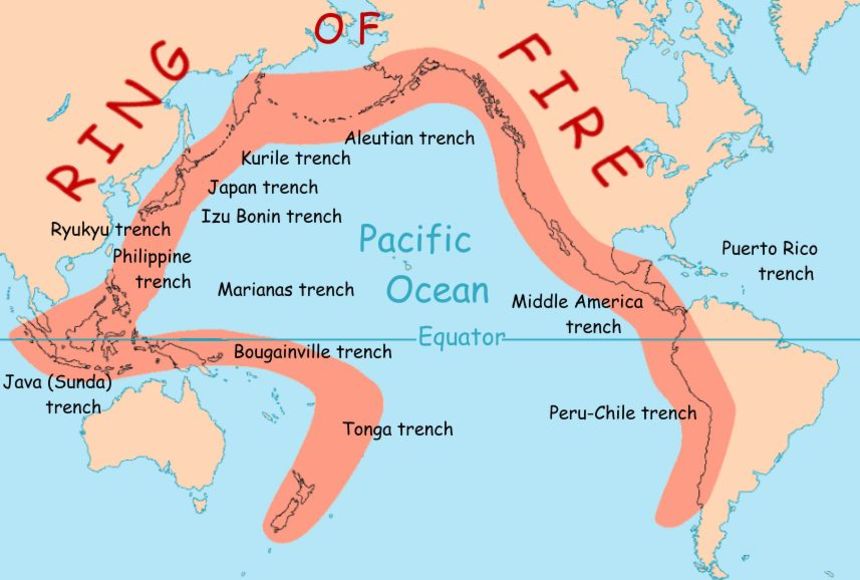
    Map of the Pacific Ring of Fire, showing the arc of volcanoes and fault lines around the Pacific.

    A Proper Respect for the Ring of Fire

    I’d climbed the slopes of volcanoes before: Calbuco – Chile (a few weeks before it blew its top), Gunung Agung – Bali, Gunung Merapi – Yogyakarta, Banda Api, Banda Islands, Kawah Ijen – East Java, celebrated for its mesmerising nighttime “blue fire” flames and the world’s largest highly acidic turquoise crater lake.

    I’d learned enough to hold a proper respect for the Ring of Fire, this deadly necklace of 400-plus volcanoes where earthquakes and eruptions are as routine as a Sunday roast. Indonesia itself has 130 active volcanoes.

    Gunung Agung erupting, Bali, with an ash column rising from the summit.
    Gunung Agung, Bali, disrupted the local community for just under two years. Seismic unrest and evacuations began in September 2017, major explosive ash ejections peaked in late November 2017, and intermittent minor eruptions and travel alerts continued through May 2019 before local conditions fully stabilised. Airline flights were rerouted during this time.

    Over our nine years in Bali, on several occasions we were jolted awake in the wee hours, the room quivering violently; walls shuddering, objects rattling, and the floor beneath us heaving. Heart racing, confusion and fear would collide as reality dawned. It took seconds before my mind screamed EARTHQUAKE!

    I’d grab Phylipa by the arm, escape from the building quickly and head for the garden. Standing on the grass outside our bedroom, we’d struggle to keep our balance. Our swimming pool took on a life of its own, doing its best to emulate a tsunami with the water sloshing back and forth, escaping the confines of the pool at each end.

    It’s a dubious part of the charm, I suppose, this dance of tectonic plates, the loud reshuffling of the earth’s crust beneath our feet.

    A Small Point About Feeling Safe

    Which brings me to a small point about feeling safe.

    Don’t skip the next bit simply because you live somewhere you regard as geologically respectable. The Earth has a longer memory than we do.

    You may go on holiday to somewhere exotic with beautiful beaches and leaning palm trees and wish you’d remembered this……

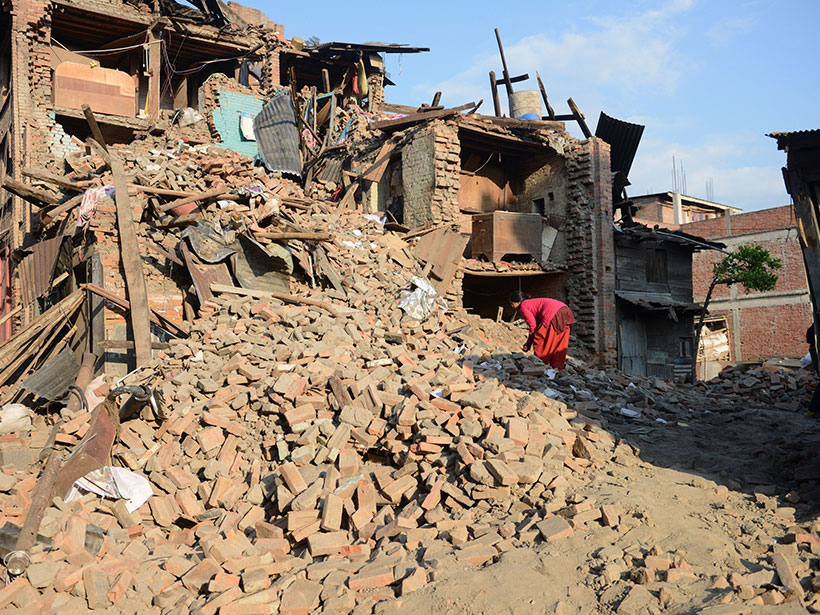
    And if you are unfortunate enough to experience a serious earthquake there, surviving the initial shaking is only the beginning.

    1. The Encore: Aftershocks

    Earthquakes, rather like unsuccessful comedians, sometimes come back for another go.

    Aftershocks may occur minutes, hours, days or even longer after the main event. Many are strong enough to cause further damage.

    Stay away from damaged buildings.

    If the ground begins moving again: Drop, Cover and Hold On.

    Don’t rush outside while the shaking is underway unless you are already somewhere that is immediately unsafe. Falling masonry has an irritating habit of arriving before you do.

    2. Injuries

    Common sense – look after yourself first, then help others.

    If any communications are working, contact emergency services for life-threatening injuries. They’re too busy for anything lesser. Don’t move someone seriously injured unless leaving them where they are presents an immediate danger.

    Be particularly alert for crush injuries, shock and cuts that are deeper than they look.

    Adrenaline is a remarkably efficient liar. You may feel perfectly well immediately afterwards and discover later that a falling bookcase has made rather more of an impression on you than you realised.

    3. Buildings That Are No Longer What They Were

    A building can look perfectly respectable after an earthquake while quietly contemplating collapse.

    Watch for:

    • Cracks in walls, ceilings or foundations.
    • Leaning chimneys or walls.
    • Loose masonry, glass or roof tiles.
    • Damaged staircases.
    • Sagging ceilings or floors.

    Never re-enter a seriously damaged building to retrieve your daughter’s favourite teddy bear until the appropriate authorities say it is safe.

    Your house may have survived the earthquake. That doesn’t necessarily mean it survived the earthquake well.

    4. Gas, Electricity and Fire

    If you smell gas, hear hissing or suspect a leak, leave immediately.

    Do not light a match, candles or use lighters. Don’t operate electrical switches, appliances or vehicles nearby. An earthquake has already created enough problems without you adding an explosion.

    Also watch for damaged electrical cables and broken water pipes.

    5. If You Are Near the Sea

    A strong or long-lasting earthquake near the coast can mean a tsunami. Move to higher ground or inland even if the authorities haven’t given any warnings.

    If you see the sea suddenly withdrawing an extraordinary distance, don’t stand there taking photographs and wondering whether this might make an interesting Facebook post.

    Leave.

    Immediately.

    The sea is not being helpful. It is getting ready to return, with interest.

    6. Ignore the Rumour Mill

    After a disaster, misinformation spreads almost as quickly as panic.

    Use official emergency alerts, radio broadcasts and local authorities for instructions. Text messages are often preferable to unnecessary calls, since phone networks may be overloaded.

    The neighbour who claims that his cousin’s brother-in-law has heard that another earthquake is definitely coming at three o’clock is not an emergency warning system.

    7. Expect Life to Become Inconvenient

    Electricity, water, mobile networks, roads and shops may all be disrupted.

    If possible, keep available:

    • Drinking water.
    • Essential medication/a first-aid kit.
    • A torch with batteries
    • Warm clothing and blankets.
    • Basic food.

    And wear sturdy shoes.

    After an earthquake, broken glass, nails and rubble have an extraordinary ability to turn a perfectly survivable natural disaster into an unnecessary trip to A&E which will already be working to capacity.

    Are There Really More Earthquakes?

    Whenever several major earthquakes make the news in quick succession, it is natural to wonder whether your patch of the planet has suddenly become more restless.

    Perhaps.

    But probably not in the way we imagine.

    Earthquakes are clustered in both geography and time. One large earthquake may be followed by hundreds, even thousands, of aftershocks. Several major earthquakes occurring within a short period can create the impression that the entire planet is becoming increasingly unstable.

    That doesn’t necessarily mean it is.

    The Earth is an extraordinarily complicated machine, powered by forces operating over timescales that make human history look like a lunch break. Large earthquakes in different parts of the world are usually the result of local tectonic processes rather than evidence that one side of the planet has somehow set the other wobbling.

    But that should not be confused with safety.

    We tend to imagine that earthquakes happen elsewhere: Japan, Indonesia, California, Chile. Places with dramatic volcanoes, spectacular fault lines and people who have the good sense to build emergency kits.

    Then again, Edinburgh Castle sits on a volcanic plug.

    The volcano is dormant.

    Perhaps.

    The point is not to spend your life waiting for the furniture to move. The point is to understand what to do if, one day, it does.

    Because when the Earth decides to remind you that the ground beneath your feet is not actually fixed to anything, the initial earthquake is only the opening act.

    The aftershocks may be waiting. The activity of animals will warn you first.

  • The Art of Standing Your Ground

    The Art of Standing Your Ground

    So many people are struggling right now – including the bright, strong ones who are usually the pillars of their families and communities.

    I’ve felt it myself, particularly over the past month. The pressure can be overwhelming, as though the world has become louder, stranger and harder to make sense of.

    We see institutions failing, accountability disappearing and old certainties beginning to crack. But perhaps the greatest damage is not what happens around us, but what happens within us: people feel isolated, angry, abandoned and powerless.

    Others seek refuge in groups, movements or religion, hoping to find certainty and belonging, only to discover that something still doesn’t quite fit.

    Perhaps that discomfort is not a weakness. Perhaps it is the part of us that remains awake – quietly reminding us to question, to think for ourselves and, above all, not to lose our humanity.

    Our Authority

    There’s a subject that keeps turning up with something important to say: Authority.

    Not the sort that comes with a uniform, a title, a corner office or the ability to shout louder than everyone else. That is usually just costume jewellery for the ego.

    I mean something rather more interesting: the ability to know your own law, live by it, and – when somebody decides to test you – stand there without folding like a cheap deckchair.

    Because it is one thing to behave impeccably when nobody is looking.

    Quite another when somebody is.

    Most of us can be principled in private. We know what we believe. We know how we want to live. We have our carefully constructed little moral architecture, complete with tasteful lighting.

    Then somebody comes along and starts kicking the foundations.

    And suddenly there’s a small, irritating voice in the back of the head:

    What are you going to do if they really test you?

    Can you handle it?

    Will you actually hold your ground?

    And there, rather inconveniently, is the problem.

    Because freedom isn’t much use if you only possess it when nobody challenges you.

    If you are always wondering whether you could hold your position when the pressure arrives, then some part of you is still looking over its shoulder.

    Can It Be Taught?

    Someone once said:

    You can’t teach that. You either are that kind of man or you’re not.

    It’s a lovely sentence. Also nonsense.

    You can teach it.

    More than 5,500 men and women have been through this work.

    And that is where the story of Private Life really began.

    Where Private Life Began

    Back in 2020, Jon Little and Greg Saunders created what was then called the Law For Mankind Knowledge Share.

    The idea was simple enough: teach people how to understand and exercise their own authority.

    Not swagger.

    Not confrontation.

    Not wandering around looking for somebody to have an argument with.

    Something considerably more valuable: certainty.

    The sort of certainty that comes from knowing what you are doing when the moment arrives.

    And, judging by what we’ve seen, it has freed a great many people.

    So we’ve now brought the original Law For Mankind Knowledge Share into the Private Life ecosystem.

    Everything under one roof. Which is considerably more convenient than leaving 75 hours of material scattered around the internet like socks after a washing machine explosion.

    And, for a limited time, there is an offer.

    Until midnight Wednesday the 12th, the usual minimum donation was reduced by 40 per cent, making it $1,000 (approx £745 / €870 / AUD 1,420).

    Note: this offer closed in August 2026. Current pricing is on the Private Life site.

    There is also a compensation plan available for those who need one.

    What the Programme Contains

    The complete programme contains more than 75 hours of material, making it, dollar for dollar, the densest course on this subject ever produced.

    But before you reach for the smelling salts, you don’t have to consume it all at once.

    Nor should you.

    It’s organised as a ten-week programme, with the important material delivered in manageable pieces. The rest is there to search, explore and return to whenever life produces a situation that makes you think:

    Right. This is one of these…

    There are ten core knowledge-share sessions covering everything from notice writing and dealing with authority to emotional mastery and pressing a claim in court.

    Then there are ten implementation sessions.

    These were added three years after the original programme, because there is an inconvenient truth about knowledge:

    Knowing something and actually being able to do it are two entirely different sports.

    And then there are the Circle coaching calls and community portal.

    A place to ask the questions that inevitably appear when theory meets the rather untidy business of real life.

    And a place to connect with other people walking the same road.

    Whether that’s your thing or not.

    What Authority Actually Feels Like

    The point isn’t to become someone who is perpetually prepared for battle.

    Quite the opposite.

    The real prize is to become someone who doesn’t need to be.

    Because knowledge is useful, especially when you know you can stand your ground and you don’t have to prove it every five minutes.

    You simply stop being afraid of being tested.

    And that, ultimately, is what authority feels like.

    Not power over other people. Power over yourself, which, as it turns out, is a considerably more interesting kind of power.

    This is something you don’t want to find yourself regretting when the moment finally comes that you need it… and it’s heading that way.

    Here’s the link

    In the interests of complete honesty, that is an affiliate link. If you sign up, we receive a small commission. It doesn’t cost you a penny more.

    A Postscript on Composure

    I’ve always admired this photograph of Saffiyah Khan facing down English Defence League protesters in Birmingham in 2017.

    What strikes me isn’t confrontation. It’s composure.

    No anger. No fear. No shouting. No attempt to compete for attention.

    Just a calm, confident presence that completely changes the dynamic.

    And perhaps that’s the real lesson: you don’t always win by fighting harder. Sometimes you win by refusing to play the game everyone else is playing.

    That look says it all.

    This is the confidence that can be yours by standing your ground.

    Here’s that image again:

    Saffiyah Khan standing calmly in front of an English Defence League protester in Birmingham, 2017.
  • A Life Without Pain

    A Life Without Pain

    With confidence in the pharmaceutical industry looking shakier than it has in years, is it time to stop relying on one approach to health?

    I’m not saying throw out modern medicine.

    I am saying it makes sense to have more than one tool available when you or someone you love needs help.

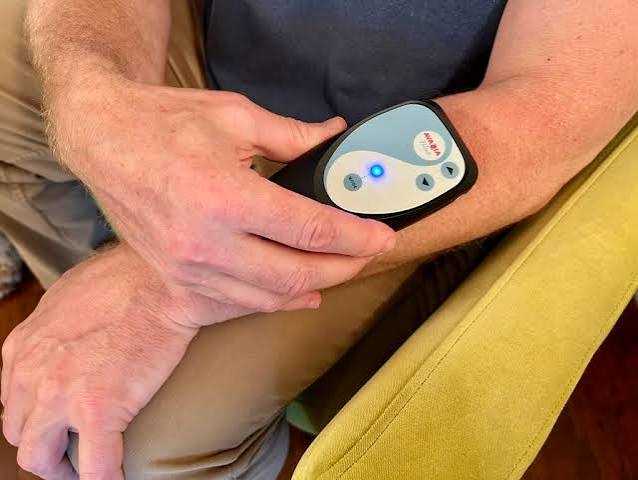
    That’s why so many people are investing in microcurrent technology.

    People have described it as “a hospital in your hand.” Maybe that’s a bold claim. Maybe it isn’t. But if having another option available could save you stress, discomfort or endless waiting, isn’t it at least worth looking into?

    The worst time to wish you had another option is when you need one.

    If you’ve been sitting on the fence, this sale might be the nudge you’ve been waiting for.

    Midnight tonight. Then it’s gone.

    Click here to learn more: ​Friend Offer Landing Page​ and scroll down to Open Advanced Devices And Upgrades, where you’ll see the Proprietary Devices and Accessories.

    Graeme Dinnen

    ResourcesForLife.net

  • What’s Your Biggest Threat?

    What’s Your Biggest Threat?

    Everyone is excited about AI. Or robots. Or oil prices. Or geopolitics, that endless international am-dram in which men in dark suits stride purposefully between podiums while being wrong in several languages at once.

    The modern world arrives gift-wrapped in anxieties. Somewhere near the top of the catalogue sits misinformation, accompanied by the factory-line production of deepfakes – counterfeit realities stamped out with industrial efficiency.

    But none of these things will ruin you.

    These are the spectres that keep me watchful. I depend on reliable information as others depend on fresh water, and it takes only the smallest contamination to taint the entire reservoir. Once doubt seeps in, every fact begins to taste faintly of forgery.

    Feed me tainted facts or dress fiction in the convincing costume of AI-generated reality, and even the most diligent machine can find itself confidently escorting nonsense into polite conversation.

    Yet the No #1 threat that will ruin you is already in your pocket.

    Your phone.

    Don’t click off because you’re read many articles about the hazards of cell phones and done nothing about it. It’s time to read on….

    That small, gleaming monolith of distraction was sold to us as liberation and functioning rather more like a digital ankle tag. It arrives with the promise of connection and quietly absconds with your solitude, your concentration and, eventually, any remaining capacity for boredom, which is a pity, because boredom is a crucible from which most good ideas emerge.

    We’ve all become digital twitchers.

    Not the charming, damp sort with binoculars and thermoses, but nervous little mammals forever checking a rectangle in the hope that someone, somewhere, has validated our continued existence with a thumbs-up emoji.

    The extraordinary thing is that intelligent people appear especially susceptible. Cleverness offers no immunity. Quite the reverse. Smart people simply construct more sophisticated excuses for their dependency.

    “I need it for work.”

    “I was just checking one thing.”

    “Research.”

    Of course, the addict always has a reason.

    The greatest social experiment in history isn’t happening in a laboratory. It’s happening every time we unlock our phones.

    Modern society increasingly rewards traits that once sat on the fringes of human behaviour: emotional detachment, relentless self-promotion, superficial relationships, and the pursuit of status over substance.

    Are We Engineering a More Psychopathic Society?

    Digital isolation, combined with the incentives of social media, may be nudging us toward patterns that resemble psychopathic behaviour – not because people are becoming psychopaths, but because the system rewards many of the same characteristics.

    Online, empathy is expensive. Outrage is profitable. Authenticity competes with carefully curated identities designed to maximise attention and approval. Human connection becomes transactional, measured in followers, engagement, and algorithms rather than trust, vulnerability, and shared experience.

    Then there’s the psychology of mass compliance when people respond, assuming they make entirely independent decisions, yet much of human behaviour is unconsciously influenced by the surrounding environment.

    Perhaps the most unsettling observation concerns manipulation itself. The people most vulnerable to influence are often those who believe they are immune to it.

    At the same time, social media may be accelerating the erosion of authentic human connection. Digital interactions increasingly replace face-to-face relationships, while algorithms prioritise engagement over wellbeing.

    The result is a culture that amplifies performance instead of presence, visibility instead of vulnerability, and validation instead of genuine connection.

    If our institutions, technologies, and incentives consistently reward behaviours associated with emotional distance, conformity, and impression management, what kind of society are we gradually creating?

    Become A Part-Time Mutineer

    Much of my approach to modern life consists of small, private mutinies. My cell phone spends most of its existence on airplane mode and, at night, is exiled to another room altogether. I refuse to wear those little radiation-puffing earbuds that leave people sitting in mute concentration, as though undertaking some obscure monastic penance in the hope of divine intervention.

    And the router? It is switched off every night without fail. Civilisation can survive a few hours without Wi-Fi; indeed, it occasionally seems improved by the absence.

    It is astonishing how quickly the mind, deprived of its electronic pacifier, begins first to itch, then protest, and finally, after an interval of considerable discomfort, to think.

    Really think.

    Without interruption. Without applause. Without the incessant narcotic drip-feed of novelty.

    My most creative time is while cycling. No one’s knocking on the front door, there are no incoming phone calls, no distractions from urgent paperwork spotted out of the corner of my eye.

    The future, I suspect, will belong not to those with the cleverest machines, but to those still capable of sustained attention. The rare people who can sit alone with their own thoughts and not immediately reach for a glowing piece of Chinese glass.

    A radical act, these days.

    Almost eccentric.

    Graeme Dinnen

    ResourcesForLife.net

    PS If you haven’t been told this many times already

    • the shorter your calls on a cell phone are, the better for your brain
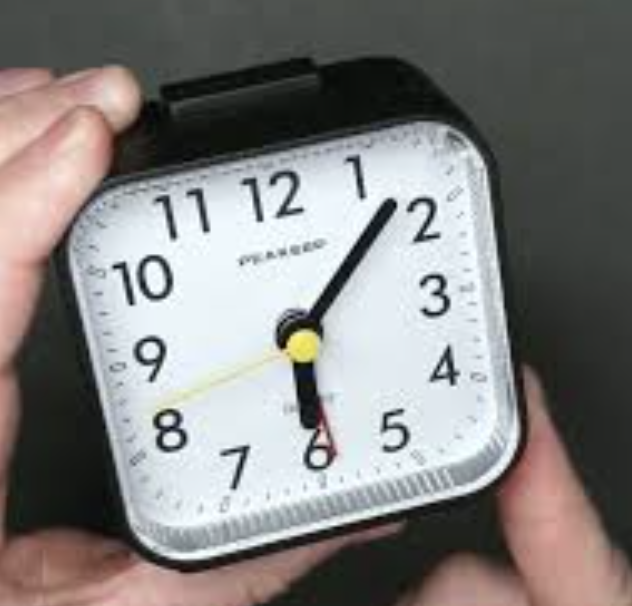
    • if you need an alarm, buy a battery-operated alarm clock. Not an electric one.

  • Paint With Words

    Paint With Words

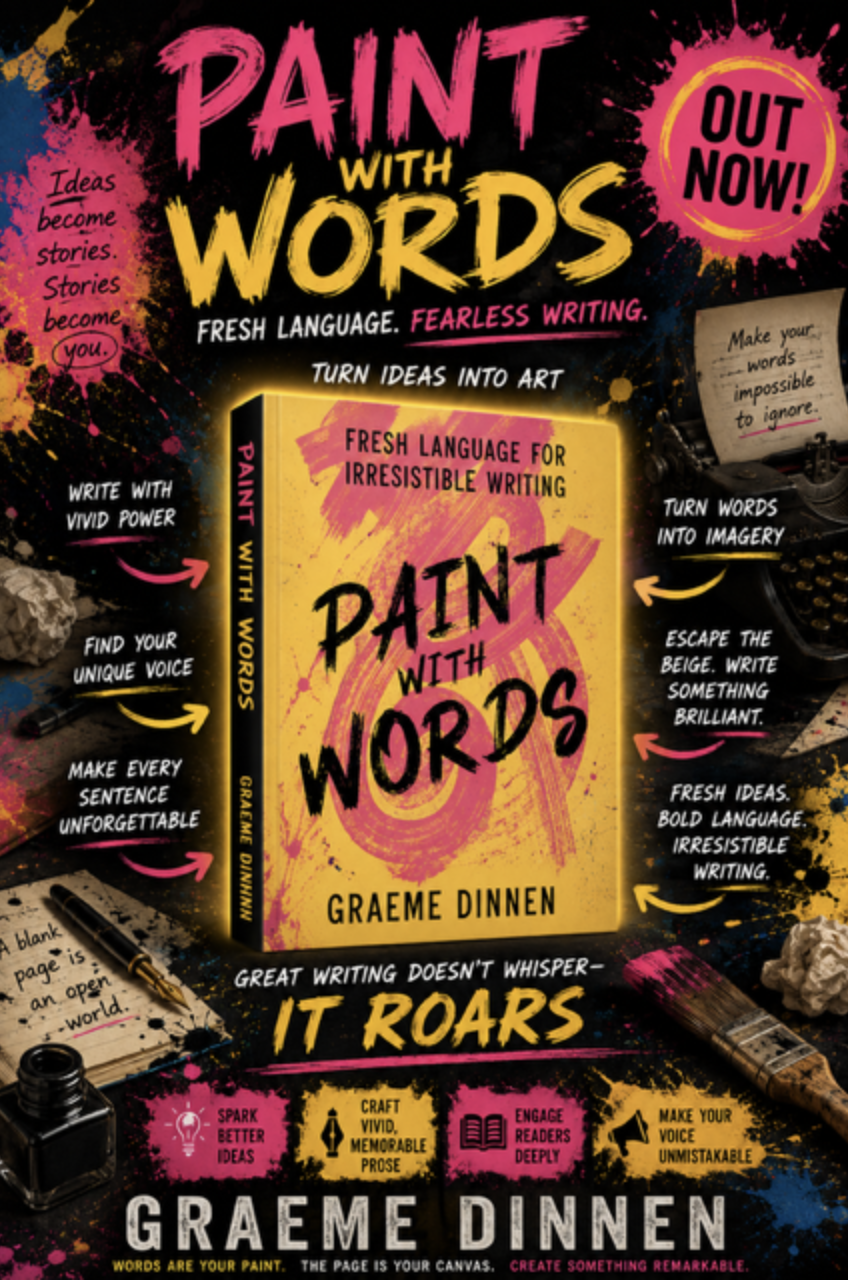
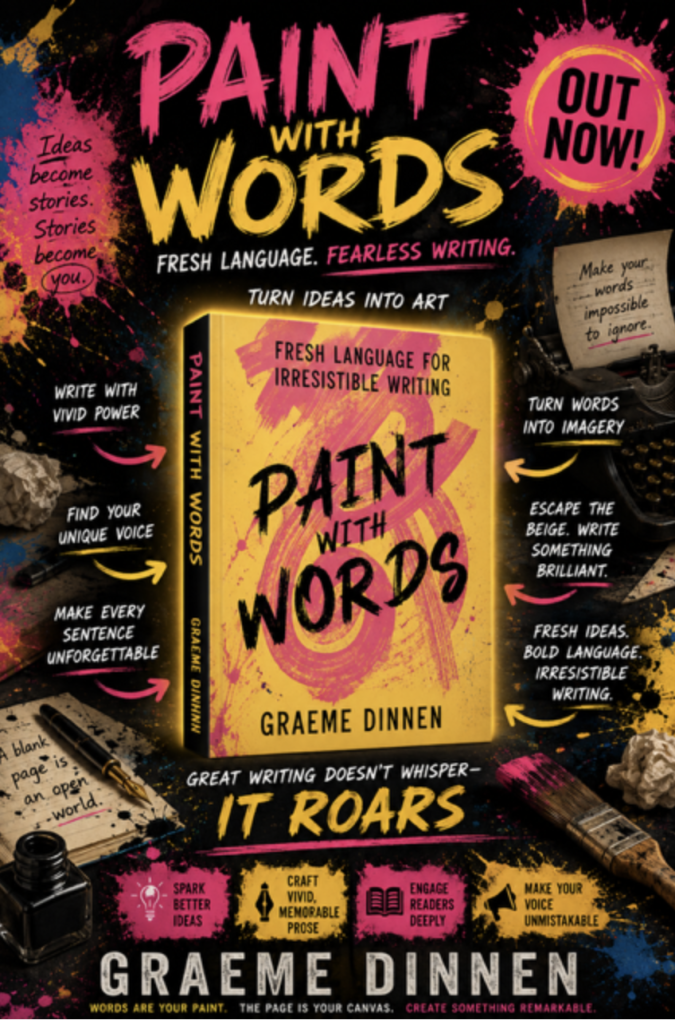
    Last week I completed a paperback version of my latest book “Paint With Words”.

    Paint WIth Words
    Paint WIth Words

    Why did I focus on writing? Vanity, possibly. Originality, certainly not. The Chinese got there first with the “I Ching” several millennia ago, which rather takes the shine off any claim to innovation.

    No, it was probably because there are things I want to say before the lights go out and somebody sensible changes the locks.

    I only wish my old English teacher were still alive so I could post him a copy with a note saying: Look, against all available evidence, it happened.

    He dragged me through O-Level English with the exhausted patience of a man trying to rescue a shopping trolley from a canal.

    But this isn’t a book about grammar in the joyless, ruler-rapped sense. It’s about learning how to say what you mean with precision, swagger and a bit of blood in the mouth.

    How to build metaphors that don’t collapse under inspection, similes that aren’t recycled from Christmas crackers, headlines that land like a punch to the sternum, and sub-headings that lure the reader onto the next page, and the pages after that.

    This book is for the beginner standing nervously at the edge of the literary swimming pool, and for the more seasoned writer who suspects they’ve started repeating themselves like a 60’s ballad on loop.

    It’s about sharpening the tools: writing cleaner, harder, funnier, leaner prose in a world where every shelf, screen and algorithm groans beneath the weight of competition.

    Because good writing doesn’t merely communicate, it seduces, provokes, humiliates, flatters and occasionally detonates.

    And if you’re going to add another book to the tottering pile, it ought at least to arrive carrying a weapon of genuine destruction.

    “Paint With Words” is available on Amazon – https://www.amazon.co.uk/dp/B0H243SB65. or use your own Amazon account for access.

    Graeme Dinnen

    ResourcesForLife.net

    ​

  • Keeping the Charm, Losing the Chaos: Small Business in the Age of AI

    Keeping the Charm, Losing the Chaos: Small Business in the Age of AI

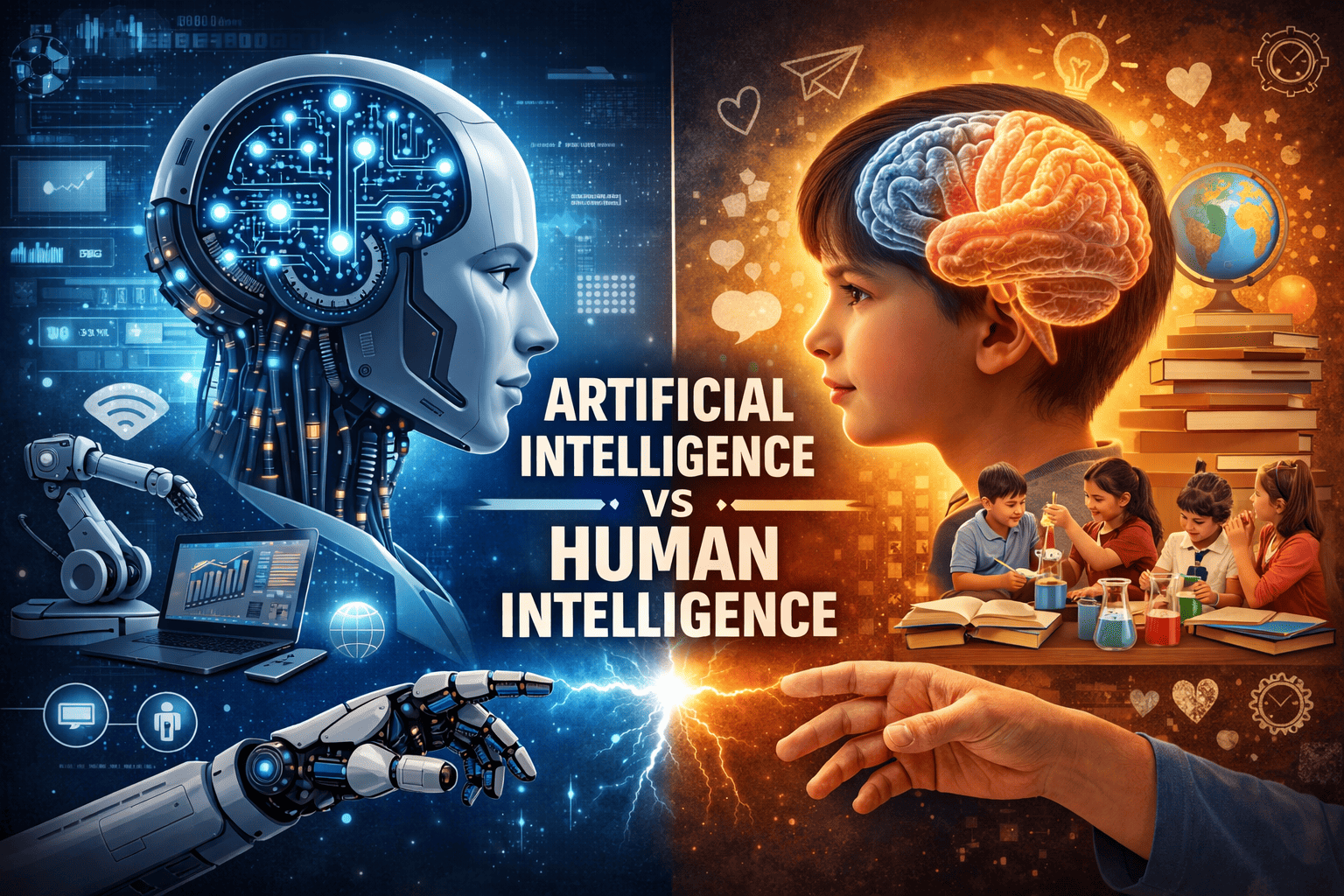
    The first thing you need to know about AI is that you’re not going to be replaced by AI, you’re going to be replaced by someone who knows how to use AI. That’s the difference.

    Small businesses have always been built on a particular kind of stubborn optimism – the belief that grit can outmuscle gravity, that charm can compensate for scale, and that a handwritten sign in the window might still outshine a billboard.

    It’s romantic. It’s admirable. It’s also, increasingly, a bit knackered.

    Because while you’ve been perfecting your sourdough or balancing invoices at midnight, something rather efficient has slipped into the room: artificial intelligence (AI). And unlike most business trends, those breathless, jargon-choked fads that arrive like overenthusiastic Labradors and leave just as quickly, this one doesn’t pant. It works.

    Relentlessly.

    The first and most obvious seduction is time. AI doesn’t tire, doesn’t procrastinate, doesn’t suddenly decide it needs a biscuit and a scroll. It eats admin for breakfast: emails, bookings, customer queries, stock tracking – all the small, dull, necessary chores that quietly siphon the life out of a working day.

    What it gives back is not just hours, but a kind of mental oxygen. Space to think. To plan. To actually run the business rather than merely survive it.

    Then there’s the matter of cost, that ever-present, slightly accusatory shadow. Hiring people is expensive, and rightly so, but not always feasible. AI, by contrast, is the quiet understudy who can play several roles at once without demanding a dressing room.

    It drafts your marketing, answers your customers, nudges your accounts into order. Not perfectly, not humanly, but often well enough, and at a price that doesn’t make you wince.

    And customers, bless them, have developed the attention span of caffeinated goldfish. They want answers immediately, preferably yesterday, and rarely between the hours of nine and five.

    AI obliges. It sits up all night, cheerfully fielding questions, solving problems, smoothing over irritations. It doesn’t replace human warmth, but it does ensure the door is never quite shut.

    Marketing, once the domain of glossy agencies and eyewatering retainers, has been democratised into something almost indecently accessible. AI will write your posts, suggest your campaigns, even tell you, gently, but firmly, what’s not working.

    It turns guesswork into something closer to strategy, which is a polite way of saying it stops you shouting into the void and hoping for applause.

    Perhaps most quietly transformative is its relationship with data. Small businesses have always had information – sales figures, customer habits, seasonal quirks – but rarely the time or tools to make sense of it.

    AI sifts through the noise with unnerving competence, spotting patterns, offering insights, whispering, “This works. Do more of that.” It’s less crystal ball, more forensic accountant.

    And then there’s scale. Growth, in the traditional sense, is messy. More customers mean more pressure, more staff, more moving parts. AI smooths the edges. It allows a business to expand without immediately buckling under its own ambition. It doesn’t eliminate growing pains, but it does offer a rather effective painkiller.

    Of course, there’s a faint unease to all of this. A suspicion that something so efficient must surely come with a catch, like the over-attentive waiter. And yes, AI isn’t perfect. It can be clumsy, occasionally tone-deaf, and it lacks that peculiar, irreplaceable spark of human instinct. But it doesn’t need to be brilliant to be useful. It just needs to be consistent.

    Which, in business, is often far more valuable.

    The truth is, adopting AI isn’t about abandoning what makes a small business special. It’s about protecting it. About removing the friction, the drudgery, the endless small obstacles that prevent good ideas from becoming great ones.

    Because charm and character will always matter. But in a world that moves this quickly, a little mechanical assistance doesn’t diminish the magic.

    It simply gives it a fighting chance.

    Click this link for more information: www.thistimenextmonth.com

    A word of warning – I’m not trying to shoot myself in the foot here but it needs to be said……

    There is something magnificently, almost operatically stupid about the great AI gold rush, a farce so perfectly constructed you’d think it had been written by a committee of satirists rather than executed by some of the most expensively educated people on earth, because what has actually happened.

    Do stay with me here as it gets better!

    Some companies sprinted to sack their humans on the promise that the machines would be cheaper, only to discover, with the pained expression of a man who has just sat on a cactus, that the machines can be considerably more expensive.

    Compute costs are now exceeding payroll in some firms, one Nvidia executive has admitted with casual candour that global IT spending is hurtling toward $6.31 trillion in 2026, up 13.5% in a single year, which is the kind of number that sounds like a typo but isn’t.

    The promise was frugality; the reality is an infrastructure bill that doesn’t scale, doesn’t sleep, and absolutely does not apologise for its energy consumption.

    Meanwhile, the workers who were meant to be redundant have instead found themselves being pushed harder, burned out faster, and made to compete with systems that experience neither fatigue nor the basic human need to occasionally stare out of a window and think about lunch, while the businesses that laid off their entry-level staff in triumphant anticipation of savings are now sitting in front of spreadsheets wondering where, precisely, the savings went.

    They went nowhere, is the answer, because tens of billions have been poured into generative AI and the overwhelming majority of companies have seen returns ranging from negligible to invisible, which is exactly how bubbles have always worked – capital chasing an idea with the momentum of a toddler chasing a pigeon, long before anyone has paused to ask whether the pigeon is actually worth catching.

    What we are watching is not a technological revolution so much as a very old story about capital concentration dressed up in a new and expensive costume, with the infrastructure owners capturing the benefits while the costs fan outward across the broader economy like a slow and courteous catastrophe; and the critical, foundational error, the thing that will one day earn its own chapter in the post-mortem, is the assumption that because a machine can do something, doing it with a machine must therefore be cheaper.

    This turns out to be roughly as reliable an economic principle as assuming that because you own a yacht, going on holiday must be free.

    Only a fool would turn his back on AI entirely, but only a greater fool would deploy it everywhere at once. The shotgun, after all, is the weapon of the panicked, and panic has never been a sound basis for a technology strategy.

    Graeme Dinnen

    ThisTimeNextMonth.com

  • Private Life Foundations

    Private Life Foundations

    The Complete Framework for Men & Women Who Want to Reclaim Authority Over Their Life, Work & Affairs

    Registration Opens March 23 — Seats are limited


    Something feels… off.

    You work.
    You build.
    You try to do the right thing.

    Yet somehow the systems around you always seem to have the final say.

    Rules appear out of nowhere.
    Decisions affecting your life are made in rooms you’ll never enter.
    And the harder you work to build something meaningful, the more complicated it becomes to simply live freely.

    Deep down, most people feel it.

    That quiet sense that life was never supposed to work like this.

    That a man or woman should be able to conduct their life and business peacefully… without endless interference, levies, or control from distant authorities who have no stake in their wellbeing.

    For years, people have searched for answers.

    But most of what they find falls into two categories:

    • Confusing legal jargon that only specialists understand
    • Empty promises from people who have never actually done the work themselves

    Which is exactly why Private Life Foundations exists.


    The Moment Everything Changed

    Over twenty years ago, Greg Paul began asking the same questions many people ask today:

    What if there is another way to relate to life, work and the legal world?

    Not by fighting the system.

    Not by hiding from it.

    But by understanding it deeply enough to move through it differently.

    What followed was two decades of exploration, trial, study, application, and real-world implementation.

    Mistakes were made.

    Hard lessons were learned.

    But eventually something remarkable happened.

    The puzzle pieces began to fit.

    A clear, repeatable framework emerged that allowed a man or woman to:

    • Conduct their affairs privately
    • Operate their work and business with greater autonomy
    • Relate to legal systems from a position of clarity rather than confusion
    • And most importantly — live with a renewed sense of peace and self-governance

    Not theory…….reality.


    In January, Something Powerful Happened

    Earlier this year, Greg shared this framework in a live event attended by over 700 men and women.

    For many participants, it was the first time the concepts truly made sense.

    Questions were asked.

    Breakthroughs happened.

    People began seeing how the pieces of their own lives could be restructured.

    One participant summed it up perfectly:

    “Oh, WOW, Greg… I had no idea when I signed up that you’ve already DONE all this.”

    That’s the difference.

    This isn’t speculation.

    It’s experience distilled.


    Introducing: Private Life Foundations

    Private Life Foundations is the fully mastered version of that live event.

    Every lesson has been refined, clarified, and structured so that you can move through the material step-by-step without the confusion most people encounter when exploring this territory alone.

    Inside the program you’ll receive:

    15 Hours of Core Training

    The essential principles and frameworks explained clearly and methodically.

    No fluff.
    No vague philosophy.

    Just the key truths and practical steps required to begin transitioning your affairs into the private.


    Three Full Q&A Sessions

    During the live event, participants asked hundreds of questions.

    The biggest and most important of those questions were recorded and included here so you can benefit from the same clarifications and real-world scenarios.


    A Complete Suite of Templates

    Understanding concepts is one thing.

    Applying them is another.

    These templates help you translate knowledge into action when restructuring your personal and business affairs.


    What You’ll Discover Inside

    Within Private Life Foundations, you’ll learn:

    • The basic ideas that explain how people fit into the legal system

    • Why many people accidentally put themselves in legally vulnerable situations

    • Important differences that affect how authority and responsibility actually work

    • How to start living and working with more clarity, independence, and control

    • Practical ways to support a more private life and private business activities

    And perhaps more importantly…

    • You’ll begin to see how a different relationship with the world is actually possible.

    One that feels calmer. Simpler.

    And far more aligned with your own conscience and values.


    Why This Matters Now More Than Ever

    Across the world, people are waking up to the same realization:

    The systems surrounding modern life are becoming more complex, more intrusive, and more difficult to navigate.

    Which means the ability to understand and structure your affairs correctly is no longer a luxury.

    It’s becoming essential.

    Private Life Foundations exists to give you the clarity most people spend years trying to piece together alone.


    The Distillation of 20+ Years

    Everything inside this programme represents over two decades of experience.

    Study.
    Application.
    Testing.
    Refinement.

    What you receive is not just information.

    It’s the most concentrated accelerator Greg has ever produced for men and women around the world (not just the UK) who want to live and conduct business more freely.


    Access Is Limited

    Because we want to maintain the quality of support for the community, we’ve placed a hard cap on enrollment.

    Only 150 seats will be available for this release.

    Access will remain open for 72 hours, or until those seats are filled.

    Whichever happens first.

    Once the cap is reached, registration will close.


    Registration Is Open March 23 – 26.

    Click to Register here and diarise the dates

    If something in you has been quietly searching for a clearer path…

    If you’ve sensed there must be a more conscious way to relate to life and business…

    Then Private Life Foundations may be exactly what you’ve been waiting for.


    Reserve Your Place

    When registration opens, you’ll be able to secure your access and begin moving through the material immediately.

    Seats are limited.

    And once they’re gone, the doors will close.

    Join us inside Private Life Foundations and begin building the foundation for a freer life.

    → Register when the doors open on March 23

    See you there

    Graeme Dinnen

    ResourcesForLife.net

    Click to Register here

  • Year of the Fire Horse

    Year of the Fire Horse

    The Year of the Fire Horse trotted in yesterday, 17 February, all flared nostrils and hot hooves, kicking sparks across the calendar like it owns the place. Which, astrologically speaking, it does.

    We’re promised movement. Passion. Power. Freedom. Strength. Courage. Transformation. Opportunity. Growth. Enthusiasm. Abundance. Fiery spirits. It reads less like a horoscope and more like the tasting notes on a particularly bullish Rioja.

    Frankly, that ought to cover most of us.

    But let’s be clear: this is not a year for idling in the paddock, chewing thoughtfully on self-doubt. The Fire Horse does not admire dithering. It wants action – decisive, unapologetic, properly done.

    No shortcuts. No half-baked ambitions left cooling on the sideboard.

    This is a year of velocity. Of barricades rattling. Of bold opportunities that won’t knock twice. The energy is immense, even exhilarating, but also exhausting if you try to cup it in trembling hands.

    Some will feel overwhelmed, as if handed a flamethrower when they were expecting a candle. Directionless power is merely noise.

    The trick, as ever, is not to tame the fire but to ride it. To meet change with a straight back and a steady gaze. To lean into the gallop rather than clutch at the reins.

    If ever there were a year to charge toward the life you’ve been circling at a polite distance, this is it. Saddle up.

    Blending Ancient Chinese wisdom, psychology, and spiritual practices offers practical tools to benefit from the horse’s dynamic energy:

    • HARNESS UNSTOPPABLE MOMENTUM even when progress is slow
    • FACE CHANGE WITH COURAGE instead of fear and resistance
    • STRENGTHEN RELATIONSHIPS AND COMMUNITY while honouring your independence
    • OVERCOME OBSTACLES by turning setbacks into stepping stones

    If you want to know what lies ahead for you, click this link and select your birth sign.

    https://chinesenewyear.net/horoscopes

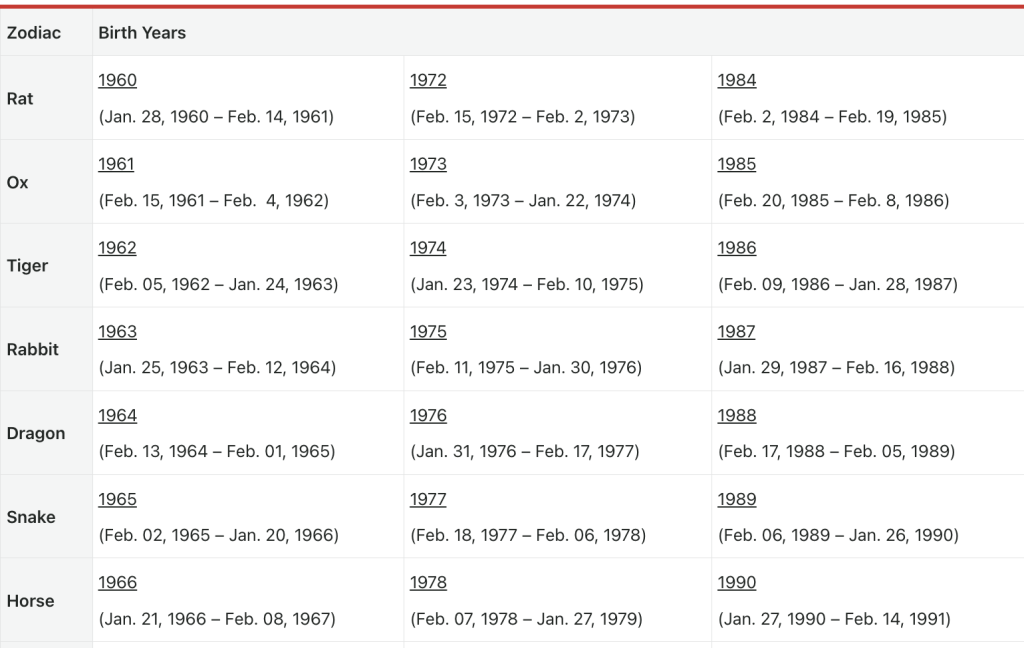
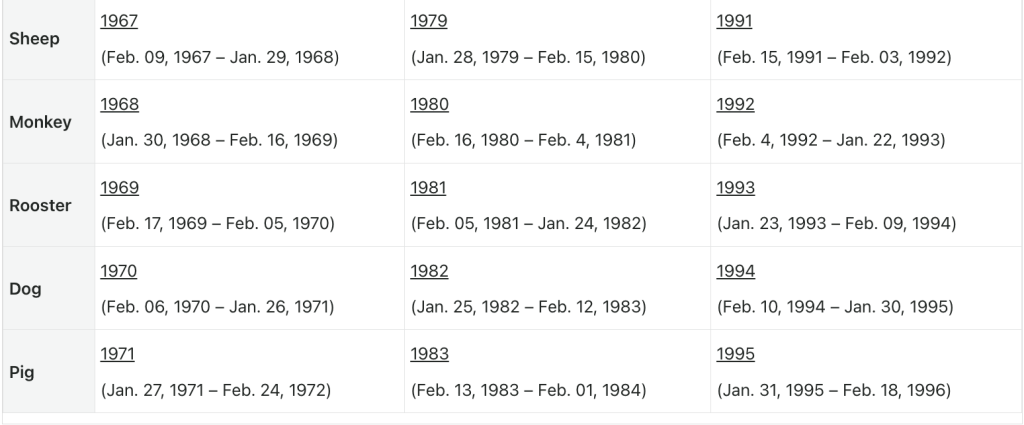
    If you’re not sure of your birth sign, see below. If you were born in 1976, you’re birth animal is a Dragon, and so on.

    Kung Hei Fat Choy

    Graeme Dinnen

    ResourcesForLife.net

  • A Sunday That Refused to End

    A Sunday That Refused to End

    I’d like to raise a glass. Not in celebration exactly, more in astonishment. A small clink to the improbable fact of you, and me, being here at all.

    To do this, I need to tell a story. All stories worth telling begin with an interruption, and this one is no different, getting underway in Hong Kong during the early months of 1941.

    It was a Sunday, brightly awoken by sunshine. My dad, Alec Dinnen, was driving to the Royal Hong Kong Golf Club for an early round. Empire time. Nothing urgent. Nothing historical. Just a man in a car, buoyed by that most durable of fantasies: that tomorrow will be a courteous repeat of today.

    He was totally unaware of how his life would change because of one incident that was about to happen.

    At one point in his journey, he spotted a car that had pulled over in a layby, its bonnet raised like a white flag. He stopped. In those days people were more likely to offer that small, human deviation from their schedule. The car was hired; the engine was sulking. Dad learned that the passenger was Japanese and, it turned out, that he too was heading for the same golf course.

    Problem solved. Fate, for once, didn’t even try to be subtle.

    Over the following months, they’d bump into each other at the golf club: a nod, a bow, it was little more than cordial nothingness. Two men sharing good manners while their future was loading a weapon and checking the safety catch.

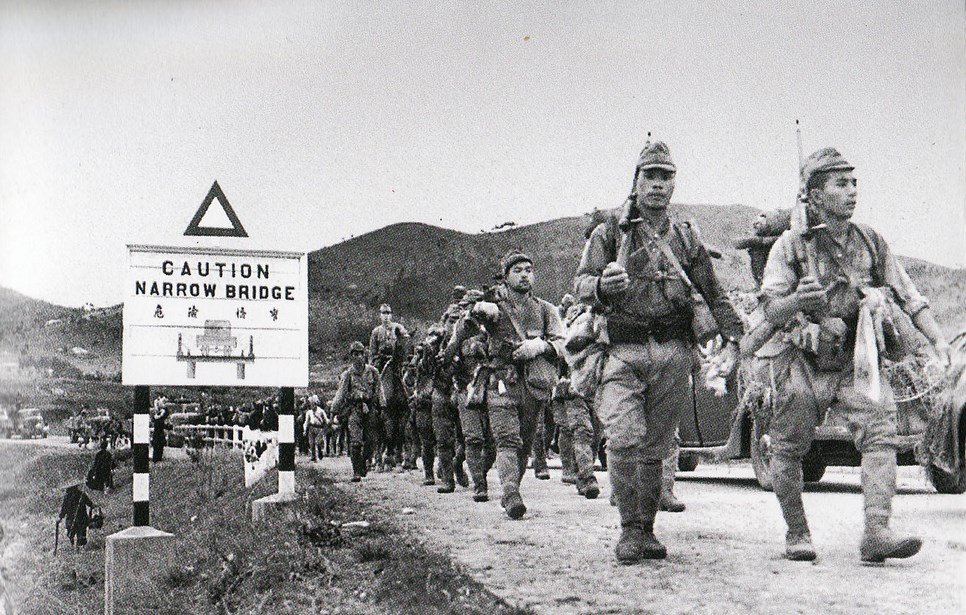
    December 1941 arrived. 5,000 miles away, Pearl Harbour had fallen. Shortly after that, the Japanese 38th Division’s forty to fifty thousand troops rolled over Hong Kong’s fourteen thousand defenders. It was eighteen days of precise, savage arithmetic.

    December 1941 – Japanese troops crossed the border into Hong Kong.

    As the Japanese troops landed on the beach at Lyemun (the closest point between Kowloon on the mainland and Hong Kong island), the order was given for the Allied troops to retreat to the fort there. As dad left the trench, a mortar shell exploded close to him and tore into his leg. He collapsed, unconscious, pinned to the ground by pain and bad luck. Japanese troops advanced, bayoneting the living, stepping over the dead. My dad was mistaken for the latter and spared by incompetence.

    He awoke later and crawled through the night to the hospital.

    At dawn, as he emerged from the bushes, Japanese soldiers spotted him, fixed bayonets, and charged. It was to be brief and brutal, as these things tend to be.

    Then a voice cut through the moment.

    “Stop. Enough”.

    The order came from a Japanese officer. A doctor. The same man my dad had given a lift to on that sunny Sunday when war was still only a rumour. Dad was taken inside, treated properly, and given tinned fruit, the currency of kindness in a world that had temporarily abolished it.

    Months later, POW’s were ordered onto the Lisbon Maru, a ship bound for Japan. Dad was placed in cargo hold #3. Standing room only. Men knee-deep in their own waste. Rice was lowered down, eaten before it reached the edges. A floating oubliette.

    Before departure, the prisoners were all brought up for a final medical inspection. Japan, meticulous as ever, did not want dysentery or any other contagious medical condition travelling towards them.

    The doctor inspecting cargo hold #3 was, thankfully, the same Japanese doctor as before.

    Knowing where the ship was headed, he pulled dad aside and declared him too ill to travel.

    The Lisbon Maru sailed without dad. In the East China Sea – unmarked, unflagged as a POW troop carrier, it was torpedoed by a US submarine Of the 1,816 prisoners aboard, around 800 died: drowned in sealed holds or machine-gunned in the water. The Royal Artillery, trapped when a ladder failed, were last heard singing It’s a Long Way to Tipperary.

    British to the end.

    My dad survived 3 1/2 years in prison camp, helped because of a car breakdown, a courteous lift, occasional meetings on the golf club verandah, a mortar that prevented dad from reaching the fort, and a doctor who remembered, offering mercy disguised as bureaucracy.

    Thanks to these quirks of fate, my sisters and I exist today. It’s why our children exist; why their children exist too.

    Remove any one of those details and the genealogical line ends. Terminated. A small universe erased.

    On another note altogether, in her early 20’s Phylipa was involved in a serious car crash. For the first few days it was touch and go, but thanks to the medical staff involved, they rebuilt her facial damage. Thankfully, she pulled through. Another instance of the precariousness of life.

    Genealogy, it turns out, is a house of cards in a drafty room. Wars knock the whole table over.

    So here’s my toast. Not to heroism or destiny, but to contingency. To the absurdly fragile chain of accidents that allowed you to be here today, reading this, breathing quietly, unaware of how close nothingness once came.

    My congratulations. Reach over your shoulder and pat yourself on the back. You deserve it. Although my story is ostensibly for us here, somehow I feel the urge to at least acknowledge those men and women who never survived the conflict, and whose potential offspring do not walk amongst us today.

    For them, we’ll never know what might have been.

    Slàinte Mhath.

    Graeme Dinnen

    ResourcesForLife.net

Graeme Dinnen
Privacy Overview

This website uses cookies so that we can provide you with the best user experience possible. Cookie information is stored in your browser and performs functions such as recognising you when you return to our website and helping our team to understand which sections of the website you find most interesting and useful.