
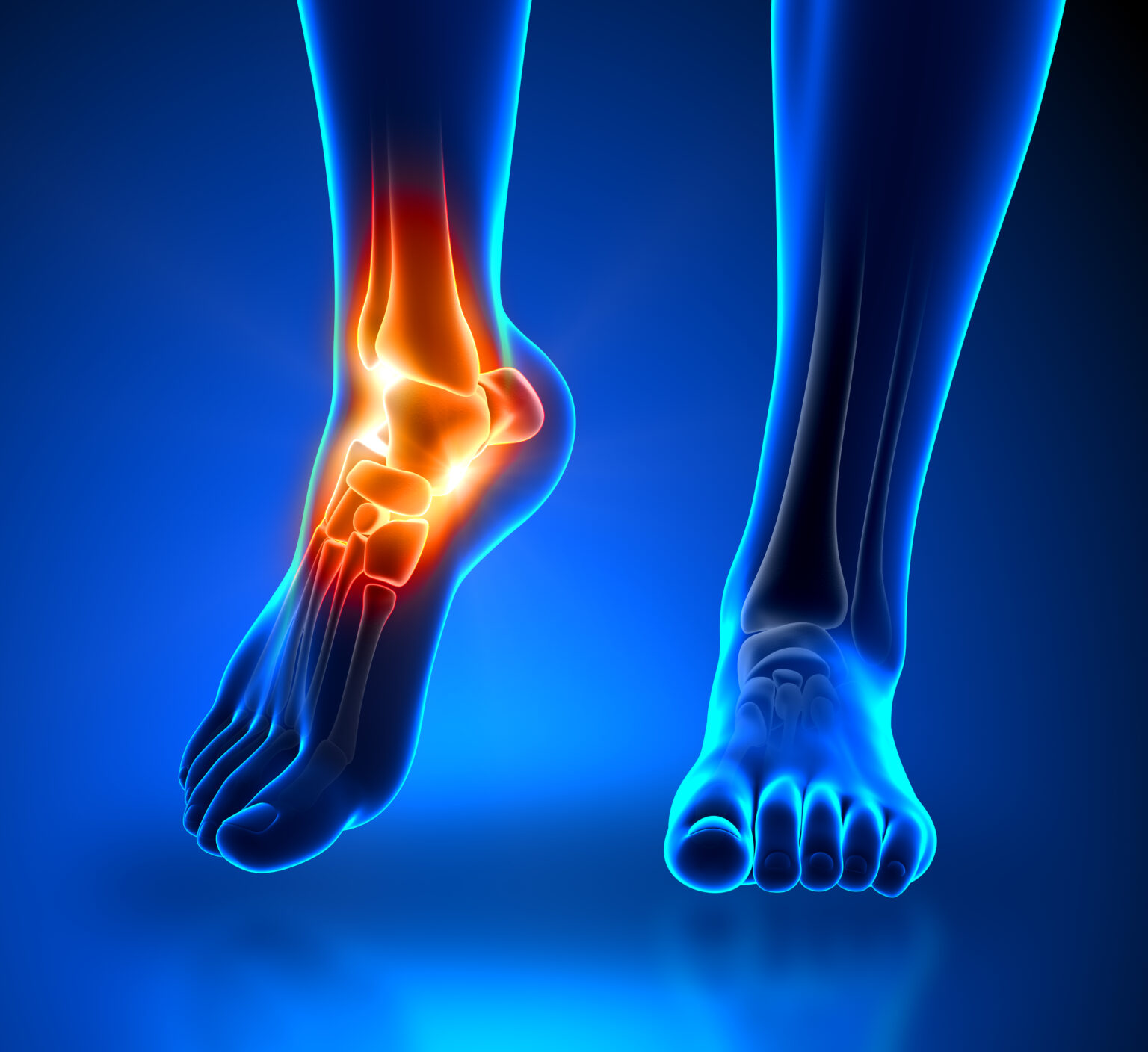
We tend to think of our feet as two rather uninteresting things at the bottom of our legs. They get shoved into shoes in the morning and largely forgotten until they hurt.
Perhaps we have the whole arrangement backwards.
Our feet are the foundations of the body. Build a house on crooked foundations and you won’t expect the roof to remain perfectly level.
Through the pages of What Doctor’s Don’t Tell You, I came across posture therapist and author Eleanor Dalton. Known as “Posture Ellie”, she has a rather different way of looking at posture. It isn’t simply about sitting up straight, pulling your shoulders back and trying to look like a soldier waiting for inspection.
Posture is the musculoskeletal home you live in: the state of your body and how it has organised itself in response to everything you ask of it from when you wake to when you sleep,…..and even how you sleep.
And increasingly, we ask rather a lot while wearing shoes that may be doing the asking for us.
Your feet weren’t designed like this
Barefoot isn’t some fashionable invention dreamed up by a wellness influencer. For most of human history, humans walked barefoot or with primitive protection wrapped around their feet. Shoes became necessary as humans migrated into colder climates and encountered harsher terrain. The original solution was wonderfully unsophisticated: leather, straps and protection from the elements.
There was no foam. No air cushioning. No rigid arch support.
The foot remained a foot.
Modern footwear is rather more ambitious. We squeeze the toes into narrow spaces, deforming their natural shape. We raise the heel. We surround the foot with cushioning and support. Then we wonder why the muscles and joints don’t behave like those of someone who has spent their life walking barefoot.
The cushioning is particularly seductive. It feels comfortable and protective, as though the shoe is doing us a favour.
But the more the shoe does, the less the foot has to do.
The muscles don’t have to work in the same way. The foot receives less information from the ground. The body’s loading patterns change.
Change the foundation and the rest of the structure has to accommodate it.
Even five millimetres can matter
You don’t need to totter around on six-inch stilettos to alter your biomechanics. According to Dalton’s approach, even a 5mm heel, over time, can influence how joints are positioned and how the body loads itself.
Raise the heel and the body is tipped forward. It doesn’t simply accept the new angle. It compensates.
The pelvis changes. The knees respond. The spine adjusts. The head moves.
The illustration Dalton gives is to think of the Leaning Tower of Pisa. The further up you travel, the greater the visible displacement from the foundations.
The same principle can apply to the human body. A small change at the foundations can produce a much larger compensation at the top.
And that ‘top’ happens to contain your head.
Trainers: the great deception
Stilettos at least look dangerous.
Flip-flops are a major contributor to back pain and a potential accident waiting to happen.
Trainers are another matter altogether.
They have become increasingly elaborate: thicker soles, greater cushioning, more support and more separation between the foot and the ground. They are sold as technological improvements, particularly for running, gym work and walking.
And this may be precisely why they deserve scrutiny.
The danger isn’t necessarily that a trainer is uncomfortable. Quite the opposite. It can be so comfortable that you assume it must be good for you.
After all, your foot is effectively sitting on a mattress.
You become disconnected from the ground. Sensory information changes. Muscles and joints work differently. Then we compound the problem by running, exercising or walking for miles in them.
That doesn’t mean every trainer is damaging. Nor should everyone throw theirs away tomorrow. Feet adapt, and abruptly moving from heavily cushioned shoes to minimalist footwear can create problems of its own.
But it raises an awkward question:
Are we protecting our feet from the very work that keeps them strong?
We don’t walk so much these days
There is another modern problem: we sit.
We sit in cars, at desks, watching television and looking at screens. Our ancestors didn’t spend much of their lives in chairs with their feet resting passively on the floor.
Muscles need loading, movement and variation.
Yet we have created an existence where feet spend most of the day trapped inside shoes while the body spends most of the day sitting. Then, at the weekend, we expect those same muscles and joints to cope with a long walk, a game of golf/tennis/squash, a run or an enthusiastic gym session.
The body isn’t a machine you can leave switched off for eight hours and then demand maximum performance from.
And then comes the headache
If the foot alters the way it loads, the ankle responds. The knees and hips compensate. The pelvis and spine adjust. The shoulders and neck become involved.
Eventually, the head has to find somewhere to go.
If the head isn’t comfortably positioned over the body, the muscles around the neck have to work to keep the eyes level. Failure to do this and you don’t see where you’re going as clearly.
This is one possible route by which a problem originating lower down can contribute to discomfort higher up, including neck tension and some form of headache.
That doesn’t mean every headache starts in the feet. Headaches have many causes. But the mechanical principle is worth understanding as the body doesn’t consist of independent spare parts.
Posture isn’t a pose
Sitting bolt upright, shoulders pinned backwards and stomach sucked in is a pose.
Posture is the state of the structure underneath. How collapsed is it? How asymmetrical? How mobile? How capable of responding to change?
Even stress enters the equation. Shoulders rise. Breathing changes. The jaw tightens. The body contracts.
A temporary physical response can become habitual. What began as an emotional state can become a physical state, until the body forgets how to let go.
Don’t go barefoot overnight
The temptation is obvious: throw away the trainers, buy barefoot shoes and walk everywhere as nature intended.
Not so fast.
If your feet have spent decades in conventional shoes, they may not suddenly be ready to behave like feet accustomed to being barefoot. Minimalist shoes can place greater demands on muscles, tendons and joints. A gradual transition makes more sense.
Start simply. Spend a few minutes barefoot on a firm surface. Feel the ground. Notice where your weight falls. Can you spread your toes? Shift forwards and backwards without gripping? Does one foot feel different?
Then walk slowly.
Not for fitness.
For information.
If you have plantar fasciitis, look to upper body – forward leaning head, rounded shoulders and stooped upper back putting too much weight on the front of the foot
Perhaps the question isn’t whether shoes are good or bad. Perhaps it is whether the shoes designed for our comfort have quietly changed the body they were supposed to protect.
And perhaps that headache isn’t always where the story begins.
Graeme Dinnen
Leave a Reply