
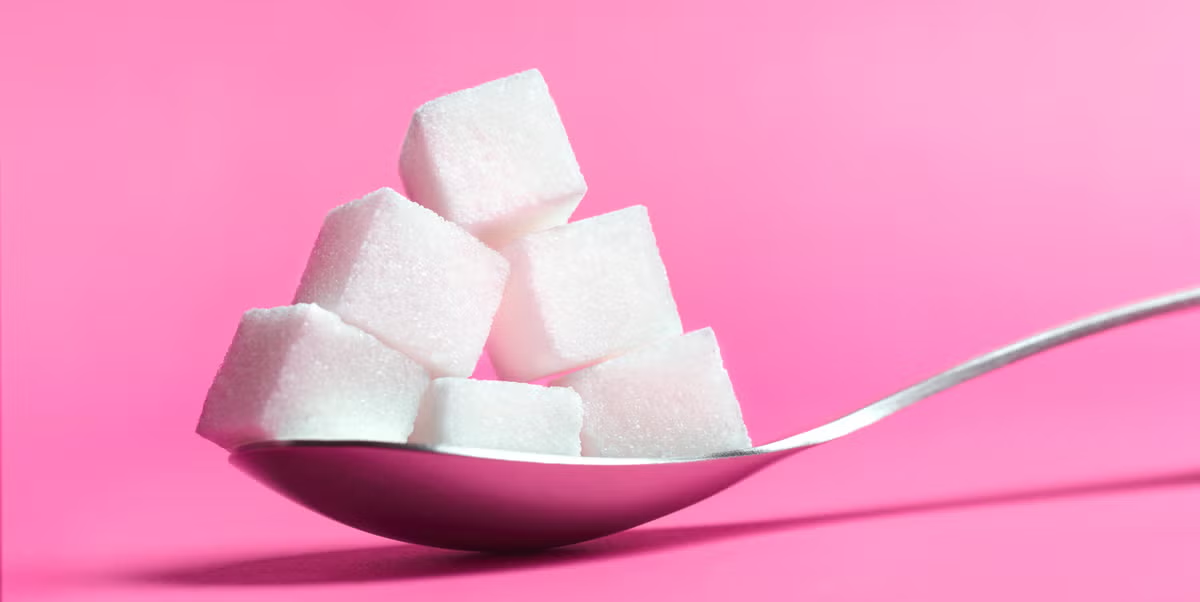
We like to think we’ve become terribly sensible about sugar. We’ve stopped putting two teaspoons in our tea. We’ve swapped the biscuits for something that comes in brown packaging and has the word natural written on it. We buy yoghurt that looks as though it was designed by a Scandinavian architect and congratulate ourselves on our restraint.
And yet, somehow, we’re still eating sugar as though it were a national emergency.
The trouble is that sugar has become rather good at hiding.
It no longer needs to arrive wearing a party hat and announcing itself as a chocolate bar. It is tucked into breakfast cereals, bread, sauces, soups, salad dressings, flavoured yoghurts, protein bars and an astonishing number of things that appear, at first glance, to be food for people who have their lives under control.
The food industry has discovered that sweetness sells. More importantly, sugar makes highly processed food difficult to stop eating. It gives cheap ingredients a certain glamour. A little sugar can turn something bland into something irresistible; a little more can turn irresistible into where did the packet go?
And then there are the disguises.
Sugar doesn’t always appear on the label as sugar. There’s glucose, fructose, sucrose, maltose, dextrose, syrup, honey, molasses and fruit concentrates. They sound different, but your body is not particularly impressed by the linguistic ingenuity of the marketing department.
Then comes the great health-food deception.
Honey is natural. Maple syrup is natural. Coconut sugar is natural. Date syrup is natural. Fine. Natural doesn’t automatically mean nutritionally harmless.
Arsenic. is natural. So is a scorpion’s sting. I know, I’ve had one.
These sweeteners may differ in flavour and processing, but they still contribute free sugars to the diet. The word natural is not a health certificate.
The really sneaky culprit, however, may be the liquid sugar we barely notice.
Soft drinks are obvious, but fruit juices and fashionable smoothies can deliver considerable amounts of sugar without providing the chewing, fibre and satiety that come with eating whole fruit. You can drink the equivalent of several pieces of fruit in minutes and still wonder why you’re hungry half an hour later.
This is where the modern diet becomes slightly absurd. We have spent decades being told to eat less fat, only to replace much of it with products engineered to be low-fat, highly palatable and often generously sweetened. We have transformed food into mathematics: low fat, high protein, zero added sugar, natural ingredients, fortified with vitamins, approved by someone wearing a white coat.
Perhaps we should return to something much simpler or that still resembles the thing it came from.
Read the label. Not the claims on the packaging, the advertising. Read the small print on the back, which is where the confession is often hidden.
And don’t imagine that cutting sugar from your coffee means you’ve escaped.
Sugar isn’t merely sitting in the sugar bowl anymore.
It has moved into the cupboard, the fridge, the takeaway menu, and, rather cleverly, into our definition of what we think is healthy.
The sweet stuff has become invisible.
Which is precisely why it works.
Watch this short clip.(1:39)…….you’ll be surprised
In 1981, I read William Dufty’s “Sugar Blues”. By the end of the second chapter, I decided “No more spoonfuls in my tea or coffee and certainly none on my morning cereal”.
Although the move had some benefits, little did I know how much sugar remained in my diet.

As the saying goes, “Everything is hidden in plain sight”. All we need to do is look, or in the case of sugar-filled products, buy a small magnifying glass and read those packaging labels.
Leave a Reply