


Arresting Mental Decline
The real villain of the piece is dementia. That slow, stalking thief of reason.
It’s not poetic, it’s not noble, and it certainly isn’t fair. Right now, 55 million people across the planet are living with it, or rather, slowly losing the ability to live at all.
And the number’s climbing by ten million a year, which is more than the population of some countries that host the Olympics.
In Australia, Alzheimer’s is now the leading killer of women. In men, it’s third, just behind the usual suspects. Over in the USA – the land of burgers and broken healthcare, it’s elbowed its way up to the bronze medal podium of death causes. In Europe and Canada it’s well within the top 10 causes of disease death.
And if you’re between 30 and 65 thinking you’re safely out of reach, think again. Four million people in that so-called “sweet spot” are already battling Young Onset Dementia. But here’s the real gut-punch: dementia doesn’t kick down the door with a grand entrance.
It slips quietly through the side gate. Years early. Sometimes decades. It sets the table, uncorks the bottle, and makes itself very much at home — ready to slowly drain the life out of the room.
And modern medicine? Frankly, it’s brought a bottle of water to a house fire. Every “breakthrough” drug gets its day in the press before being quietly shuffled off, after begrudgingly admitting to side effects like “brain bleeding” and “cognitive nothingness”, as if they didn’t know during the testing phase.
If you want to see the heartbreak up close, ask someone with dementia to count backwards from ten to one or December to January. Watch as the numbers or months fall off the map, as time folds in on itself like bad origami.
There’s no shortage of gadgets promising to stave off dementia, but most offer little more than a fleeting sense of relaxation. They’re corporate toys at best that blink, buzz, and vaguely vibrate.
None of them hold a candle to the heavy-hitting solutions offered by Vielight devices, serious technology for a serious problem.
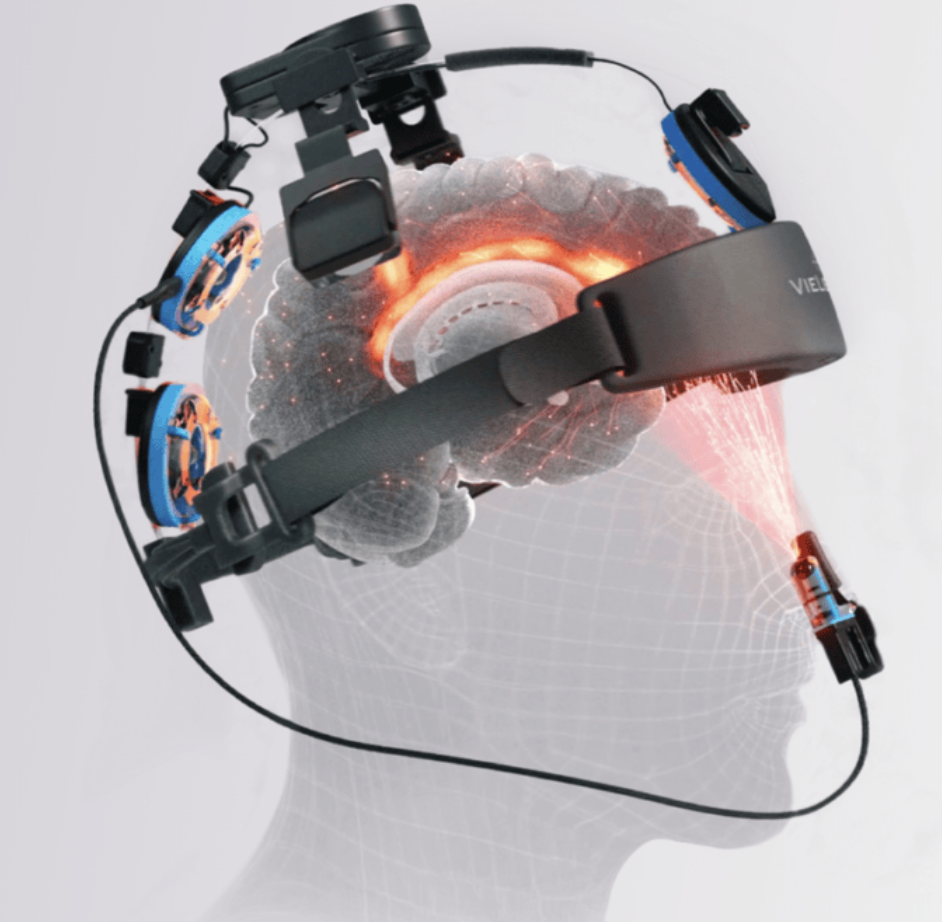
Enter stage left: Vielight, the heavy artillery of neurotechnology. It uses near-infrared photobiomodulation, which is light therapy that nudges your cells back toward life. Like sun on a frostbitten limb.
A study in Frontiers in Medical Technology, helmed by some very clever Canadians, found that this therapy affects tubulin, microtubules, and the other microscopic Lego bricks of your mind.
It appears to restructure the very water between your brain cells. It’s good science. Real, dusty, peer-reviewed, beaker-clinking science.
And it’s not just theory. These devices, especially the Vielight Neuro Duo, a sort of head-mounted halo of salvation, are giving people with dementia, Parkinson’s, and traumatic brain injuries something they haven’t had in far too long: hope. Less trembling. More memory. Moments of peace. The quiet clarity of a room once thought lost.
They’ve even helped people reach transcendental states, the kind you can’t get from guided meditation apps voiced by minor celebrities.
So, if you’re thinking of investing in something truly radical, something that doesn’t come with a slick app and a 2-week battery life, you might want to consider Vielight.
Use the code RFLBIO and save yourself 10%. Because yes, your brain is absolutely worth it. And if no one else is going to save it, maybe a bit of clever light and a Canadian lab can,


Reviews
There are no reviews yet.