
The body is an extraordinary little recycling plant. Sweat, breath, hair, tears, fingernails, saliva, blood, urine, faeces, breast milk, semen, earwax, sebum (from skin glands) – it is forever providing evidence about the state of your internal health.
We routinely analyse these things because they contain information about what is going on inside.
So why not the voice?
The voice is, after all, another thing the body produces. It carries breath, vibration, rhythm, pitch and changes in the mechanics of the body. We already know that illness can alter the way someone sounds.
Perhaps the voice deserves the same forensic scrutiny as everything else we routinely flush, spit, cut, or cough out.
If the body is constantly telling us what is wrong, it seems rather daft to ignore one of its loudest clues.
And where does my voice come from?’ I once asked husband-and-wife couple over supper at a restaurant in Los Angeles. If anyone knew, they would, as they’d carried out extensive research on the subject.
“Simple” came the reply. “Your voice is passed down from your grandparents, not your parents”
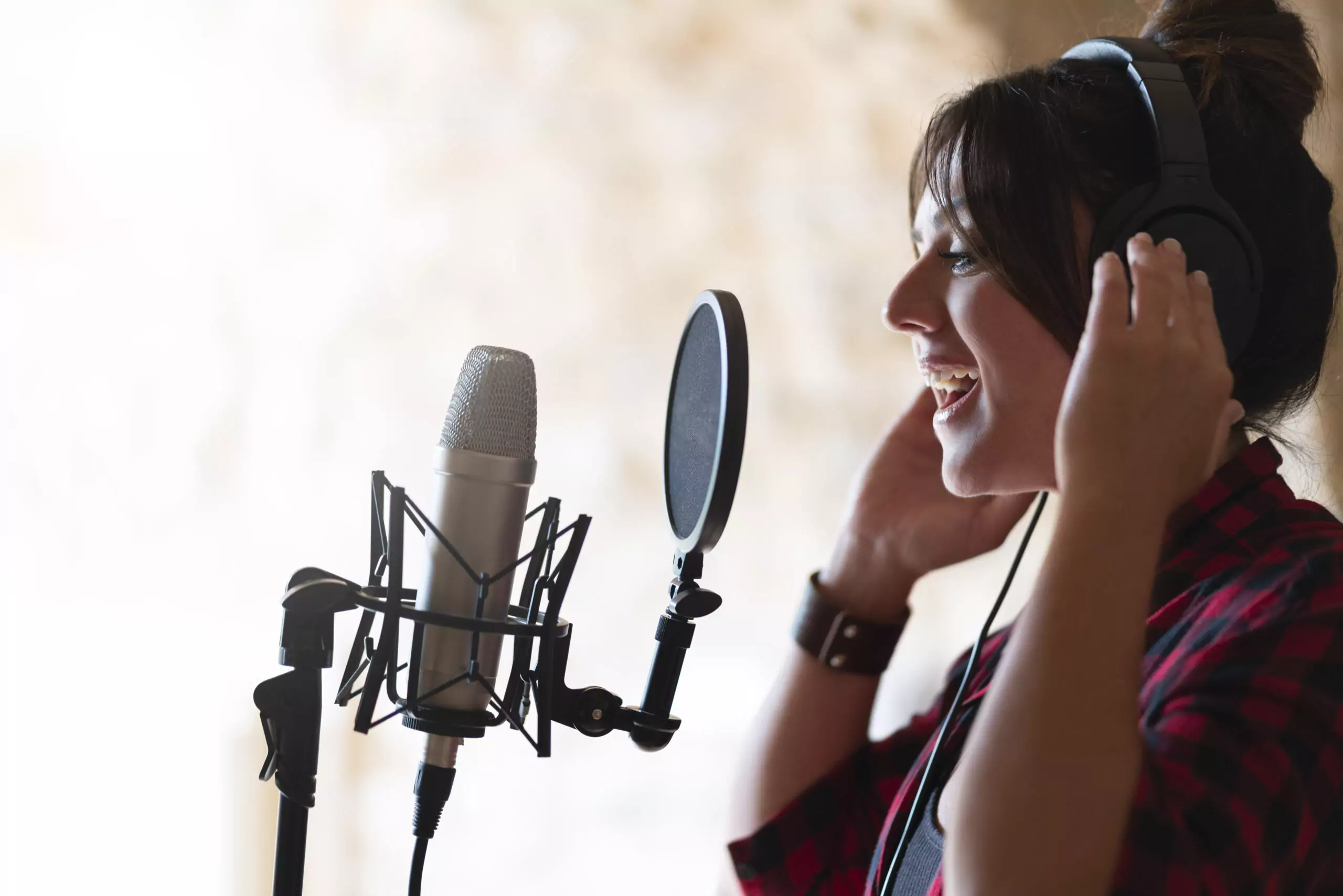
We think of the voice as something we use to communicate. Words, arguments, gossip, lies, the occasional declaration of undying love. Air leaves the lungs, the vocal cords vibrate, the mouth gets involved and out comes you.
But what if the voice is doing more than talking?
What if, hidden beneath the words, is a biological signature of the person making them?
It sounds faintly ridiculous. It also sounds rather interesting.
That is the proposition behind Human BioAcoustics, developed by Sharry Edwards (Sound Health Institute) and described in Breaking the Sound Barrier of Disease, written together with Larry Trivieri Jr. (Integrative Medicine Author).
Edwards argues that the human voice may contain information about the body’s structural and biochemical condition, information that can be extracted through computerised frequency analysis.
The idea is deliciously simple.
Talk to a computer for about thirty seconds. Analyse the frequencies which in turn provide a Vocal Profile. From this, Edwards claims, it may be possible to identify physiological imbalances and generate individualised sound frequencies intended to address them.
No blood. No needles. No fasting.
Just your voice.
And suddenly the thing you’ve spent your entire life using to ask for another cup of coffee becomes a possible biological instrument.
Sound and the body
We shouldn’t dismiss the idea simply because it sounds unconventional.
The body is not a chemically inert bag of organs. It is an extraordinary electrical, mechanical and biochemical system. Cells communicate. Muscles contract. Neurons fire. Molecules move. Tissues vibrate.
And we already know that illness can change the voice.
Neurological disease can alter speech. Respiratory problems change vocal quality. Hormones affect pitch. Emotion, fatigue and stress are audible.
So the interesting question isn’t whether the body can influence the voice, as obviously it can.
The question is whether the voice contains enough information about the body to work backwards, from sound to physiology.
That’s a much bigger claim.
This is where scepticism earns its keep
A Townsend Letter review by Rudy Shur describes claims that Vocal Profiling can reveal nutritional deficiencies, toxic exposures, pathogens and other physiological disturbances, alongside accounts of people who reportedly benefited from personalised sound programmes.
If true, that would be remarkable.
But if true is doing a lot of work.
A graph produced by a computer is not automatically evidence. A compelling anecdote is not a clinical trial. And the fact that something involves frequencies does not magically make it scientific.
The correct response isn’t to dismiss the idea because it comes from outside conventional medicine.
Nor is it to swallow it whole because we desperately want it to be true.
It is to ask the most unfashionable question in modern health:
Does it actually work?
Show me the methodology.
Show me the controls.
Show me the independent replication.
Show me the failures as well as the successes.
If a thirty-second recording of someone’s voice really can reveal meaningful information about their internal physiology, medicine should be all ears.
We may have been looking at the wrong end of the microphone
Perhaps the most interesting proposition isn’t whether every claim made for Human BioAcoustics survives scrutiny.
It is the larger possibility that we’ve become rather obsessed with chemistry.
We describe ourselves as genes, proteins, hormones, neurotransmitters and biochemical pathways.
We are all of those things.
But we are also electrical, mechanical and vibrational organisms.
The body is chemistry.
It is also physics.
And the voice sits precisely where those worlds meet.
It is produced by the body, shaped by the nervous system, powered by breath and expressed as vibration.
Perhaps it carries information.
Perhaps some of that information can be decoded.
Perhaps some of it can’t.
But if the voice really does contain a biological signature, every time you speak you may be doing something rather more interesting than making noise.
You may be broadcasting yourself.
The intriguing question is whether we’ve finally learned how to listen.
I’ve followed Sharry Edwards’s work for the past three years. Some accuse her of being too scientific; others too esoteric. An acknowledged pioneer in the emerging field of Vocal Profiling using BioAcoustic Biology, I see her as a bridge between both fields of inquiry.

Leave a Reply