
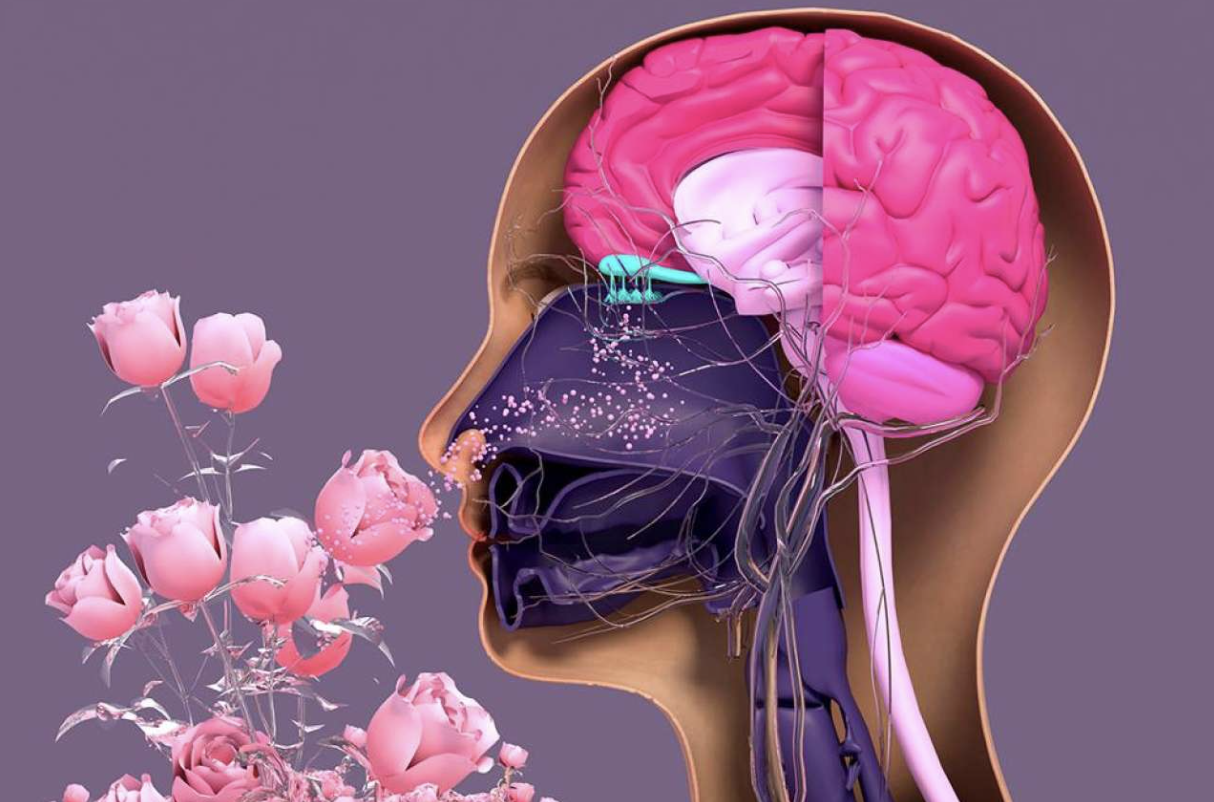
The sense of smell is one of the great unexplored mysteries.
As we re-connect with our intuition it seems that the time is right for this information to be shared.
When we talk about our senses, we usually focus on sight and sound. But there’s one sense that often gets overlooked – smell.
And the more I learn about it, the more I’m amazed by how crucial it is and how little we understand this primary sense.
I find it fascinating that our sense of smell is already well-developed right from our birth. Imagine entering the world with a super-powered nose!
We use our noses constantly and can detect up to a trillion different scents. It’s so powerful that if your eyes were closed, you could almost “see” everything around you just by smelling it.
Think about this: when something doesn’t make sense, we say, “It doesn’t pass the sniff test”. That’s because we instinctively trust our noses. Interestingly, studies show that elders who lose their sense of smell have a 35% higher chance of dying within five years.
That’s worth noting!
Despite these amazing abilities, we don’t often talk about our sense of smell unless it’s related to sinuses, colds, or bad breath. Why is that?

Maybe it’s because we’re so focused on what we see. After all, 80% of our perception of reality comes from sight. No wonder darkness can be so disorienting.
Here’s the kicker: the nerves for smell are the only ones that go directly to the brain without any screening. One reason essential oils are so useful. They head straight into the hippocampus, our memory centre. This means our noses can give us profound insights into ourselves.
Let’s connect this with our intuition
As we begin to reconnect with our inner selves, it feels like the right time to spread and share this knowledge about our sense of smell.
Our culture is becoming more virtual, with people spending hours staring at screens instead of interacting with nature or each other. This shift isn’t necessarily positive. Studies show that people with access to nature, even if it’s just from a balcony, are happier than those without it.
This connection to nature is vital
Here’s another interesting thought: smells can be like a visual map of our personal state. Imagine having a custom fragrance based on where you grew up.
In Hawaii, it might be sea salt or tropical fruit. For me, growing up near the River Clyde in Scotland, it’s the smell of seaweed on beach rocks at low tide.
Louis XIV of France had a real thing for fragrances. Every room in Versailles was filled with freshly cut flowers. The furniture and fountains were sprayed with perfumes, and visitors were given a good dousing of scents before they even stepped inside. Maybe it was because Louis’s personal hygiene was lacking or maybe he just loved playing with different scents.
Either way, Louis knew that smell was a big deal.
We already associate certain emotions with specific scents. The smell of fresh bread brings thoughts of warmth and comfort, while the scent of gasoline might remind us of road trips and independence.
Want to sell your house? Smell has a strong association with memory and can be highly emotive, so some freshly baked bread or cake in the kitchen might evoke memories of a happy childhood, while a coconut scent in a reception room, bathroom or bedroom might remind people of being on holiday.
These associations are real and powerful, one reason scent marketing is used in supermarkets to promote sales. Citrus smells convey the image of your produce being fresh and in good condition; in a Dutch convenience store, a melon fragrance was found to cause impulsive buying. Melon was also found to make customers more positive and likely to browse longer in stores.
Coffee in the coffee section; the scent of bread in the bakery. You get the idea.
Department stores: Grapefruit, cinnamon, ginger and orange.
Clothes and fashion shops: Mint and lemon.
Furniture and interior outlets: Tea, orange and lemon.
A few years ago I spoke with a lady in the Philippines whose work was based on creating individual yet distinctive smells for 5 star hotels. Hotels utilise a symphony of fragrance notes to craft their signature scents. These can include: Citrus notes: (lemon and neroli), to convey a sense of freshness and cleanliness. Woody notes: (sandalwood and cedar), offering a warm and inviting foundation.
So, how can we harness the power of our noses to enhance our lives? I believe our sense of smell holds the key to greater happiness, abundance, and fulfilment. It’s certainly time we started paying more attention to it.
A Roadmap To Restoring Your Sense of Smell is available for anyone wanting to understand and improve their olfactory senses.
Smelling To Survive The Amazing World of Our Sense of Smell
Graeme Dinnen
ResourcesForLife.net
Leave a Reply