
Long before anyone had invented cholesterol tests, prescription pads or a waiting-room television showing Homes Under the Hammer, the Chinese were already worrying about something we have somehow managed to make considerably more complicated: how to stay well.
The result was the Huangdi Neijing, usually translated as The Yellow Emperor’s Inner Classic or Treatise on Internal Medicine.
Undoubtedy one of the foundational texts of Traditional Chinese Medicine written more than two thousand years ago, it is presented as a conversation between the legendary Yellow Emperor, Huangdi, and his physician, Qi Bo.
Think of it as an ancient medical consultation, except the doctor doesn’t reach for a prescription pad after seven minutes and tell you to come back if things get worse.
Instead, the Emperor asks a rather inconvenient question.
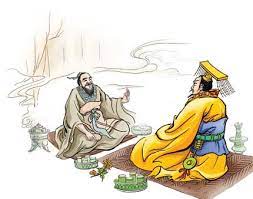
Why, he wants to know, did people in ancient times apparently live long and healthy lives, while people of his own age were becoming prematurely tired and unwell?
Qi Bo’s answer is essentially that people had forgotten how to live.
A fairly brutal diagnosis.
The Neijing is particularly interested in rhythm. Sleep. Food. Movement. The seasons. The weather. Emotions. Work. Rest. The relationship between the individual and the natural world.
The season us Northern Hemisphere dwellers are in – Autumn – brings contraction and gathering in. Winter is the season for conserving energy and retreating. Spring is a time of emergence and expansion. Summer is associated with growth and activity.
It sounds perfectly obvious until you look at modern life.
We sit indoors beneath artificial light, eat strawberries in December, work at midnight, watch TV series until all hours, sleep with a glowing computer beside our heads and then wonder why our bodies appear confused.
The Yellow Emperor might reasonably have suggested we try turning the lights off.
Underlying the Neijing is the idea of yin and yang: complementary forces that are continually changing and interacting. Light and darkness. Activity and rest. Heat and cold. Expansion and contraction.
They are not simply good and bad, as the cartoon version sometimes suggests. They are relationships. Health depends upon maintaining a workable balance between them.
And this is where the treatise becomes particularly interesting.
The ancient physician isn’t simply waiting for disease to arrive before doing something about it. Prevention is central. The skilled physician notices the small disturbances before they become large ones.
In other words, don’t wait for the roof to fall in before investigating the damp patch.
Modern medicine is extraordinarily good at many things, particularly acute disease, surgery, infection and emergency care. But our culture has also become rather comfortable with the idea that health is something that happens to us in a doctor’s surgery.
The Neijing takes a different view.
Health is something you actively participate in.
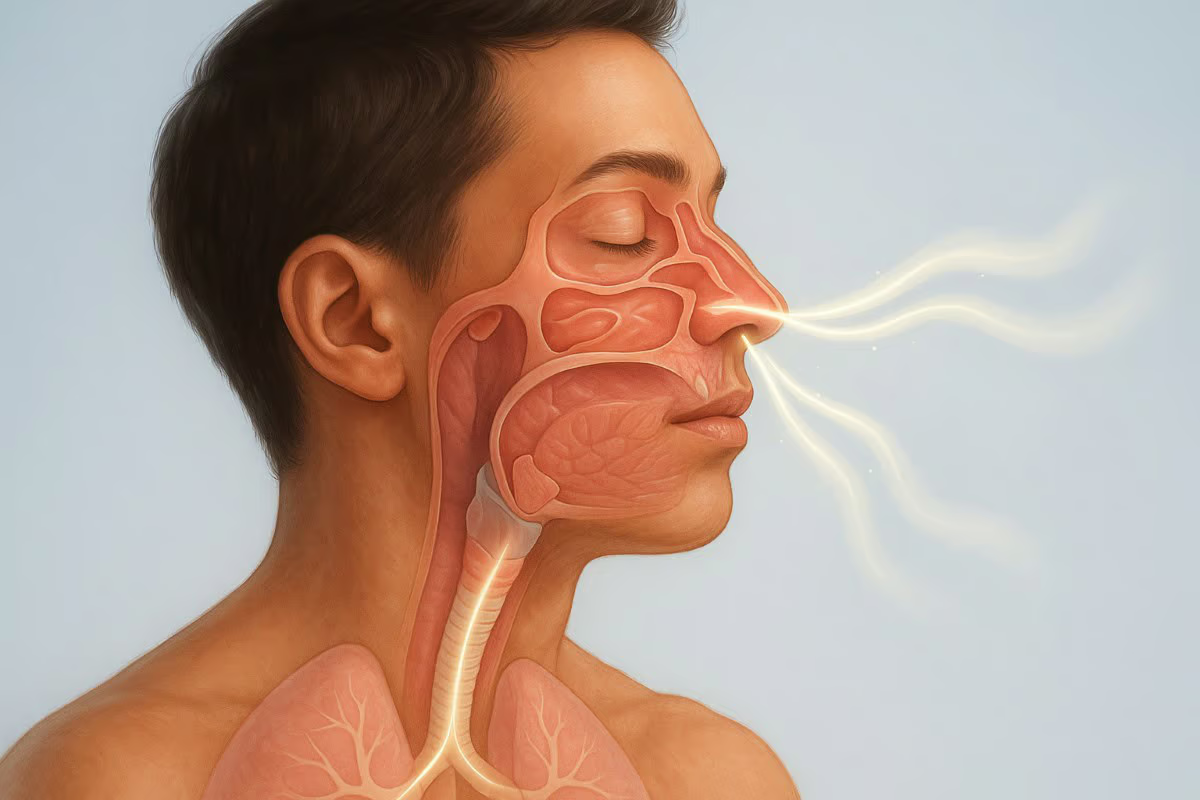
What you eat matters. How you breathe matters. How much you move matters. Whether you sleep matters. Your emotional life matters. Your relationship with the changing environment matters.
The Neijing also deals with diagnosis, acupuncture, bodily functions and the relationships between different organs and systems. Its explanations belong to the intellectual world of ancient Chinese medicine and should not simply be dressed up as modern anatomy.
Some of its physiological concepts do not correspond to contemporary biomedical science.
But that doesn’t make the underlying questions irrelevant.
Quite the opposite.
The remarkable thing about the Neijing isn’t that it somehow contained modern medicine two thousand years early. It didn’t.
Its value is that it asked a question we have become rather good at avoiding:
What if staying healthy is partly about how you live, rather than simply what you take when something goes wrong?
That is a surprisingly radical thought for a book written more than two millennia ago.
The Yellow Emperor wasn’t living in a world of processed food, smartphones and fluorescent offices. He didn’t have a sedentary job, a Deliveroo account or a sleep tracker telling him he’d had a disappointing night.
But he understood something we forget.
The body lives in the real world.
It responds to light and darkness, activity and inactivity, food and fasting, warmth and cold, stress and rest. It changes with the seasons. It ages. It adapts.
And perhaps the most enduring lesson of the Huangdi Neijing is therefore not a particular herb, acupuncture point or ancient prescription.
It is the idea that health begins long before illness.
The Yellow Emperor was asking how to live well more than two thousand years ago.
We’re still waiting for the answer.
Or maybe he’s already given us one.
Long before anyone asked, “And what seems to be the problem?”, the ancient Chinese were already discussing how to stay healthy.
The result was the Huangdi Neijing, or The Yellow Emperor’s Inner Classic
There’s a moral in there for us.
Graeme Dinnen
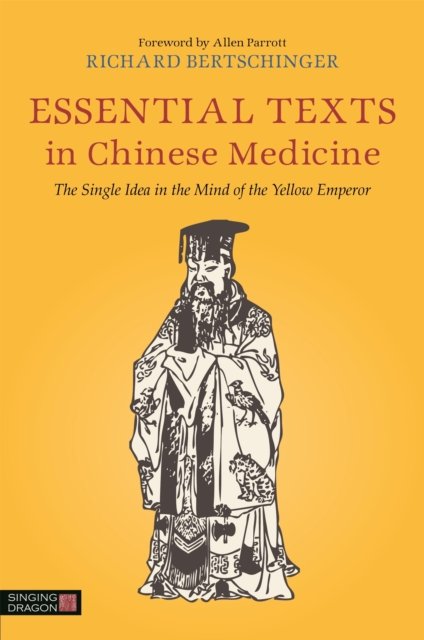
Essential Texts in Chinese Medicine: The Single Idea in the Mind of the Yellow Emperor
is available from https://uk.bookshop.org/a/12630/9781848191624
Author Richard Bertschinger is a renowned authority on this subject
Leave a Reply