
Sleep, that sweetly elusive friend that’s far more than mere shut-eye, it’s the unassuming linchpin of our biology, quietly keeping the machinery of homeostasis humming along.
Yet, the irony, for all its quiet heroism, sleep disturbances are like gremlins in the works, sowing the seeds of all sorts of bodily betrayals. Ignore them long enough, and they’ll become unwelcome companions on your journey to cardiovascular disease, metabolic dysfunction, and, yes, even the all-too-foreboding gates of mortality.
A chronic lack of sleep? It’s not just a matter of yawns and bags under the eyes. It gnaws at the mind itself, undercutting memory, taking a sledgehammer to attention spans, and generally laying waste to the cognitive house we so carefully try to keep.
And, as if that weren’t enough, there’s a haunting link between the cumulative sleep debt and the onset of Alzheimer’s, that thief of memories and self.
For the young, sleep disorders come with their own special cocktail of repercussions. Mental health, fragile and impressionable as it is, takes a nosedive.
Anxiety, depression, and slipping academic performance are all marked signatures of a mind deprived of rest. Worldwide, where sleep disturbances have crept up steadily, afflicting a quarter of the population
In the course of two decades, we’ve managed to turn a national bedtime story into a full-blown, bleary-eyed epidemic with profound social, economic, and health costs.
Sleep, it seems, is no mere indulgence. It’s the master key to keeping it all – mind, body, and nation – from unravelling.
Baby Monitors

Fantastic work by building biologist Nicole Bijlsma and team! Their study “Does Radiofrequency Radiation Impact Sleep?” was a massive undertaking and looked at the radiation exposure from BABY MONITORS and the sleep impact on consenting adults who took part:
“This study is the first double-blind, randomised, placebo-controlled study to report the impact of exposure to a multi-night radiofrequency device (baby monitor) on clinically relevant sleep outcomes under real-world conditions.
Our preliminary findings demonstrate that radiofrequency devices induce statistically significant changes in the EEG during Non-Rapid Eye Movement (NREM) sleep.”
The conclusion tiptoes delicately around the elephant in the nursery: baby monitors and their potential toll on the youngest among us. Deprive a baby of that precious, enigmatic NREM sleep in those formative years, and who really knows what developmental dice we’re rolling?
What consequences might lie ahead? It’s the sort of question science will dutifully set out to answer, but not until these bleary-eyed infants have grown up to tell the tale.
And so, we wait for the verdict that only decades of development and data can deliver.
The ORIGINAL RESEARCH article: Does radiofrequency radiation impact sleep? A double-blind, randomised, placebo-controlled, crossover pilot study
Front. Public Health, 29 October 2024
Sec. Radiation and Health
This article is part of the Research Topic: Individual Sensitivity to Wireless Radiation
Volume 12 – 2024 | https://doi.org/10.3389/fpubh.2024.1481537
Many thanks to my friend and former nurse Naomi Cook for passing on the information
Graeme Dinnen
ResourcesForLife.net
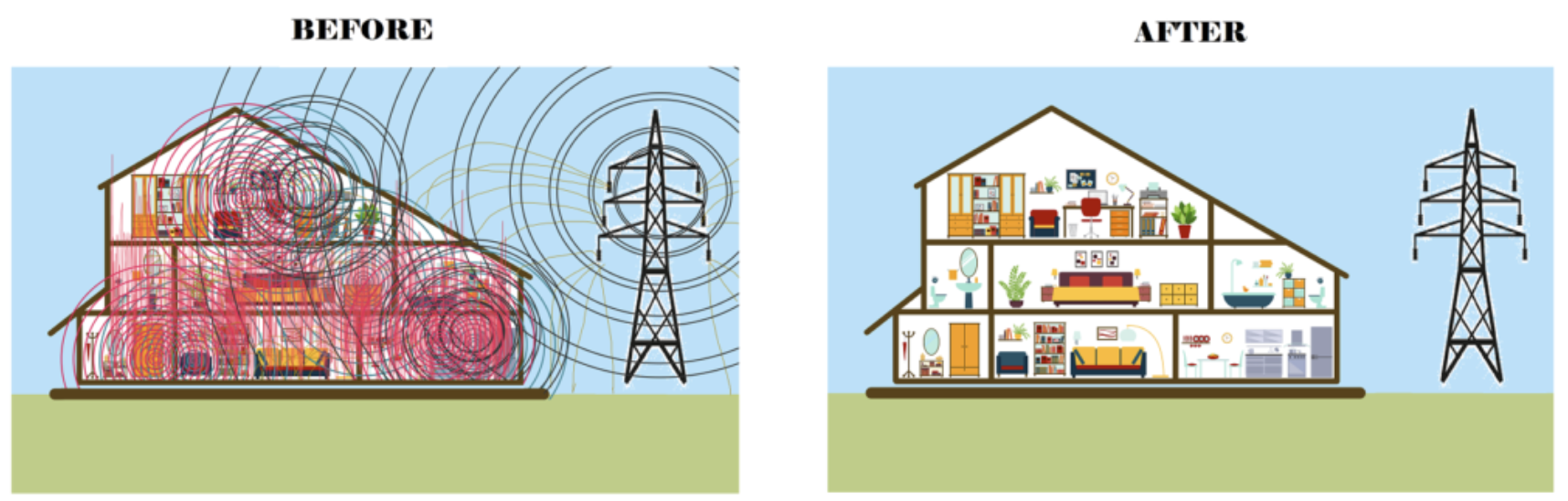
PS In 2019 I trained with Geovital Academy in GeoBiology and Radiation Protection and Environmental Medicine. Given that the purchase of a home is for many people, the largest payment they will ever make, there’s an increasing need for an Electromagnetic Field (EMF) survey to be carried out before any offer is made. This involves checking the invisible yet detrimental health impacts from cell phone masts, power lines in the street, wiring within the property itself and any electrical substations.
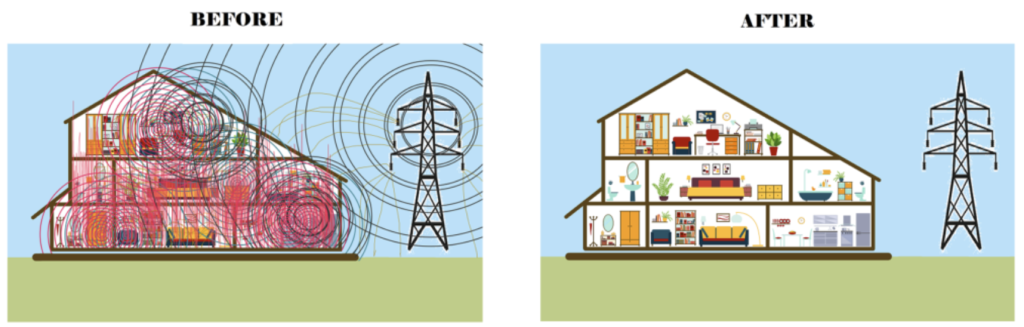
Homes can be plagued by the relentless exposure to electric fields (the presence of electricity) and magnetic fields (the flow of electricity).
Baby monitors are only a part of the ever-growing “Beware” list.
I wrote this article in May 2024. Intentional Ignorance: Damaging Unborn Generations
In my opinion it is essential reading for anyone with children – especially the links to Barry Trower’s short yet powerful videos
Leave a Reply