
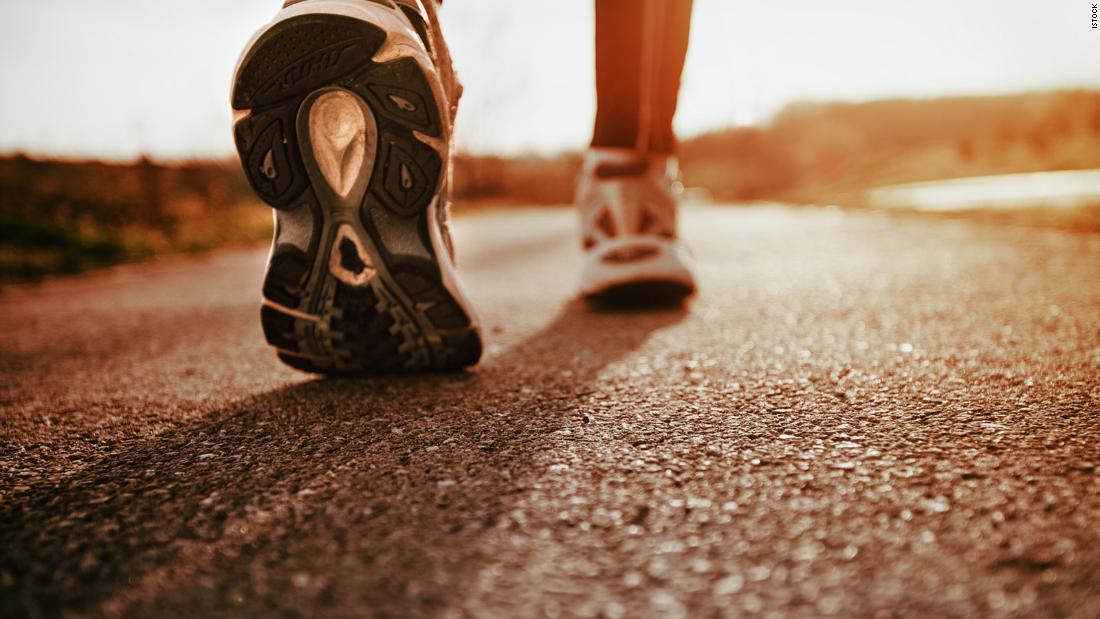
The Glorious Futility of Walking Nowhere in Particular
(Written in response to readers’ feedback from the article ‘Footsteps in Nature’ on 8 January 2025)
It is the scourge of modernity that we are constantly looking for a number, a digit, an arbitrary figure on which to pin our hopes for health and longevity.
Ten thousand, they say. Ten thousand steps a day. As if our feet are metronomes of mortality, ticking off moments of vitality one trudging stride at a time.
It’s a delightfully round number, plucked from the ether, peddled by fitness evangelists and wearable wrist prophets. A goal for the goal-less. A religion for the irreligious.
But before you lace up your trainers and hit the pavement in pursuit of this statistical nirvana, let’s interrogate the absurdity of it all.
Where did this ten-thousand-step doctrine come from? Not, as you might hope, from a secret cabal of podiatrists or kinesiologists poring over decades of rigorous study.
No. Like many other mantras, it was a marketing ploy. Yes, a confection, a bauble dreamed up by a Japanese pedometer company in the 1960s to shift units. The phrase for 10,000 steps in Japanese, manpo-kei, translates roughly as “10,000-step metre,” and it has the sort of satisfying symmetry that appeals to the mind.
We do love a round number, don’t we? It feels definitive, authoritative. A satisfying endpoint. Never mind that the science is shaky, that some studies suggest as few as 4,000 steps a day might stave off decrepitude for the sedentary among us.
And yet, I suppose, there is something pleasingly poetic about the step. The simple act of putting one foot in front of the other, of pacing out our existence in increments.
Walking is a peculiarly democratic form of locomotion, requiring no special equipment or instruction. It’s contemplative, meditative even. The great minds of history have been inveterate walkers – Nietzsche, Woolf, Wordsworth, Aristotle, Charles Dickens, Ernest Hemingway. Strolling through fields and forests, cities and cemeteries, they found their muses in the rhythm of their own footfall.
But I doubt any of them were counting.
The fixation on counting, on tracking, on quantifying every blink and breath, is a symptom of our age, this Fitbit dystopia we’ve wandered into. It reduces walking – a beautiful, purposeless act – to an exercise in data entry.
There is, you must admit, something a bit tragic about the sight of grown adults obsessively monitoring their wristbands, checking their step counts like stockbrokers checking the market.
Are you healthier at 10,001 steps than at 9,999? Is the extra lap around the block truly the difference between vitality and infirmity? It is the tyranny of the number, of the quantifiable, that robs walking of its joy.
So how many steps should you take? The answer is as many as it takes to feel the grass underfoot, to explore the labyrinthine streets of a city, to outpace a storm or chase a sunset.
Walk until you find the quiet hum of your own mind. Walk to nowhere and back again. Forget the number. Forget the watch. Forget the guilt. The beauty of walking lies not in the counting but in the movement, the endless, human act of going.
We’re told that our hunter-gatherer ancestors walked an average of 18,000 steps a day. Even the women who were doing more gathering than hunting were walking around 11,000 steps – which seems a country mile more than our average rate today of just 5,000 steps.
How do I know this? Well, I could tell you it was painstakingly unearthed by earnest researchers in white coats, poring over clipboards and corralling data in sterile laboratories. But the truth? It’s probably the conjuring trick of yet another marketing company. Yes, the same breed of bright-eyed scoundrels who once convinced us that a sugary cereal was part of a balanced breakfast or that a gym membership would miraculously sculpt our lives along with our thighs.
Somewhere, in a boardroom lit by PowerPoint and delusion, a team of grinning creatives likely plucked a factoid from the ether – or, more cynically, invented it wholesale – and sold it to us with the slick sincerity of snake-oil salesmen.
It’s a story we like, one that sounds plausible, taps into a vague guilt, and promises salvation in the form of another product or app. The perfect cocktail of modern persuasion.
So, do I know this for certain? Of course not. But I suspect, as with most things, that it’s less science and more spin, delivered with a wink and a price tag.
This perspective, however, does make sense…..we are genetically disposed to be more active, and the fact we do not has many knock-on consequences, affecting our health, mental wellbeing and even our sleep.
If you like statistics, my friends at What Doctor’s Don’t Tell You suggest that 60% of people suffer from some level of insomnia; even if they are getting some sleep, they wake in the night or find it difficult getting to sleep.
80% of us sit at a desk to do our work, say researchers from the University of South Florida. In turn, this increases the risk of insomnia by around 37% and raises the need for the weekend catchup sleep by up to 66%.
The researchers analysed lifestyle data from 1,000 office workers, and categorised them either as good, catchup or insomnia-like sleepers. Most fell into the insomnia-like category, which included having problems falling asleep, having interrupted sleep and suffering from frequent daytime tiredness. We don’t need to start foraging again – a trip to the supermarket is still OK – but we do need to increase our level of activity, even if we just increase the number of steps we walk each day.
Any exercise or activity that raises the heart rate – such as a brisk walk, dancing or climbing a few flights of stairs – can have a positive effect on cognitive abilities and sleep quality.
Researchers from University College London (UCL) say that even moderate exercise can help us sleep deeply and soundly – and it has a positive knock-on effect into the next day. The UCL researchers tested a group of 76 people, aged between 50 and 83, after they had done some moderate to vigorous physical activity, and discovered they still had greater mental sharpness the following day.
If you’re too lazy to go for a walk, get a dog. Not for the companionship, the wagging tail or the wet-nosed affection – no, none of that sentimental nonsense. Get a dog because they’ll shame you into moving. Dogs are nature’s personal trainers, wrapped in fur and fuelled by an unwavering commitment to dragging you out of your stupor.
It doesn’t matter if it’s raining, snowing, or the kind of day where even the clouds can’t be bothered. That dog will look at you with those imploring, judgmental eyes, and suddenly your excuses seem as feeble as your fitness.

You’ll walk because you have to, because no one wants to be the monster who disappoints a Labrador. And, before you know it, you’ll find yourself outside, grudgingly putting one foot in front of the other, rediscovering the radical concept of fresh air.
So, yes, get a dog. Not because you need one, but because they’ll make you feel too guilty not to move. And, occasionally, they’ll even let you pretend it was your idea.
Graeme Dinnen
ResourcesForLife.net
.
Leave a Reply