
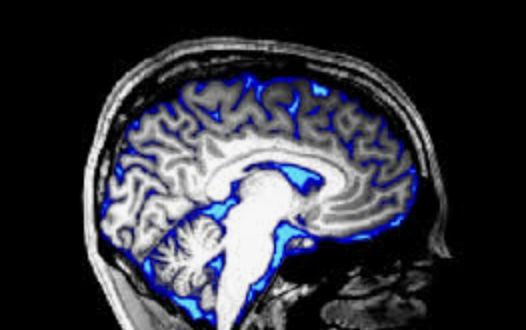
Your Liquid Life Support
Let’s begin, as all truly appalling nights do, with a leak.
Not the scandalous kind whispered through clenched teeth at dinner parties for spies, but an invisible, internal seepage of that most arcane and unfashionable of bodily humours: cerebrospinal fluid.
CSF is the clear, glistening nectar sloshing around your brain and spinal cord like the last dregs of a gin martini.
CSF does not advertise itself. It doesn’t clot like blood, doesn’t churn like bile, doesn’t threaten the way pus does. It is quiet, an introvert in the bodily hierarchy, the Jeeves to your cerebral Wooster, there, mostly, to keep things running without asking for applause.
This shimmering liquid, around 150 millilitres of it, give or take your hydration and hubris, is produced in the ventricles of the brain, secreted by something gloriously named the choroid plexus.
If that sounds like an early Bowie album, good. It should. The choroid plexus is an obscure club in the ventricles where things happen that no one entirely understands, and it’s best not to ask too many questions.
Now, cerebrospinal fluid’s job, like that of most great servants, is both menial and vital. It cushions. It bathes. It removes waste, a sort of cerebral housekeeper who takes out the bin while you dream about your ex or try to remember the capital of Azerbaijan. It keeps the brain buoyant, literally.
Without it, your grey matter would collapse under its own melancholy.
But when CSF goes wrong, oh, how it lets you know. A leak, and you’ll be brought low by a headache that no amount of coffee, codeine, or Catholic guilt can touch. Too much of it, and your brain is squeezed like toothpaste in a Tube strike.
This is hydrocephalus, and it turns people into balloons, both figuratively and occasionally literally.
There’s a certain gothic horror to diseases of the cerebrospinal fluid. They don’t show up with a rash or a limp. They come with dizziness, double vision, nausea, and a sense that the universe has subtly, but definitively, tilted.
It’s the sort of thing you’d expect in a Victorian asylum, perhaps described in a leather-bound volume with the phrase vapours somewhere on page one.
But modern medicine, which despite its best efforts still occasionally gets it right, has ways to prod and puncture the system. Spinal taps, shunts, intrathecal injections, all phrases that sound like rejected Bond villains but are instead the means by which your watery secret is examined and tamed.
Cerebrospinal fluid is not glamorous. It won’t win any awards. But without it, your brain would be a damp, sulking mass, collapsing into the spinal column like a flan in a cupboard.
And so, next time you feel light-headed, spare a thought for the clear, unsung hero floating gently in the hollows of your skull. Because sometimes, the most vital things are the ones we never see — like love, or tax avoidance, or indeed, cerebrospinal fluid.
Yes, cerebrospinal fluid (CSF) health issues are often given some interesting misdiagnoses, especially in the early stages. This is primarily due to the overlapping symptoms with more common conditions and the rarity or complexity of certain CSF disorders. Here are a few common scenarios:
1. CSF Leak (Spontaneous or Traumatic)
- Often misdiagnosed as: Migraine, tension headache, sinus issues, chronic fatigue.
- Why: Low-pressure headaches from CSF leaks can resemble migraines but are posture-dependent (worse when upright).
- Typical delay in diagnosis: Months or even years.
2. Normal Pressure Hydrocephalus (NPH)
- Often misdiagnosed as: Parkinson’s disease, Alzheimer’s disease, or general aging.
- Classic triad: Gait disturbance, urinary incontinence, cognitive decline.
- Why: Symptoms are gradual and resemble other neurological conditions.
3. Idiopathic Intracranial Hypertension (IIH)
- Often misdiagnosed as: Migraine, depression, anxiety, or even psychosomatic complaints.
- Symptoms: Vision changes, headaches, ringing in ears, nausea.
- Common in: Young overweight women, but can affect others too.
4. Chiari Malformation or Syringomyelia
- Often misdiagnosed as: Fibromyalgia, multiple sclerosis, or chronic pain syndromes.
- Why: Chronic pain, dizziness, and neurological symptoms mimic other conditions.
Why Misdiagnosis Happens:
- CSF disorders are not routinely tested for unless specifically suspected.
- Some require special imaging (e.g., MRI with contrast, cisternography).
- Lack of awareness among general practitioners and even some specialists.
Parasites in the spinal fluid can cause severe neurological damage by triggering inflammation and disrupting normal brain and spinal cord function.
One common example is Neurocysticercosis, caused by the pork tapeworm Taenia solium, which can lead to seizures, headaches, and hydrocephalus. Parasitic invasion of the cerebrospinal fluid (CSF) can increase intracranial pressure, damage nerve tissue, and impair motor and cognitive function. Infections like Toxoplasma gondii in immunocompromised individuals may result in encephalitis.
Delayed diagnosis or treatment may lead to permanent disability or death, highlighting the importance of early detection, imaging, and anti-parasitic therapy in managing such infections effectively.
Taenia solium (Neurocysticercosis)
- Transmission: Ingesting eggs via contaminated food or water.
- Effect: Cysts form in the brain and spinal cord, leading to seizures, hydrocephalus, meningitis, or paralysis.
- Common in: Latin America, sub-Saharan Africa, and Asia.
Toxoplasma gondii
- Transmission: Undercooked meat, cat feces, or congenital infection.
- Effect: Causes toxoplasmic encephalitis, particularly in immunocompromised people (e.g., HIV/AIDS patients).
- Symptoms: Confusion, seizures, headache, and motor weakness.
Trypanosoma brucei (African Sleeping Sickness)
- Transmission: Tsetse fly bites.
- Effect: Invades CSF in late stages, causing sleep disturbances, psychiatric symptoms, coma, and death.
- Regions: Sub-Saharan Africa.
Acanthamoeba spp. and Naegleria fowleri
- Transmission: Contaminated water entering the nasal passages.
- Effect: Causes granulomatous amoebic encephalitis or primary amoebic meningoencephalitis (PAM), often fatal.
- Symptoms: Rapid neurological decline, fever, and coma.
Schistosoma mansoni and S. haematobium
- Transmission: Skin contact with infested water.
- Effect: Rarely, eggs reach the spinal cord causing transverse myelitis, paralysis, or bladder dysfunction.
Leave a Reply