
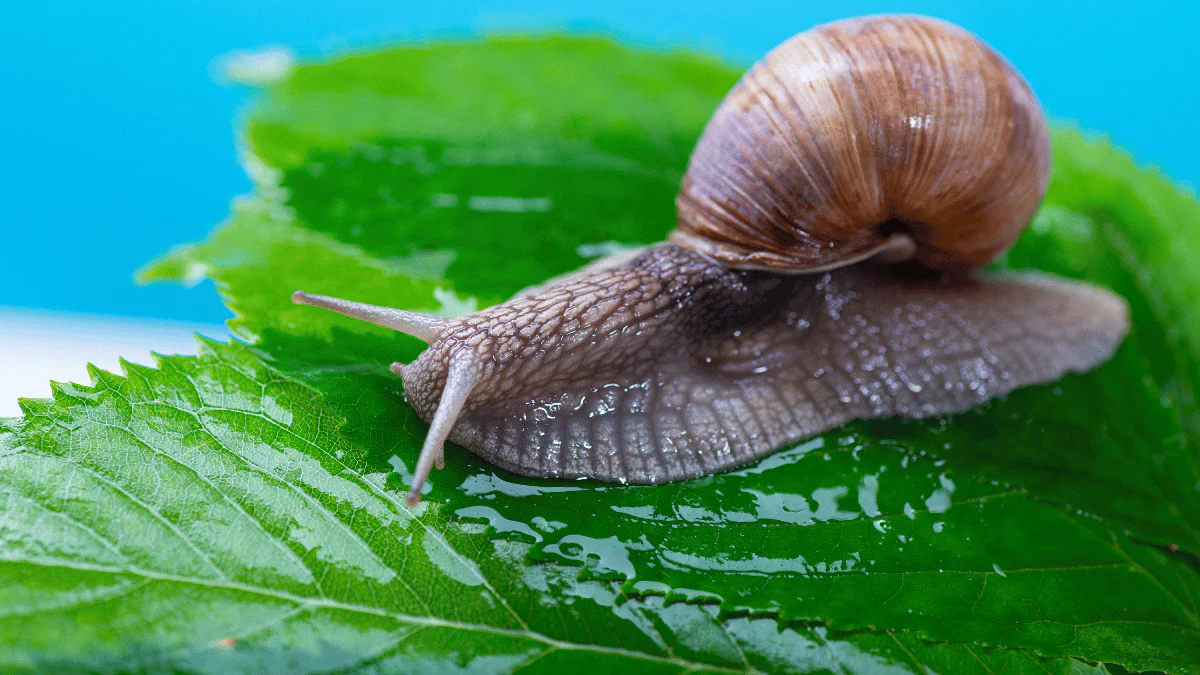
Let’s begin with the snail. A creature whose primary evolutionary adaptation is a refusal to hurry as it glistens with the kind of sullen pride only a gastropod can muster.
Snail slime, that shimmering ectoplasm of the garden’s most languorous mollusc, is not, as one might hope, a defensive goo of myth or magic. No, it is, in the end, rather depressingly biological.
A gloopy cocktail, mostly water, bound together by proteins, carbohydrates, and a sprinkling of minerals, the gastropod’s version of consommé. This gelatinous secretion is known, with no attempt at euphemism, as “mucus”, the same charming substance that decorates your upper lip during flu season.
But don’t be fooled by its humble origins. This viscous spoor is also a kind of scented calling card, a molluscan Tinder trail. Other snails, trolling through the undergrowth in slow motion, can sniff it out in pursuit of amour.
Sadly, what works for romance also works for murder. The same perfumed path is a neon sign for predators, some of them, shockingly, fellow snails. Yes, there are snails that eat snails. Slowly. Deliberately.
Nature, as always, is not so much red in tooth and claw as she is slick with mucus and murder.
The trail of gloop with all the subtlety of a toddler’s sneeze, and once considered the epitome of “eugh” is now a £90 face serum in Selfridges.
Behold snail mucin: Nature’s own haute slime.
A long time and trusted female friend, first encountered the substance not in the lab, nor on the cheeks of a radiant K-beauty influencer, but in a Hong Kong skin boutique where she was offered a vial of this secreted sanctity with the solemnity usually reserved for coronation oil.
The assistant, a sylph in a pastel smock, whispered of its regenerative powers, its peptide plenitude, its collagenic dreams. Her skin gleamed with such dewiness she half expected moss to grow on her temples.
She was sold, or rather, seduced.
But let us rewind. Snail mucin, or “snail secretion filtrate,” is collected from live snails gently encouraged to glide over glass plates like reluctant figure skaters.

The goo they leave behind is rich in glycoproteins, hyaluronic acid, and a vague, persistent sense of unease. This is then bottled by the litre, triple-distilled like posh vodka, and sold to people who use the word “dermaplaning” unironically.
There is something magnificently absurd about the idea of smearing mollusc mucus across your face in the name of beauty. It is the sort of thing a decadent Roman empress might do, possibly while reclining on a chaise and feeding lark tongues to a cat.
That it works, scientifically, clinically, cosmetically, is beside the point. It’s the gesture, the ritual, the sheer gall of it that I find questionable. The idea that this slow, slimy invertebrate, vilified in horticulture and French cuisine alike, is now the Messiah of the modern vanity shelf is poetry.
Slimy, shimmering poetry.
Snail mucin has done the impossible: it has rendered slime chic. Not content to merely be effective, it is marketed with all the bombast of a West End debut. The packaging promises “youthful elasticity,” “epidermal rejuvenation,” and the kind of “dewy glow” that previously only came from a run-in with a bottle of gin.
It is not enough to look good anymore; your skin must look wet, like you’ve just emerged from an encounter with Poseidon. Dryness is failure. Moist is in.
And of course, because this is the beauty industry, there is always the faint tang of cruelty. Snails being gently milked or, in more enterprising circles, farmed like bovine aristocrats in tiny greenhouses, serenaded with Mozart and fed organic greens.
I’m told it’s ethical. I’m also told I have fine lines I didn’t know I had. One of these is probably true.
But the real miracle of snail mucin isn’t its chemical composition or its efficacy in reducing crow’s feet. It’s that it has achieved the impossible: it has made slime aspirational.
That’s not science. That’s alchemy. It is a substance that belongs equally to the apothecary and the absurdist. A slick, glinting metaphor for everything we wish beauty could be: natural yet miraculous, ancient yet Instagrammable.
So next time you see a snail oozing across the patio after a drizzle, don’t recoil. Kneel. Thank it. Whisper “merci.” For within that shimmering trail lies the glistening future of your face.
And remember: the road to radiance is paved with slime.
Apart from the slime trail containing a selection of microscopic parasites in the process of changing hosts (usually from snail to ant), slime does have some other potential downsides:
Allergic Reactions or Sensitivities
For the dermally delicate, smearing snail secretion on your face can be like inviting a wasp to tea. What begins as a beauty ritual ends in a red, itchy tantrum of welts and regrets.
Ethical Concerns
The gastropod in the room. Brands assure us the snails are serenaded with Mozart and stroked lovingly as they ooze. Still, for some, the image of a mollusc milking parlour reeks less of spa day, more of Kafkaesque livestock dystopia.
Not Vegan
Vegans, those culinary ascetics who flinch at honey and interrogate bread, will rightly recoil. Snail mucin is, after all, a byproduct of a being who did not volunteer for your glow-up.
Inconsistent Product Quality
A pot of snail goo from Seoul may differ wildly from its Parisian cousin. You may get luxury elixir, or the cosmetic equivalent of pond scum. It’s a lucky dip in a jar.
Limited Scientific Research
Like many beauty messiahs, snail mucin arrives swaddled in testimonials and whispered miracles. But peer-reviewed journals remain politely sceptical, waiting for data more robust than a blogger’s before-and-after selfie.
Potential for Clogged Pores
And then there’s the texture, rich, gloopy, and dangerously close to something that might slither across a damp forest floor. For the oily-skinned, it may feel less like nourishment and more like clogging your pores with a particularly ambitious salad dressing.
Your choice entirely!
Graeme Dinnen
ResourcesForLife
Leave a Reply