
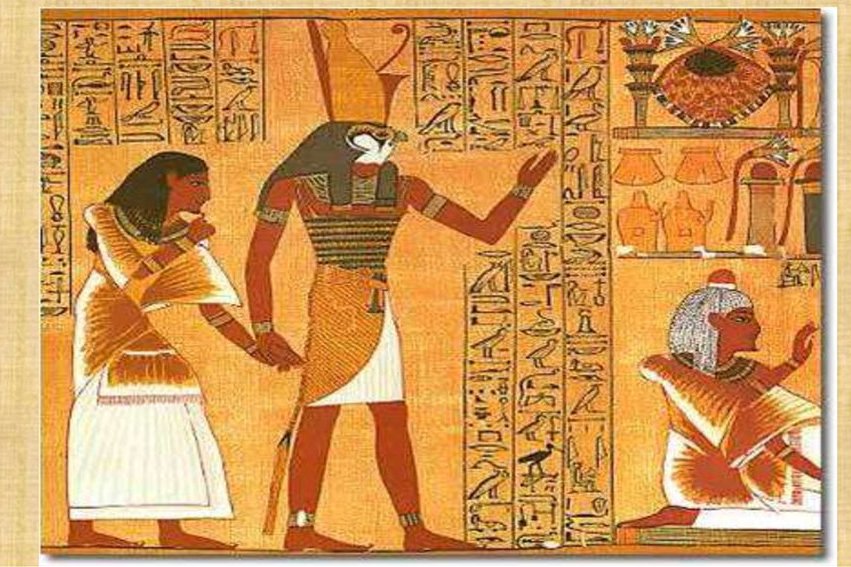
Ancient Wisdom from the Rubble of Time
When people bleat on about the Ancients, grunting, soot-faced troglodytes fumbling with fire in some damp cave while swatting sabre-toothed tigers with mammoth bones, I take a very deep breath.
Not for calm, mind you, but to suppress the overwhelming urge to scream in twelve dead languages and throw something heavy at them.
Because, frankly, the only primitive thing here is the modern imagination.
And somehow, the oft-quoted phrase from the Life of Brian springs to mind:
Apart from the sanitation, the medicine, education, wine, public order, irrigation, roads, the fresh water system, and public health … what have the Romans ever done for us?
Let’s begin, as all good heresies should, by offending the church of consensus. History, that pompous, pipe-smoking old don in the armchair of Western smugness, insists that we, the moderns with our contactless cards and curated self-care routines, are the clever ones.
We, who invented anxiety in high definition and need apps to sleep, presume we’re the pinnacle of civilisation. Because we have smart fridges. And TED Talks.
But take a step off the asphalt, out where the wi-fi dies and the insects sing in dialect, and listen. The ground hums. It has secrets. And it doesn’t give a damn about your LinkedIn profile.
Civilisation, as we know it, did not begin somewhere between the invention of pottery and the first tweet. Step carefully here, because the ground beneath your feet might be lying to you, or rather, telling truths too old for textbooks and too inconvenient for rational men.
Take Gunung Padang, for instance, a lichen-slick hillock in West Java, a jungle-clad mystery that’s been whispered about for centuries. It’s not so much a ruin as a sulk, a stone tantrum hurled across millennia, daring anyone with a carbon dating kit to make sense of it.
What is it? A megalithic site. Terraces. Stones shaped into rough symmetry. A place locals revere and archaeologists scratch their beards over. Some say it’s 2,000 years old. Others, clutching seismic data like scandalous love letters, insist it may be 12,000 years old, a heretical number, older than the Pyramids, older than history as we know it. And if that’s true, then we’ve been sitting on a forgotten chapter of humanity’s story, and possibly its prologue.
The Javanese say it was a meditation place for the ancients, which, of course, is what moderns always assume when they can’t find a toilet. But maybe it was more. An observatory. A temple. A library of the cosmos written in basalt and moss.
And it’s not alone.
All over the world, the ancients were stargazing, stone-lugging, season-mapping sages. They built with obsidian patience and an eye for the eternal.
The Maya etched time into pyramids sharper than any Rolex. The Egyptians dragged meaning across the desert with the help of gods, slaves, or aliens, depending on which YouTube rabbit hole you’ve tripped into. The Babylonians scribbled star maps and omens on clay long before the first horoscope was printed in a women’s magazine.
They weren’t just building tombs. They were synchronising themselves with the heavens, celestial feng shui for crops.
Then there’s agriculture, that miraculous moment when humans stopped chasing dinner and began inviting it over. But they didn’t just poke seeds in the ground and hope.
The Incas, those high-altitude engineers, carved terraces into Andes cliffs like a barcode of botanical intelligence. In India, the Vrikshayurveda told farmers how to rotate crops, love their soil, and live in a biodiverse harmony that would put modern monoculture to shame.
Their knowledge was empirical, elegant, and, crucially, ecological. Unlike us, they didn’t need a Netflix documentary to tell them not to kill the bees.
Medicine? Oh, they had that too. Not in pills or with co-pays, but in philosophy. Unani Tibb, Ayurveda and Traditional Chinese Medicine didn’t separate the liver from the soul. Health wasn’t a war to be fought but a balance to be struck.
Modern science is only now catching up with the idea that perhaps your gut affects your mind, that perhaps eating what’s in season makes more sense than importing Peruvian blueberries in winter.
The tragedy is not that we forgot. It’s that we chose to. We assumed that new meant better, that digital trumped oral, that plastic would last longer than stone. But the old gods whisper still, through terraces, through megaliths, through the alignment of stars over places like Gunung Padang.
So what did they leave us? Stones. Symbols. Calendars. And the lingering suspicion that maybe, just maybe, we’re not the climax of civilisation but its amnesiac descendants.
If we had any sense, we’d stop tweeting long enough to listen.
Written Language
It was the Sumerians, an ancient civilisation in Mesopotamia (modern-day southern Iraq), who first gave us written language, at first known as cuneiform, meaning “wedge-shaped,” around 3200 BCE. It began as pictographs scratched into clay tablets with a reed stylus. Over time, it evolved into a system of abstract signs representing sounds, syllables, and ideas.

Although the Inca and Aztec civilizations existed at roughly the same time, the Incas had no written language, instead using a complex arrangement of knotted strings – quipu. Yet they developed a sophisticated record-keeping system.
The Aztecs did have a form of writing, though it wasn’t phonetic like an alphabet. They used pictographs, logograms, and ideograms, essentially pictures and symbols to represent objects, sounds, or ideas. While limited in grammatical complexity, the Aztec writing system could tell stories and record history, often accompanied by oral explanations from trained scribes.
On the downside, the Aztecs believed that their sun god, Huitzilopochtli, required human sacrifices each day to ensure the sun would rise. In contrast, the Incas practiced a more ritualised form of sacrifice, sadly involving children, to honour and appease their chosen deities.
Graeme Dinnen
ResourcesForLife.net
I receive emails from Ancient Origins Unleashed. I hope they are ok with me re-posting their Ancient Origins Quiz, hence my mention of them at the end.
Step back into the world of lost empires, mysterious monuments, and early human ingenuity. This 10-question quiz challenges your understanding of the ancient world. From the origins of writing and the purpose of the Nazca Lines to forgotten technologies and misunderstood cultural practices.
Along the way, you’ll explore:
- Why the Moai of Easter Island face inland
- What ancient Egyptians really believed about the brain
- How the Sumerians recorded their history
- Who deciphered the Rosetta Stone and opened a gateway to Egyptian knowledge
- Which civilizations left behind massive relics without written explanations
Start the quiz and see how much ancient wisdom you really carry.
If you enjoy Ancient Origins UNLEASHED, add in your email below:
There’s loads of good stuff in there we never learned at school!
Leave a Reply