
There are moments when civilization feels as though it’s mislaid the plot. Entirely.
I had one in Ojai, California.
In a health food shop, surrounded by wheatgrass shots and earnest women in Lycra discussing the pH of kale, I witnessed an absurd scene that ought to have been written by Beckett.
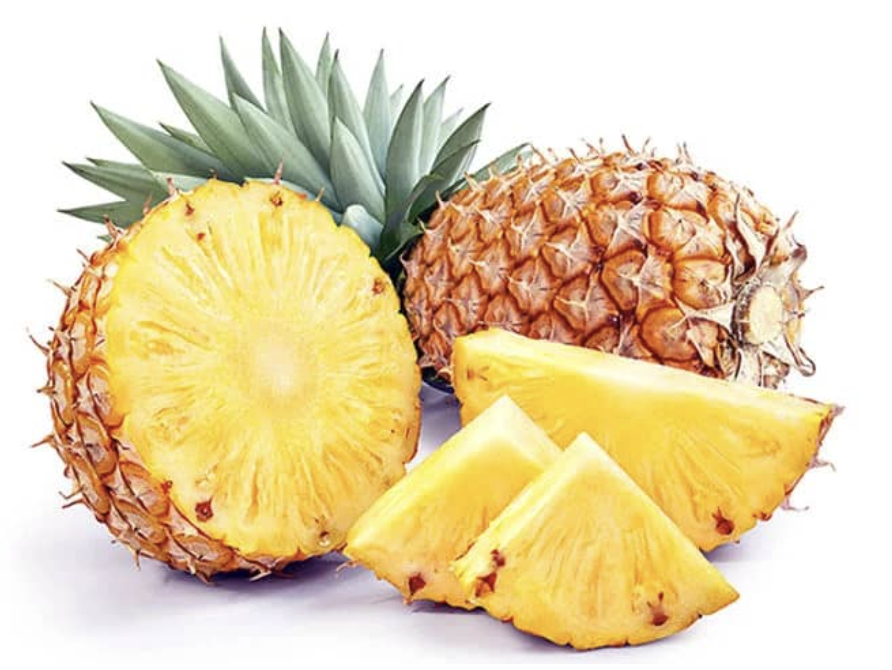
A boy, maybe seven or eight, was there. He pointed to a pineapple, an actual pineapple, the whole, spiky, crown-topped fruit, and asked his mother what it was.
When she told him, he was dumbfounded because he’d never actually seen one before, not outside its natural habitat of a clamshell plastic punnet, pre-cubed, de-cored, bleached of its eccentricity.
He loved the taste of pineapple, yet it took a whole fruit to baffle him.
And that, right there, is the obituary of food.
We live in an age of choice. Or at least, that’s the brochure.
Supermarkets have aisles longer than cathedral naves and brighter than Vegas, lined with a cornucopia of packaging, logos, and things that used to be food but now look like prototypes for Lego bricks.
Walk into one and it appears abundant, generous, practically biblical in its overflow. But scratch the label, the promises of “artisan,” “crafted,” “farmhouse,” “authentic”, and you discover the dreary truth.
Almost everything you put in your basket is, in one way or another, fraud.
Take bread. Real bread is flour, water, salt, yeast. Four ingredients, and yet it can taste like poetry. It can bring a room to silence when you crack open a loaf still steaming from the oven.
Now go into your nearest supermarket and pick up a “farmhouse loaf.” It will last longer than a minor war. It squeaks like polystyrene when you squeeze it. It has a list of ingredients that reads like a chemist’s receipt.
And yet, here it is, packaged in wholesome brown with a sketch of a windmill on the front, as though this pallid sponge has been lovingly tended by a bucolic miller in breeches, rather than extruded from a chrome roller in Slough, or somewhere distant in Europe.
Meat, too, has been stripped of its dignity. A chicken used to be a bird. Now it is a factory product, designed not to cluck or peck or live, but to grow so quickly that it can barely hold up its own miserable weight.
Then it’s pumped with water to add weight, and “flavour enhancers,” frozen, portioned, wrapped, and sold as “chicken Kiev.” It tastes of nothing, except the vague melancholy of disappointment.
And still we eat it, staring at screens, shovelling forkfuls into our mouths as if refuelling, rather than dining.
Even vegetables have lost their plot. Tomatoes should be the red punctuation marks of summer, tart, juicy, complicated. But buy them now and you get scarlet billiard balls, smooth, flawless, utterly tasteless. They look like they were bred for Instagram rather than appetite.
Out of season, strawberries are as hard as beetroot and smell faintly of nothing. Carrots are watery orange batons. Apples are waxed into uniform spheres. Nature has been disciplined, bullied, and spray-painted into compliance, as if the seasons themselves no longer matter.
And what do we do? We accept it. We shrug. We stuff trolley after trolley with the industrialised parody of food and take it home to children who have never eaten a tomato that tastes of real tomato or an apple that tastes of real apple.
We confuse satiety with satisfaction. The appropriate phrase is “overfed and undernourished”, surrounded by food but starved of flavour.
Of course, there are exceptions. Farmer’s markets are a theatre with bread that bruises, carrots unapologetically dirty, cheese smelling like truth. It’s food with a handshake, not a barcode, chaotic, sensual, fleeting, and absolutely worth the pilgrimage.
We are told, endlessly, that food has never been safer, cleaner, more convenient. And yes, you are unlikely to die of a rancid prawn these days. But in exchange for hygiene and shelf life, we have surrendered taste, integrity, and imagination.
We eat preservatives. We eat the mythology of “natural” and “wholesome” plastered over food that is neither.
The real tragedy isn’t just the poverty of flavour. It’s the poverty of expectation. A generation has grown up thinking bread should feel like foam and strawberries should taste like bottled air. They don’t know what they are missing, and therefore they don’t miss it.
Appetite has been domesticated.
What we have lost is the relationship, the memory of a grandmother’s stew, the rhythm of seasons, the anticipation of the first asparagus in spring, the last raspberries in autumn.
Eating has become an errand, not an event. Food has been outsourced to laboratories, factories, marketing departments. And we, docile and distracted, chew obediently.
It is possible to eat better, of course. To demand more. To buy food that rots, as only real food does.
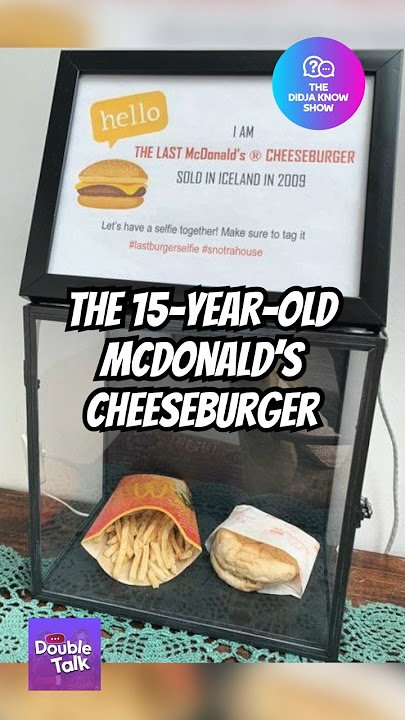
We’ve all seen the image of the last McDonald’s sold in Iceland during 2009. Today it still looks like it did on day 1. What on earth convinces people to eat this adulteration? Probably the constant advertising and the many road signs pointing to the nearest outlet.
Yet proper eating requires effort, and perhaps the most dispiriting truth is that we no longer want to make the effort. We want convenience dressed up as choice, abundance dressed up as quality. We are complicit in our own blandness.
So here we are: a nation that can summon a pizza to the door in six minutes flat, but cannot remember what a tomato is meant to taste like. That is progress, apparently. The Romans had bread and circuses. We have sliced white and Netflix.
Farmers’ Markets
But then there are farmers’ markets, those small, stubborn outposts of sanity. They are not the solution to everything but farmers’ markets are theatre with mud on their boots: bread that bruises, carrots that once had a conversation with soil, cheese stinking like truth. It’s food with a handshake, not a barcode, chaotic, sensual, fleeting, and absolutely worth the pilgrimage.
At a farmers’ market, you buy food that reminds you it is alive, or at least once was. It has blemishes, curves, scars, stories. A tomato that tastes of tomato, a strawberry that needs no sugar. You are not just buying calories; you are buying a handshake from the person who grew it. That is a relationship, not a transaction.
And that’s the joy of the market: it gives food back its context. It insists on seasonality, on imperfection, on the notion that eating is not a corporate arrangement but a cultural act. It’s the antidote to the fluorescent aisles where everything has been sanded down into glossy anonymity.
Because at least here, among the stalls, there’s a fighting chance that a child will point to a pineapple and recognise it, not because it came in a plastic tub, but because it came with a crown.
Pineapple boy in California hadn’t been deprived of food. He had, in fact, been drenched in it, plastic-wrapped, machine-cut, chilled and preserved into familiarity. What he lacked was context. He had been fed only the edited version, the sanitised highlight reel. Seeing the original fruit was like catching a glimpse of a celebrity without makeup.
Disorienting. Unrecognisable.
Food now is designed not to nourish or delight but to travel in food miles. To endure. To survive the hostile environments of container ships and warehouses and fluorescent lighting. It is, in its way, the perfect metaphor for us: engineered for shelf life, with taste an afterthought.
Let’s put 2 and 2 together to determine what this is leading to.
• Chronic disease is projected to rise 99% by 2050.
• Cancer in people under 50 has surged 79% in just three decades.
• Type 2 diabetes is now showing up in children as young as 8.
• And fertility rates are collapsing as hormone systems buckle under toxic overload.
Want a 53 second video explanation of what’s causing this?
https://www.facebook.com/reel/1420798212358680
From where do we source our food?
Bread and croissants from a bakery, not a supermarket. Meats from a butcher, not a supermarket. Thankfully, our fishmonger is only 10 minutes from us. Use them if you can. because food is their lifeblood. The lifeblood of a supermarket, is profit
And so we support Farmers’ Markets, local farm shops. We receive a weekly delivery from the enterprising network of Riverford Organic Farmers; we cook our food in organic olive oil, not the liquid deceit offered on supermarket shelves.
I’m inviting you to do something, and right away. Whatever you choose to do, make it beneficial to both you and your family, especially is you have children.
You’re given one digestive tract to get you through life. Maltreat it and it’ll repay you with a repertoire of indignities that’ll fold you in half.
Both Riverford and Save Our Soil (organic olive oil) supply to buyers in the UK.
Click the links (if you live in the UK).
Riverford Organic – click to order and receive £15 off your second order
Organic Olive Oil – click to order and receive £5 off your order
Graeme Dinnen
ResourcesForLife.net
Leave a Reply