
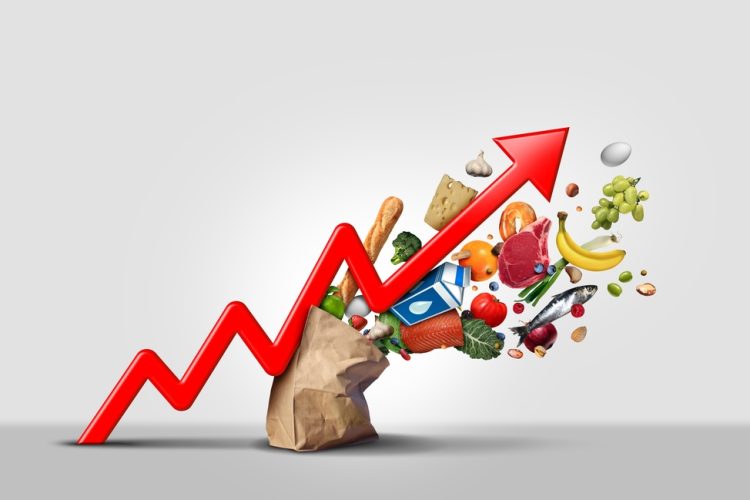
We’re all facing significant challenges over the coming era. One of them is food.
The elected leaders of many countries are throwing their toys out of the pram, and we’re already paying the price.
Let’s be real. The world feels heavy right now. We’ve all seen the news. Everything is going up in price and the threat of stagflation is no longer conjecture.
Understanding the value of food as fuel for the body will become increasingly important.
For centuries, food has been bringing people together to a communal table, allowing them to talk a while sharing their stories, their emotions, their experiences and their lives.
There’s nothing better than enjoying food with friends. Food gives us an instant connection to our traditions and beliefs. Most important it’s the way mothers in every country or tradition say “I love you”
An appetite for food is much like an appetite for life. Food changes our mood and can induce contentment well beyond that of the digestive tract.
It’s the modern equivalent of sitting around the campfire and exploring memories. Having a sense of belonging; a place in the world.
For me a delivered pizza doesn’t tick any of these boxes.
The subject of diet is far too colossal to address comprehensively here. There’s no such thing as a single healthy diet that benefits everyone. Each unto their own. Rules cannot apply to everyone. If you want to eat meat, you shouldn’t have to listen to someone preaching with different views, unless you express an interest in their perspective.
Would you take advice from the US Academy of Nutrition and Dietetics if you knew they are shareholders in the ultra food companies PepsiCo and Nestle?
Would you take nutritional advice from Amazon if you knew they bought Whole Foods and are now selling pharmaceuticals?
We humans have clearly become confused about food.
Recent media headlines include:
• Americans ditch cheese after learning Pfizers GM ingredients are now found in 90% of dairy products
• Deli ham and bacon were recently classified as a Group 1 carcinogen (cancer-causing) by the WHO. To give you a perspective, Group 1 also includes tobacco, asbestos and arsenic. How long did it take for them to admit that?
• The FSA is considering relaxing the safety rules for genetically edited foods, with approval likely for this year.
• Despite rumours, supermarkets have not collectively agreed to stock synthetic food. Instead they already sell plant-based alternatives (vegan burgers, dairy-free cheese, etc.). These may contain ultra-processed ingredients and hidden contaminants.
• The UK Food Standards Agency (FSA) is reviewing safety rules and speeding up the approval process, for selling lab-grown meat in the UK
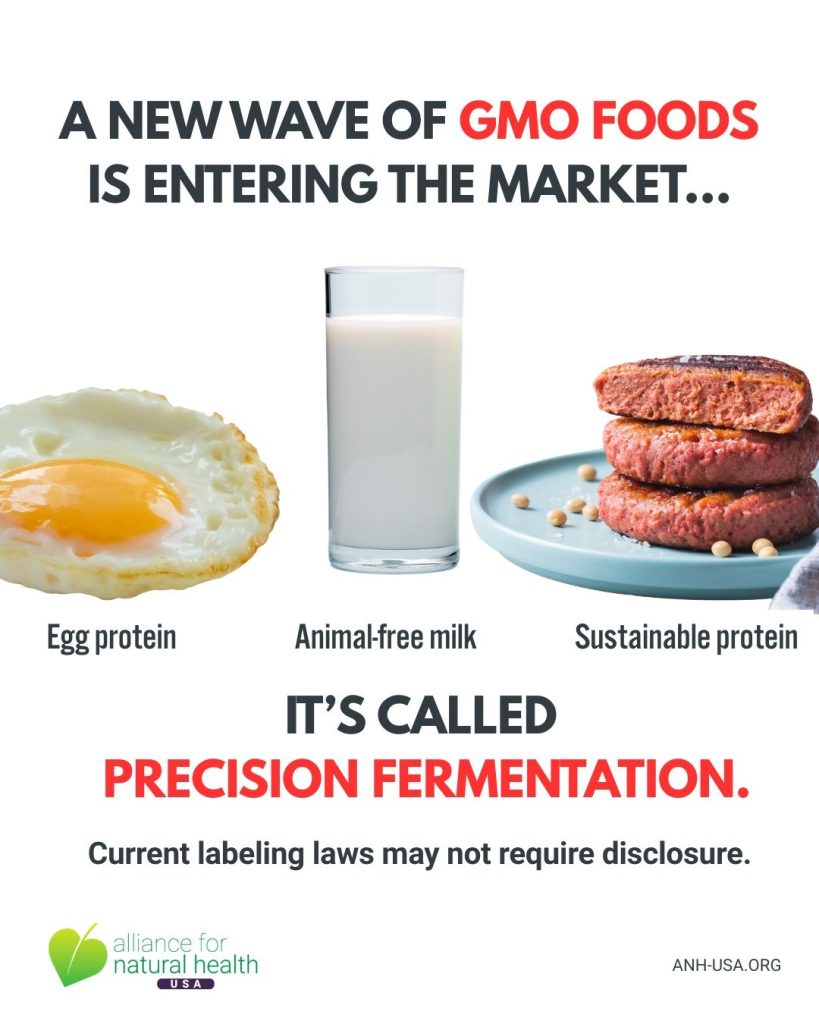
• A new wave of genetically engineered “precision fermentation” foods is quietly entering the US market, without GMO labels and without your informed consent.
Heart Health
We’re repeatedly told that heart disease is the #1 Killer in the United States. The reason is simple – the Western diet is devastating the entire body, particularly your heart and cardiovascular system.
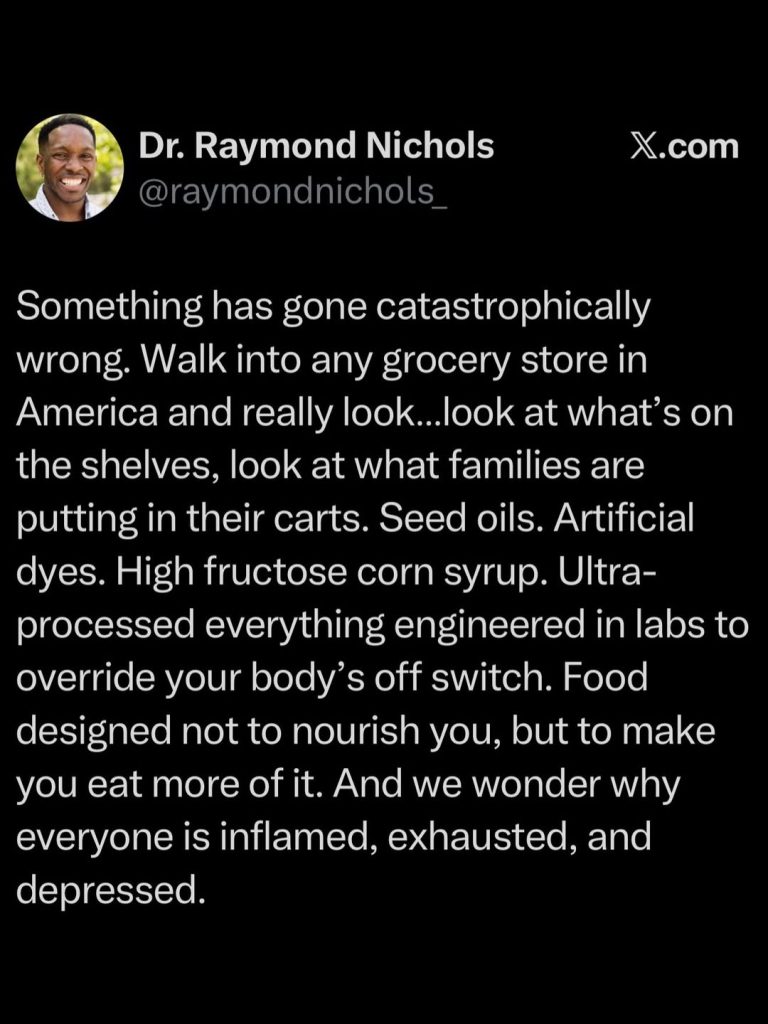
The truth is that the wrong food combinations are consumed, in ridiculous portions, and are supplemented by over-processed and toxin-heavy “foods” that provide nothing while stripping your body of minerals and vitamins.
Instead of skipping your eggs in the morning, skip the carbohydrates instead. You’ll feel fuller for longer and have improved focus because the nutrients in eggs are not only a great part of a heart healthy diet, they are incredible as brain food!
Some years ago I found myself incarcerated in a hotel for the duration of one of those weekend seminars – days of PowerPoint penitence punctuated by coffee the colour of varnish. At breakfast, I watched my fellow inmates assemble their plates at the buffet with the sort of strategic enthusiasm usually reserved for military campaigns or Boxing Day sales.
You know the tableau: crockery groaning under geological layers of carbohydrates, fried eggs wobbling like minor planets, sausages laid out with the solemn inevitability of plumbing. Hash browns, pastries, toast – everything beige that could be coaxed from a kitchen before nine in the morning was drafted onto the plate. It was less breakfast than a nutritional land grab.
Having seen this sort of thing before, and knowing precisely how the story ends, I kept to the monastic lane: porridge, fruit, a cup of tea that didn’t threaten to clot.
By mid-morning the buffet brigade had reached the inevitable post-prandial reckoning. They were slumped in their conference chairs, eyes at half-mast, nodding gently like ornamental dashboard dogs while the speaker soldiered on through slide fifty-three.
The great fry-up offensive had advanced bravely, but somewhere around the bacon and brioche it had overextended its supply lines and surrendered the room to sleep.
Opt For Quality
Cheese – making real cheese has become a passion, and one we enjoy the benefits of. If there’s a real cheese maker near you, wherever you live, support them, or you’ll end up eating cheese from a questionable source. We buy from www.finecheese.co.uk/.
Pfizer’s GM products may be in your cheese. https://www.facebook.com/reel/4324400844498294
Honey – Turn the honey bottle upside down. If it bubbles slowly or barely moves, it’s real. If it flows fast like water, it’s fake. There are many quality honey providers wherever you live. Supermarkets are rarely amongst them.
Salt – As most people are mineral deficient, Celtic Sea Salt is the inexpensive answer, containing 83 vital minerals including magnesium, potassium, calcium, selenium and iodine. I’d venture that 50% of people waiting to see a doctor are there because they’ve become mineral-deficient. The answer is inexpensive mineral-rich salt.

Beans – IF you use beans in your kitchen for preparing Mexican foods or just love chickpeas ……https://boldbeanco.com/
Curry – Curries contain curcumin. If you don’t eat at your local Indian restaurant, try making curry or other spicy dishes at home.
Oatmeal – They call it healthy, the breakfast bowl haloed in virtue – oats, wholesome as a vicar’s handshake, the sort of thing that makes you feel morally superior before you’ve even found the spoon.
Yet the same pious porridge that 85% of patients with stomach cancer had been dutifully eating every morning for the past decade. Ten years of earnest chewing, ten years of believing the packaging’s pastoral lies.
The likely villain is glyphosate, a weedkiller misted liberally over oat fields, the agricultural equivalent of spraying the salad with floor cleaner and hoping nobody notices. Healthy, they claim. Just add milk and faith.
Herbs and Spices, this is worth listening to, if only to set you on the right path again.
Fruit and Veg (and more): We favour Farmer’s Markets and Riverford organics. If you register to receive your box of organic fruit and veg, Riverford offer £15 off your second order. UK only.
Margarine – You want to avoid margarine as the older or cheaper margarines usually contain trans fats, which raise bad cholesterol (LDL), lower good cholesterol (HDL) and increase the risk of heart disease. Margarine is usually made from refined vegetable oils that are artificially coloured to look like butter, chemically processed, then bleached and deodorised. Put a small lump of margarine on your windowsill i and a year later it will look the same. Not even flies land on it.
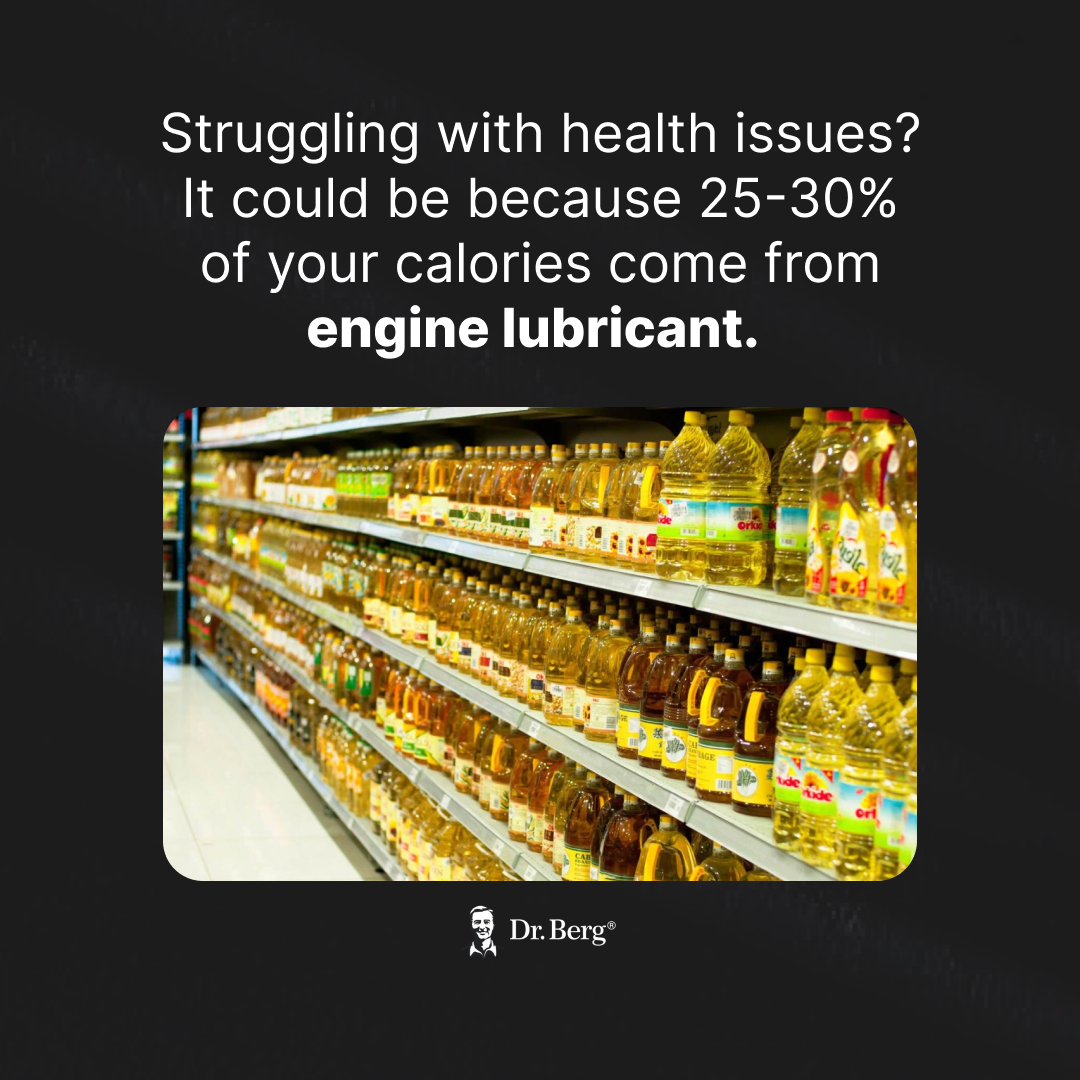
Olive Oil – AVOID rapeseed oil (aka Canola). 50 years ago, the only place you’d find it is in a mechanic’s garage. We’ve been buying our olive oil from Citizens of Soil for over a year. Their oils contain health-supporting polyphenols, unlike many of the supermarket oils. To try it, click the link, and you’ll be given a £5 discount for your order (UK buyers only)
Wheat
WEC Agricultural Report:
“Wheat is not just a commodity; it has historically been a weapon. It has toppled more empires than gunpowder and will likely do so again. The current 2021–2025 wheat bear market is the calm before the most violent upward surge in agricultural history. Our models indicate a phase-transition target of $21.00 per bushel by the peak of the 2032.95 turning point. This is not inflation. It is systemic food scarcity intersecting with the War Cycle, Climate Cycle (volatility, not “warming”), and the Monetary Crisis Cycle (1971–2032).”
You’re going to be buying food in a month’s time anyway. Why not buy it at this month’s prices?
It’s time to make useful decisions.
Graeme Dinnen
ResourcesForLife.net
PS. From Jeff Berwick, yeterday:
“Food rations – Look at the map. Ukraine is tapping out Russia’s oil refineries. China has stopped exporting fertilizer. The Middle East is being primed for a blowout. They are knocking out 40% of the world’s energy supply on purpose. Why? Because if you can’t afford to travel, you stay in your 15-minute city.
If you think eggs are expensive now, wait until oil hits $150 or $200. We are looking at a total economic collapse and a food shortage that could wipe out 1 to 2 billion people. This isn’t a “maybe.” It’s baked into the cake.”
Leave a Reply