
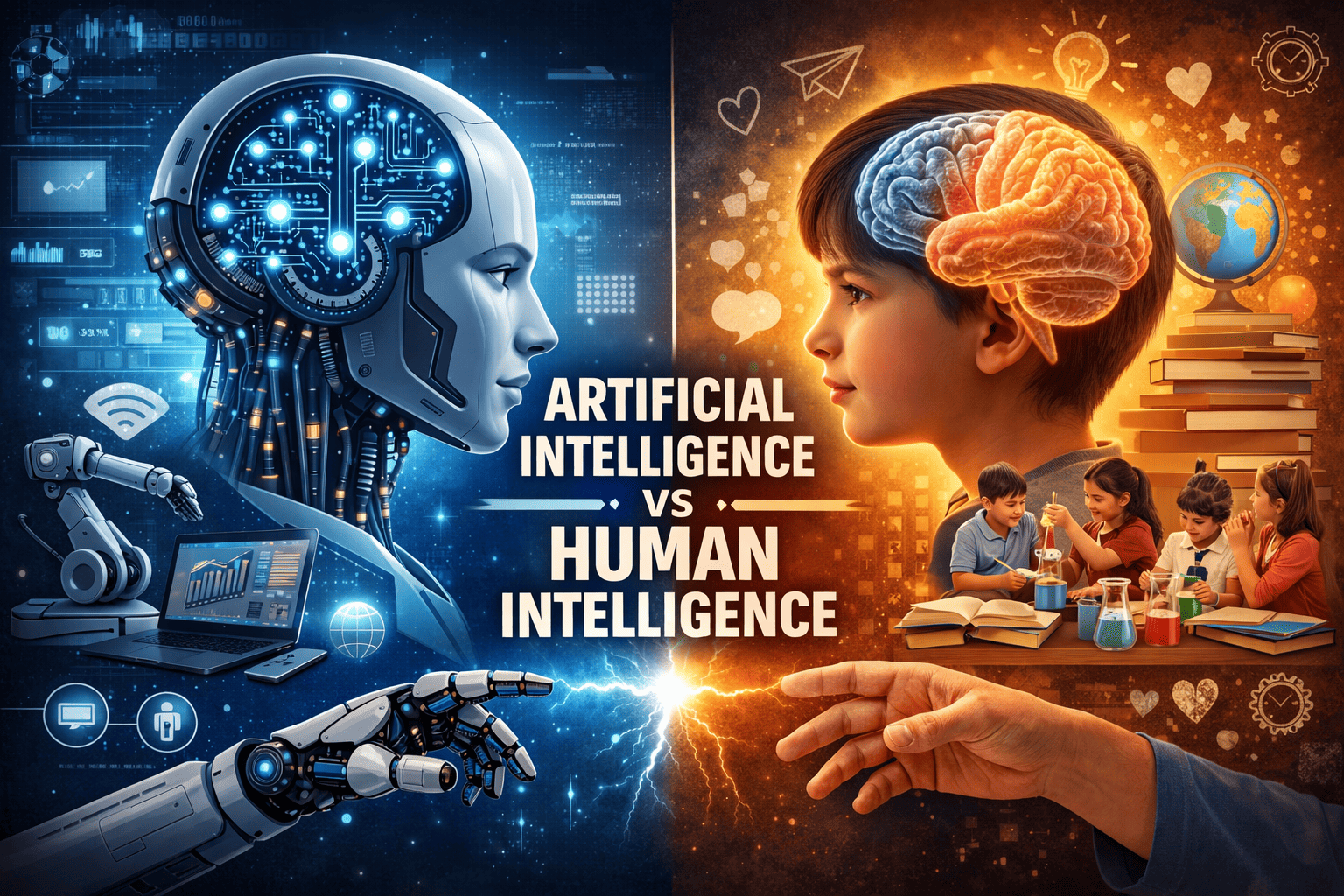
The first thing you need to know about AI is that you’re not going to be replaced by AI, you’re going to be replaced by someone who knows how to use AI. That’s the difference.
Small businesses have always been built on a particular kind of stubborn optimism – the belief that grit can outmuscle gravity, that charm can compensate for scale, and that a handwritten sign in the window might still outshine a billboard.
It’s romantic. It’s admirable. It’s also, increasingly, a bit knackered.
Because while you’ve been perfecting your sourdough or balancing invoices at midnight, something rather efficient has slipped into the room: artificial intelligence (AI). And unlike most business trends, those breathless, jargon-choked fads that arrive like overenthusiastic Labradors and leave just as quickly, this one doesn’t pant. It works.
Relentlessly.
The first and most obvious seduction is time. AI doesn’t tire, doesn’t procrastinate, doesn’t suddenly decide it needs a biscuit and a scroll. It eats admin for breakfast: emails, bookings, customer queries, stock tracking – all the small, dull, necessary chores that quietly siphon the life out of a working day.
What it gives back is not just hours, but a kind of mental oxygen. Space to think. To plan. To actually run the business rather than merely survive it.
Then there’s the matter of cost, that ever-present, slightly accusatory shadow. Hiring people is expensive, and rightly so, but not always feasible. AI, by contrast, is the quiet understudy who can play several roles at once without demanding a dressing room.
It drafts your marketing, answers your customers, nudges your accounts into order. Not perfectly, not humanly, but often well enough, and at a price that doesn’t make you wince.
And customers, bless them, have developed the attention span of caffeinated goldfish. They want answers immediately, preferably yesterday, and rarely between the hours of nine and five.
AI obliges. It sits up all night, cheerfully fielding questions, solving problems, smoothing over irritations. It doesn’t replace human warmth, but it does ensure the door is never quite shut.
Marketing, once the domain of glossy agencies and eyewatering retainers, has been democratised into something almost indecently accessible. AI will write your posts, suggest your campaigns, even tell you, gently, but firmly, what’s not working.
It turns guesswork into something closer to strategy, which is a polite way of saying it stops you shouting into the void and hoping for applause.
Perhaps most quietly transformative is its relationship with data. Small businesses have always had information – sales figures, customer habits, seasonal quirks – but rarely the time or tools to make sense of it.
AI sifts through the noise with unnerving competence, spotting patterns, offering insights, whispering, “This works. Do more of that.” It’s less crystal ball, more forensic accountant.
And then there’s scale. Growth, in the traditional sense, is messy. More customers mean more pressure, more staff, more moving parts. AI smooths the edges. It allows a business to expand without immediately buckling under its own ambition. It doesn’t eliminate growing pains, but it does offer a rather effective painkiller.
Of course, there’s a faint unease to all of this. A suspicion that something so efficient must surely come with a catch, like the over-attentive waiter. And yes, AI isn’t perfect. It can be clumsy, occasionally tone-deaf, and it lacks that peculiar, irreplaceable spark of human instinct. But it doesn’t need to be brilliant to be useful. It just needs to be consistent.
Which, in business, is often far more valuable.
The truth is, adopting AI isn’t about abandoning what makes a small business special. It’s about protecting it. About removing the friction, the drudgery, the endless small obstacles that prevent good ideas from becoming great ones.
Because charm and character will always matter. But in a world that moves this quickly, a little mechanical assistance doesn’t diminish the magic.
It simply gives it a fighting chance.
Click this link for more information: www.thistimenextmonth.com
A word of warning – I’m not trying to shoot myself in the foot here but it needs to be said……
There is something magnificently, almost operatically stupid about the great AI gold rush, a farce so perfectly constructed you’d think it had been written by a committee of satirists rather than executed by some of the most expensively educated people on earth, because what has actually happened.
Do stay with me here as it gets better!
Some companies sprinted to sack their humans on the promise that the machines would be cheaper, only to discover, with the pained expression of a man who has just sat on a cactus, that the machines can be considerably more expensive.
Compute costs are now exceeding payroll in some firms, one Nvidia executive has admitted with casual candour that global IT spending is hurtling toward $6.31 trillion in 2026, up 13.5% in a single year, which is the kind of number that sounds like a typo but isn’t.
The promise was frugality; the reality is an infrastructure bill that doesn’t scale, doesn’t sleep, and absolutely does not apologise for its energy consumption.
Meanwhile, the workers who were meant to be redundant have instead found themselves being pushed harder, burned out faster, and made to compete with systems that experience neither fatigue nor the basic human need to occasionally stare out of a window and think about lunch, while the businesses that laid off their entry-level staff in triumphant anticipation of savings are now sitting in front of spreadsheets wondering where, precisely, the savings went.
They went nowhere, is the answer, because tens of billions have been poured into generative AI and the overwhelming majority of companies have seen returns ranging from negligible to invisible, which is exactly how bubbles have always worked – capital chasing an idea with the momentum of a toddler chasing a pigeon, long before anyone has paused to ask whether the pigeon is actually worth catching.
What we are watching is not a technological revolution so much as a very old story about capital concentration dressed up in a new and expensive costume, with the infrastructure owners capturing the benefits while the costs fan outward across the broader economy like a slow and courteous catastrophe; and the critical, foundational error, the thing that will one day earn its own chapter in the post-mortem, is the assumption that because a machine can do something, doing it with a machine must therefore be cheaper.
This turns out to be roughly as reliable an economic principle as assuming that because you own a yacht, going on holiday must be free.
Only a fool would turn his back on AI entirely, but only a greater fool would deploy it everywhere at once. The shotgun, after all, is the weapon of the panicked, and panic has never been a sound basis for a technology strategy.
Graeme Dinnen
ThisTimeNextMonth.com
Leave a Reply