
Everyone is excited about AI. Or robots. Or oil prices. Or geopolitics, that endless international am-dram in which men in dark suits stride purposefully between podiums while being wrong in several languages at once.
The modern world arrives gift-wrapped in anxieties. Somewhere near the top of the catalogue sits misinformation, accompanied by the factory-line production of deepfakes – counterfeit realities stamped out with industrial efficiency.
But none of these things will ruin you.
These are the spectres that keep me watchful. I depend on reliable information as others depend on fresh water, and it takes only the smallest contamination to taint the entire reservoir. Once doubt seeps in, every fact begins to taste faintly of forgery.
Feed me tainted facts or dress fiction in the convincing costume of AI-generated reality, and even the most diligent machine can find itself confidently escorting nonsense into polite conversation.
Yet the No #1 threat that will ruin you is already in your pocket.
Your phone.
Don’t click off because you’re read many articles about the hazards of cell phones and done nothing about it. It’s time to read on….
That small, gleaming monolith of distraction was sold to us as liberation and functioning rather more like a digital ankle tag. It arrives with the promise of connection and quietly absconds with your solitude, your concentration and, eventually, any remaining capacity for boredom, which is a pity, because boredom is a crucible from which most good ideas emerge.
We’ve all become digital twitchers.
Not the charming, damp sort with binoculars and thermoses, but nervous little mammals forever checking a rectangle in the hope that someone, somewhere, has validated our continued existence with a thumbs-up emoji.
The extraordinary thing is that intelligent people appear especially susceptible. Cleverness offers no immunity. Quite the reverse. Smart people simply construct more sophisticated excuses for their dependency.
“I need it for work.”
“I was just checking one thing.”
“Research.”
Of course, the addict always has a reason.
The greatest social experiment in history isn’t happening in a laboratory. It’s happening every time we unlock our phones.
Modern society increasingly rewards traits that once sat on the fringes of human behaviour: emotional detachment, relentless self-promotion, superficial relationships, and the pursuit of status over substance.
Are We Engineering a More Psychopathic Society?
Digital isolation, combined with the incentives of social media, may be nudging us toward patterns that resemble psychopathic behaviour – not because people are becoming psychopaths, but because the system rewards many of the same characteristics.
Online, empathy is expensive. Outrage is profitable. Authenticity competes with carefully curated identities designed to maximise attention and approval. Human connection becomes transactional, measured in followers, engagement, and algorithms rather than trust, vulnerability, and shared experience.
Then there’s the psychology of mass compliance when people respond, assuming they make entirely independent decisions, yet much of human behaviour is unconsciously influenced by the surrounding environment.
Perhaps the most unsettling observation concerns manipulation itself. The people most vulnerable to influence are often those who believe they are immune to it.
At the same time, social media may be accelerating the erosion of authentic human connection. Digital interactions increasingly replace face-to-face relationships, while algorithms prioritise engagement over wellbeing.
The result is a culture that amplifies performance instead of presence, visibility instead of vulnerability, and validation instead of genuine connection.
If our institutions, technologies, and incentives consistently reward behaviours associated with emotional distance, conformity, and impression management, what kind of society are we gradually creating?
Become A Part-Time Mutineer
Much of my approach to modern life consists of small, private mutinies. My cell phone spends most of its existence on airplane mode and, at night, is exiled to another room altogether. I refuse to wear those little radiation-puffing earbuds that leave people sitting in mute concentration, as though undertaking some obscure monastic penance in the hope of divine intervention.
And the router? It is switched off every night without fail. Civilisation can survive a few hours without Wi-Fi; indeed, it occasionally seems improved by the absence.
It is astonishing how quickly the mind, deprived of its electronic pacifier, begins first to itch, then protest, and finally, after an interval of considerable discomfort, to think.
Really think.
Without interruption. Without applause. Without the incessant narcotic drip-feed of novelty.
My most creative time is while cycling. No one’s knocking on the front door, there are no incoming phone calls, no distractions from urgent paperwork spotted out of the corner of my eye.
The future, I suspect, will belong not to those with the cleverest machines, but to those still capable of sustained attention. The rare people who can sit alone with their own thoughts and not immediately reach for a glowing piece of Chinese glass.
A radical act, these days.
Almost eccentric.
Graeme Dinnen
ResourcesForLife.net
PS If you haven’t been told this many times already
- the shorter your calls on a cell phone are, the better for your brain
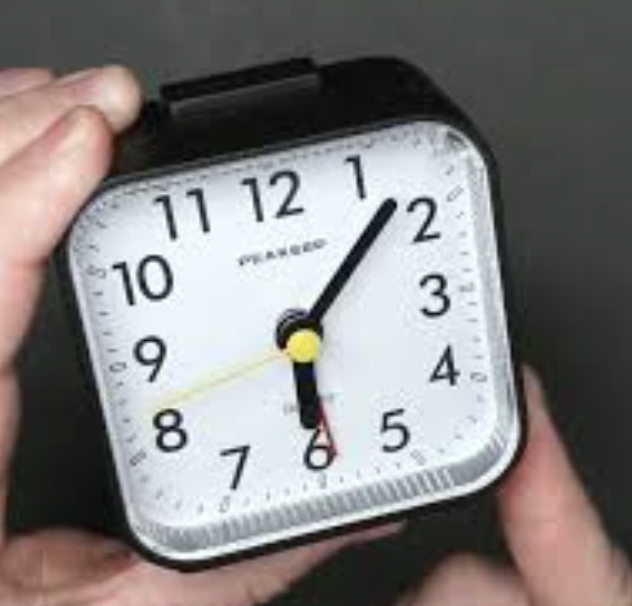
- if you need an alarm, buy a battery-operated alarm clock. Not an electric one.

Leave a Reply