
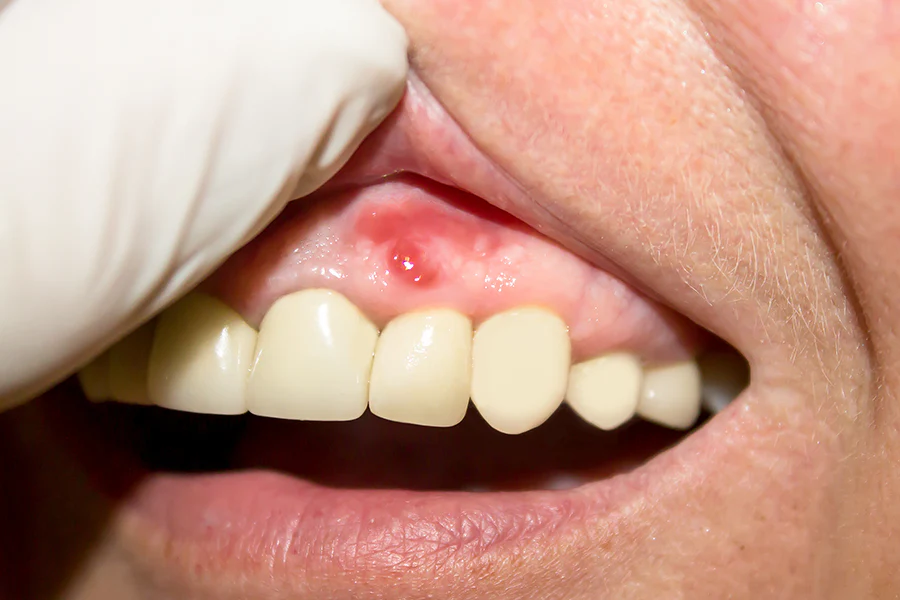
Few subjects empty a room faster than dentistry. Mention gums at a dinner party and you’ll find yourself talking to the cheese board before you’ve finished the sentence.
Which is curious, because we spend an extraordinary amount of time worrying about what goes into our mouths, while paying remarkably little attention to the thing doing the receiving.
Most people have no idea how much damage can quietly accumulate beneath an apparently respectable smile. Teeth are polished, breath is disguised with minty chemical warfare, and the gums are left to wage their own losing battle. It’s only when something begins to wobble, bleed or ache that we suddenly discover an urgent interest in oral health.
Not you, of course. You’re still reading.
A few years ago I stumbled across an online seminar called Functional Oral Health Summit: Say Ahh! It’s not a title that sets the pulse racing. Nobody ever cancelled Wimbledon to stay home for something called Say Ahh!.
Yet behind the dreary branding is some remarkably compelling information about what happens when periodontal (gum) disease is allowed to settle in for the long haul.
Gum disease is one of the commonest chronic health conditions on the planet, largely because it is both slow and polite. It doesn’t announce itself with fireworks. It simply gets on with dismantling things while we congratulate ourselves on brushing twice a day.
The full presentation lasts 58 minutes. That’s a serious commitment in an age when people complain if a video exceeds ninety seconds. If time is tight, start with operating room nurse Jeanne Dockins between 29:20 and 32:05.
In those few minutes you’ll also hear Dr David Verity explain why elective surgery should never be undertaken while periodontal disease is active.
It’s an uncomfortable thought, considering that in the United States up to half of surgical patients are believed to have periodontal disease before entering hospital.
Watch the whole presentation when you can. Not because it promises miracle cures or fashionable wellness jargon, but because it forces you to reconsider the mouth as something rather more significant than a convenient holder for teeth.
The discussion also explores possible links between periodontal disease, sleep apnoea and certain cancers – areas that continue to be actively researched and debated.
Your mouth is less a pristine showroom than a densely populated city. Around 700 species of bacteria live there, alongside fungi, viruses and the occasional unwelcome parasite.
Some residents are industrious citizens; others are little more than organised criminals waiting for an opportunity. Health depends not on sterility but on maintaining order. Once the balance shifts, trouble rarely confines itself to the mouth.
The old idea that dentists deal only with fillings while doctors deal with everything else has always been an artificial division. The mouth is the front door to the body, and it leaves clues everywhere.
What Doctors Don’t Tell You once described several striking cases from the records of a British holistic dentist. In one, a patient presented with severe toothache, only to be told the problem wou,d be resolved after a colonic irrigation. In another, treatment involving the alignment of a tooth appeared to coincide with relief from a persistent hamstring injury.
Whether or not you accept every conclusion drawn from such cases, they illustrate a broader principle that medicine has increasingly recognised: the body is a connected system, and symptoms do not always originate where they announce themselves.
Inside your mouth are teeth, gums, tongue, cheeks, tonsils, salivary glands, muscles, bone and that curious little uvula hanging like an afterthought. Sharing the space are billions of microscopic organisms engaged in a perpetual negotiation for territory.

Good health isn’t achieved by declaring war on every bacterium. It’s achieved by keeping the ecosystem in balance.
Ignore it, and your mouth won’t be the only thing complaining.
So next time you clean your teeth, keep at it for longer than you spend in the shower.
Dental sayings:
• You don’t have to clean all your teeth – only the ones you want to keep.
• The toothbrush doesn’t remove six months of tartar 30 minutes before your dental appointment!
• Dentistry is not expensive, neglect is.
Graeme Dinnen
ResourcesForLife.net
PS You’ll find this and many other important aspects of dental health explained in a clear and accessible way throughout the book.
Gum Disease: The Silent Battle In Your Mouth
available on Amazon: https://mybook.to/BattlingGumDisease


Leave a Reply