Long before anyone had invented cholesterol tests, prescription pads or a waiting-room television showing Homes Under the Hammer, the Chinese were already worrying about something we have somehow managed to make considerably more complicated: how to stay well.
The result was the Huangdi Neijing, usually translated as The Yellow Emperor’s Inner Classic or Treatise on Internal Medicine.
Undoubtedy one of the foundational texts of Traditional Chinese Medicine written more than two thousand years ago, it is presented as a conversation between the legendary Yellow Emperor, Huangdi, and his physician, Qi Bo.
Think of it as an ancient medical consultation, except the doctor doesn’t reach for a prescription pad after seven minutes and tell you to come back if things get worse.
Instead, the Emperor asks a rather inconvenient question.
Why, he wants to know, did people in ancient times apparently live long and healthy lives, while people of his own age were becoming prematurely tired and unwell?
Qi Bo’s answer is essentially that people had forgotten how to live.
A fairly brutal diagnosis.
The Neijing is particularly interested in rhythm. Sleep. Food. Movement. The seasons. The weather. Emotions. Work. Rest. The relationship between the individual and the natural world.
The season us Northern Hemisphere dwellers are in – Autumn – brings contraction and gathering in. Winter is the season for conserving energy and retreating. Spring is a time of emergence and expansion. Summer is associated with growth and activity.
It sounds perfectly obvious until you look at modern life.
We sit indoors beneath artificial light, eat strawberries in December, work at midnight, watch TV series until all hours, sleep with a glowing computer beside our heads and then wonder why our bodies appear confused.
The Yellow Emperor might reasonably have suggested we try turning the lights off.
Underlying the Neijing is the idea of yin and yang: complementary forces that are continually changing and interacting. Light and darkness. Activity and rest. Heat and cold. Expansion and contraction.
They are not simply good and bad, as the cartoon version sometimes suggests. They are relationships. Health depends upon maintaining a workable balance between them.
And this is where the treatise becomes particularly interesting.
The ancient physician isn’t simply waiting for disease to arrive before doing something about it. Prevention is central. The skilled physician notices the small disturbances before they become large ones.
In other words, don’t wait for the roof to fall in before investigating the damp patch.
Modern medicine is extraordinarily good at many things, particularly acute disease, surgery, infection and emergency care. But our culture has also become rather comfortable with the idea that health is something that happens to us in a doctor’s surgery.
The Neijing takes a different view.
Health is something you actively participate in.
What you eat matters. How you breathe matters. How much you move matters. Whether you sleep matters. Your emotional life matters. Your relationship with the changing environment matters.
The Neijing also deals with diagnosis, acupuncture, bodily functions and the relationships between different organs and systems. Its explanations belong to the intellectual world of ancient Chinese medicine and should not simply be dressed up as modern anatomy.
Some of its physiological concepts do not correspond to contemporary biomedical science.
But that doesn’t make the underlying questions irrelevant.
Quite the opposite.
The remarkable thing about the Neijing isn’t that it somehow contained modern medicine two thousand years early. It didn’t.
Its value is that it asked a question we have become rather good at avoiding:
What if staying healthy is partly about how you live, rather than simply what you take when something goes wrong?
That is a surprisingly radical thought for a book written more than two millennia ago.
The Yellow Emperor wasn’t living in a world of processed food, smartphones and fluorescent offices. He didn’t have a sedentary job, a Deliveroo account or a sleep tracker telling him he’d had a disappointing night.
But he understood something we forget.
The body lives in the real world.
It responds to light and darkness, activity and inactivity, food and fasting, warmth and cold, stress and rest. It changes with the seasons. It ages. It adapts.
And perhaps the most enduring lesson of the Huangdi Neijing is therefore not a particular herb, acupuncture point or ancient prescription.
It is the idea that health begins long before illness.
The Yellow Emperor was asking how to live well more than two thousand years ago.
We’re still waiting for the answer.
Or maybe he’s already given us one.
Long before anyone asked, “And what seems to be the problem?”, the ancient Chinese were already discussing how to stay healthy.
The result was the Huangdi Neijing, or The Yellow Emperor’s Inner Classic
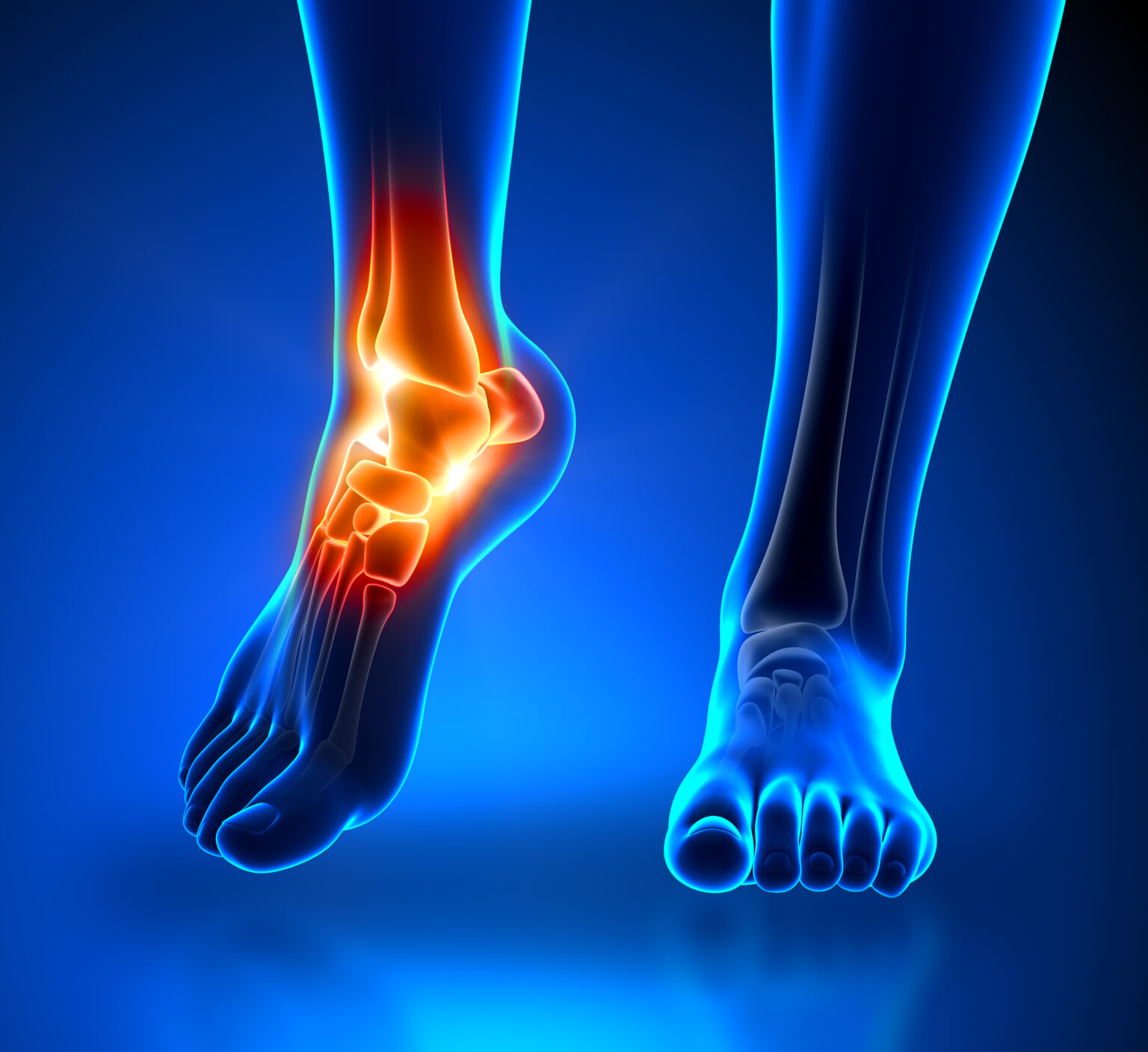
We tend to think of our feet as two rather uninteresting things at the bottom of our legs. They get shoved into shoes in the morning and largely forgotten until they hurt.
Perhaps we have the whole arrangement backwards.
Our feet are the foundations of the body. Build a house on crooked foundations and you won’t expect the roof to remain perfectly level.
Through the pages of What Doctor’s Don’t Tell You, I came across posture therapist and author Eleanor Dalton. Known as “Posture Ellie”, she has a rather different way of looking at posture. It isn’t simply about sitting up straight, pulling your shoulders back and trying to look like a soldier waiting for inspection.
Posture is the musculoskeletal home you live in: the state of your body and how it has organised itself in response to everything you ask of it from when you wake to when you sleep,…..and even how you sleep.
And increasingly, we ask rather a lot while wearing shoes that may be doing the asking for us.
Your feet weren’t designed like this
Barefoot isn’t some fashionable invention dreamed up by a wellness influencer. For most of human history, humans walked barefoot or with primitive protection wrapped around their feet. Shoes became necessary as humans migrated into colder climates and encountered harsher terrain. The original solution was wonderfully unsophisticated: leather, straps and protection from the elements.
There was no foam. No air cushioning. No rigid arch support.
The foot remained a foot.
Modern footwear is rather more ambitious. We squeeze the toes into narrow spaces, deforming their natural shape. We raise the heel. We surround the foot with cushioning and support. Then we wonder why the muscles and joints don’t behave like those of someone who has spent their life walking barefoot.
The cushioning is particularly seductive. It feels comfortable and protective, as though the shoe is doing us a favour.
But the more the shoe does, the less the foot has to do.
The muscles don’t have to work in the same way. The foot receives less information from the ground. The body’s loading patterns change.
Change the foundation and the rest of the structure has to accommodate it.
Even five millimetres can matter
You don’t need to totter around on six-inch stilettos to alter your biomechanics. According to Dalton’s approach, even a 5mm heel, over time, can influence how joints are positioned and how the body loads itself.
Raise the heel and the body is tipped forward. It doesn’t simply accept the new angle. It compensates.
The pelvis changes. The knees respond. The spine adjusts. The head moves.
The illustration Dalton gives is to think of the Leaning Tower of Pisa. The further up you travel, the greater the visible displacement from the foundations.
The same principle can apply to the human body. A small change at the foundations can produce a much larger compensation at the top.
And that ‘top’ happens to contain your head.
Trainers: the great deception
Stilettos at least look dangerous.
Flip-flops are a major contributor to back pain and a potential accident waiting to happen.
Trainers are another matter altogether.
They have become increasingly elaborate: thicker soles, greater cushioning, more support and more separation between the foot and the ground. They are sold as technological improvements, particularly for running, gym work and walking.
And this may be precisely why they deserve scrutiny.
The danger isn’t necessarily that a trainer is uncomfortable. Quite the opposite. It can be so comfortable that you assume it must be good for you.
After all, your foot is effectively sitting on a mattress.
You become disconnected from the ground. Sensory information changes. Muscles and joints work differently. Then we compound the problem by running, exercising or walking for miles in them.
That doesn’t mean every trainer is damaging. Nor should everyone throw theirs away tomorrow. Feet adapt, and abruptly moving from heavily cushioned shoes to minimalist footwear can create problems of its own.
But it raises an awkward question:
Are we protecting our feet from the very work that keeps them strong?
We don’t walk so much these days
There is another modern problem: we sit.
We sit in cars, at desks, watching television and looking at screens. Our ancestors didn’t spend much of their lives in chairs with their feet resting passively on the floor.
Muscles need loading, movement and variation.
Yet we have created an existence where feet spend most of the day trapped inside shoes while the body spends most of the day sitting. Then, at the weekend, we expect those same muscles and joints to cope with a long walk, a game of golf/tennis/squash, a run or an enthusiastic gym session.
The body isn’t a machine you can leave switched off for eight hours and then demand maximum performance from.
And then comes the headache
If the foot alters the way it loads, the ankle responds. The knees and hips compensate. The pelvis and spine adjust. The shoulders and neck become involved.
Eventually, the head has to find somewhere to go.
If the head isn’t comfortably positioned over the body, the muscles around the neck have to work to keep the eyes level. Failure to do this and you don’t see where you’re going as clearly.
This is one possible route by which a problem originating lower down can contribute to discomfort higher up, including neck tension and some form of headache.
That doesn’t mean every headache starts in the feet. Headaches have many causes. But the mechanical principle is worth understanding as the body doesn’t consist of independent spare parts.
Posture isn’t a pose
Sitting bolt upright, shoulders pinned backwards and stomach sucked in is a pose.
Posture is the state of the structure underneath. How collapsed is it? How asymmetrical? How mobile? How capable of responding to change?
Even stress enters the equation. Shoulders rise. Breathing changes. The jaw tightens. The body contracts.
A temporary physical response can become habitual. What began as an emotional state can become a physical state, until the body forgets how to let go.
Don’t go barefoot overnight
The temptation is obvious: throw away the trainers, buy barefoot shoes and walk everywhere as nature intended.
Not so fast.
If your feet have spent decades in conventional shoes, they may not suddenly be ready to behave like feet accustomed to being barefoot. Minimalist shoes can place greater demands on muscles, tendons and joints. A gradual transition makes more sense.
Start simply. Spend a few minutes barefoot on a firm surface. Feel the ground. Notice where your weight falls. Can you spread your toes? Shift forwards and backwards without gripping? Does one foot feel different?
Then walk slowly.
Not for fitness.
For information.
If you have plantar fasciitis, look to upper body – forward leaning head, rounded shoulders and stooped upper back putting too much weight on the front of the foot
Perhaps the question isn’t whether shoes are good or bad. Perhaps it is whether the shoes designed for our comfort have quietly changed the body they were supposed to protect.
And perhaps that headache isn’t always where the story begins.
This is longer than my usual offerings. But stick with it. I promise you’ll finish it feeling that the time was well spent – and possibly wondering why nobody told you this before. You may even find yourself a little angry. Not at me, but at the many deceits that have been done to you, your food and, ultimately, your family in the name of feeding us.
Tom Mueller is American. He moved to Italy and settled in an old stone farmhouse outside Genoa, surrounded by olive trees. It was there, among the olives, that he began to wonder why so much olive oil tasted of absolutely nothing.
So he asked.
He asked growers, chemists, tasters and policemen. The answers were rather less wholesome than the labels.
On 13 August 2007, The New Yorker published his investigation, “Slippery Business.” Much of the oil being sold as extra virgin, Mueller discovered, wasn’t. It was cheap oil that had been cleaned, coloured and deodorised until it could impersonate something expensive.
Sometimes it wasn’t olive oil at all. Soybean. Sunflower. Hazelnut. Whatever was cheapest.
There was history to it. In Spain, in 1981, industrial rapeseed oil intended to be inedible was processed and sold as olive oil. More than 20,000 people became ill. Hundreds died. Many survivors were left with permanent illness.
In 2010, UC Davis tested imported oils sold in California as extra virgin. Most failed the tests.
Mueller followed it with a book. Extra Virginity, published in 2011, became a bestseller. People began looking at bottles rather than merely admiring the Italian on the label.
We gave up on supermarket oil years ago and buy ours from Citizens of Soil (Uk only) that offers small-batches sourced by an olive oil sommelier and packed with polyphenols. Try it – they’ll give you a discount for your first purchase
Then there was Larry Olmsted.
Olmsted was an American journalist who wrote about food and travel for Forbes and USA Today. In 2012 he became suspicious about Kobe beef. It appeared everywhere: Kobe burgers, Kobe sliders, even Kobe hot dogs.
He asked the obvious question.
Where did the meat come from?
The answer was wonderfully inconvenient. Japan wasn’t exporting beef to America. There had been a ban for years. Not a legal gram of Kobe beef had entered the country.
The meat wasn’t necessarily being sold illegally. The problem was that, in America, the word Kobe wasn’t protected. Anyone could put it on a menu.
So Olmsted wrote a book about it: Real Food, Fake Food, published in 2016.
Then came parmesan.
Bloomberg tested grated parmesan sold in American supermarkets and found cellulose – essentially wood pulp – mixed into some products. A little is permitted to prevent clumping. Some samples contained twice that amount. Others four times. One television investigation found more than 20 per cent.
The FDA subsequently investigated a Pennsylvania company selling tubs labelled 100 per cent parmesan. They contained cheaper cheeses and filler. The company’s president pleaded guilty.
Real Parmigiano Reggiano comes from a tightly defined part of Italy, under rules so obsessive they make the Mafia look casual. The name is protected.
“Parmesan” in America, however, can mean almost anything.
Then came the fish.
DNA testing revealed that what people were eating and what they thought they had ordered were frequently different species. One nationwide study examined 1,215 samples. About a third were mislabelled.
Snapper was wrong 87 per cent of the time. Tuna, 59 per cent.
A New York sushi investigation tested every restaurant on its list. Every one was serving something other than the fish advertised.
It’s an elegant fraud. Once a fish has been filleted, its identity has disappeared. A cheap fish acquires an expensive name and suddenly becomes three times the price.
Sometimes the deception is more than financial. A cheap fish sold as white tuna can make people seriously ill.
Neither Mueller nor Olmsted was a scientist. Neither had a laboratory or a badge.
They had notebooks.
And they had the irritating habit of asking the question that nobody else had thought worth asking:
Where does this actually come from?
Mueller kept digging. In 2019 he wrote about whistleblowers – people who expose what their own employers are doing and frequently discover that truth is an expensive hobby.
After years investigating food fraud, he had arrived at something larger: courage.
And that is the peculiar thing about all this. We’re not talking about forged Picassos or stolen diamonds. We’re talking about the ordinary things in the kitchen.
The bottle of oil.
The tub of cheese
The fish on the menu on Friday night
You paid extra for a name. Someone sold you something cheaper wearing it.
And almost nobody checks.
Why would they?
Two writers asked one rather boring question and discovered a global industry built around nobody asking it.
Somebody will grate parmesan over their pasta tonight, possibly with a respectable quantity of wood pulp, and never know.
Two men with notebooks. One in an Italian farmhouse, the other writing about food and travel in America.
Both asked the same question.
Where did this actually come from?
Both wrote bestselling books about the answer.
And millions of shoppers have been looking rather more closely at what they’re buying ever since.
It gets worse – our supermarkets are now laboratories disguised as grocery stores. Thousands of products. Every colour of the rainbow. Strawberries in January. Tomatoes that look as though they have been issued by the Ministry of Geometry. Bread that stays soft for a week. Chicken breasts the size of paving slabs.
Heaven help the outlet manager if a carrot that isn’t straight slips through.
It looks like prosperity.
But much of it is really an exercise in industrial engineering.
Consider bread. Flour, water, yeast and salt used to be enough. Now a loaf can contain emulsifiers, enzymes, preservatives, processing agents, vegetable oils, added sugars and a list of ingredients that makes the contents of a chemistry cupboard look modest. The objective is no longer simply to make bread. It is to make bread cheaply, quickly, consistently and soft enough to survive a nuclear winter.
By from your local baker, not the supermarkets. The supermarket croissants, to me, taste of cardboard.
Then look at chicken.
The modern supermarket chicken has been bred to grow at extraordinary speed, reaching slaughter weight in roughly five to seven weeks. The breast has become so disproportionately large that the industry has had to contend with conditions such as woody breast – meat that can become unusually hard and fibrous. We have effectively redesigned the bird around the consumer’s appetite for cheap breast meat.
And cheap sausages can be even more revealing. Some contain surprisingly little pork, with the remaining bulk made up with water, cereals, starches and other ingredients. The sausage has become a remarkable demonstration of how far you can stretch a little meat when the label and the law are on your side.
Now take a supposedly healthy fruit yoghurt.
You might imagine milk, live cultures and strawberries.
Instead, depending on the product, you may find sugar, sweeteners, modified starch, thickeners, flavourings, colourings and fruit preparations. The strawberry on the front of the pot is sometimes doing considerably more work than the strawberry inside it.
And processed cheese slices are another triumph of modern food science. Cheese can be processed with emulsifying salts and other ingredients to produce a product that melts with almost mathematical precision. It is wonderfully convenient. It is also a very long way from the simple business of turning milk into cheese.
Then there is the extraordinary case of chicken nuggets.
A food that began as chicken has been mechanically processed, mixed with other ingredients, shaped, coated and fried before being frozen and shipped around the country. What arrives on the plate bears the name of the animal but remarkably little resemblance to the bird.
None of this means supermarkets are full of poison. That would be lazy nonsense.
The more uncomfortable truth is that the system has become exceptionally good at producing food that is cheap, attractive, convenient, durable and profitable.
Nutrition is only one consideration.
Real food has an inconvenient habit of spoiling. Apples bruise. Bread goes stale. Fish smells. Tomatoes soften. Strawberries rot.
Industrial food has largely solved these problems.
And perhaps that is precisely the problem.
Because when a food can sit on a shelf for weeks, survive a journey of hundreds of miles, look identical every time and require an ingredients list longer than the shopping list, perhaps the question isn’t “Is it safe to eat?”
Perhaps we should be asking something rather more fundamental.
What, exactly, are we eating?
I came across these links on social media. Watch them in your own time as they are valuable. Save them somewhere for future reference
If you want your Organic Flour Non Fortified then get on board with our regular orders to the exempt mills. Organic Flour as nature intended. Supply is capped and limited. Demand is huge. Don’t miss out. Get on our list by placing your first order today. https://www.goodfoodproject.co.uk/collections/stoates-flour-collection
This new ‘Tesco finest’ Madagascan vanilla extract is a complete farce. €3.65 for this little 60ml bottle but you’re paying for mostly dark brown sugar and only 4.5% vanilla! Think of the profit margin they’re making… A 500g bag of dark brown sugar in Tesco is only €0.99 cent
If this is not a stark example of how much we need better regulation of front of pack food labelling, then I don’t know what is! This label could not be any more misleading. It is mostly brown sugar so the image on the front should in fact be of some brown sugar… not the lovely looking vanilla pod.. and it shouldn’t be allowed to be called Madagascan vanilla extract
By now, you’ll probably understand why our cheese comes from The Fine Cheese Company rather than the supermarket, and why we use the local fishmonger and baker whenever we can.
It isn’t food snobbery. It’s self-defence.
And I haven’t even started on what we drink.
That particular rabbit hole deserves an article of its own.
For more subjects, discoveries and up-to-date information, follow Protect our Plates Briefed, Memories from Brittania, Nature’s Lost Vault and Sophie Morris on Facebook. My thanks to all of them for the considerable work they do in exposing, investigating and questioning what we are increasingly told to accept as food.
Because somebody, somewhere, has to give a damn about what ends up on our plates.
The body is an extraordinary little recycling plant. Sweat, breath, hair, tears, fingernails, saliva, blood, urine, faeces, breast milk, semen, earwax, sebum (from skin glands) – it is forever providing evidence about the state of your internal health.
We routinely analyse these things because they contain information about what is going on inside.
So why not the voice?
The voice is, after all, another thing the body produces. It carries breath, vibration, rhythm, pitch and changes in the mechanics of the body. We already know that illness can alter the way someone sounds.
Perhaps the voice deserves the same forensic scrutiny as everything else we routinely flush, spit, cut, or cough out.
If the body is constantly telling us what is wrong, it seems rather daft to ignore one of its loudest clues.
And where does my voice come from?’ I once asked husband-and-wife couple over supper at a restaurant in Los Angeles. If anyone knew, they would, as they’d carried out extensive research on the subject.
“Simple” came the reply. “Your voice is passed down from your grandparents, not your parents”
We think of the voice as something we use to communicate. Words, arguments, gossip, lies, the occasional declaration of undying love. Air leaves the lungs, the vocal cords vibrate, the mouth gets involved and out comes you.
But what if the voice is doing more than talking?
What if, hidden beneath the words, is a biological signature of the person making them?
It sounds faintly ridiculous. It also sounds rather interesting.
That is the proposition behind Human BioAcoustics, developed by Sharry Edwards (Sound Health Institute) and described in Breaking the Sound Barrier of Disease, written together with Larry Trivieri Jr. (Integrative Medicine Author).
Edwards argues that the human voice may contain information about the body’s structural and biochemical condition, information that can be extracted through computerised frequency analysis.
The idea is deliciously simple.
Talk to a computer for about thirty seconds. Analyse the frequencies which in turn provide a Vocal Profile. From this, Edwards claims, it may be possible to identify physiological imbalances and generate individualised sound frequencies intended to address them.
No blood. No needles. No fasting.
Just your voice.
And suddenly the thing you’ve spent your entire life using to ask for another cup of coffee becomes a possible biological instrument.
Sound and the body
We shouldn’t dismiss the idea simply because it sounds unconventional.
The body is not a chemically inert bag of organs. It is an extraordinary electrical, mechanical and biochemical system. Cells communicate. Muscles contract. Neurons fire. Molecules move. Tissues vibrate.
And we already know that illness can change the voice.
Neurological disease can alter speech. Respiratory problems change vocal quality. Hormones affect pitch. Emotion, fatigue and stress are audible.
So the interesting question isn’t whether the body can influence the voice, as obviously it can.
The question is whether the voice contains enough information about the body to work backwards, from sound to physiology.
That’s a much bigger claim.
This is where scepticism earns its keep
A Townsend Letter review by Rudy Shur describes claims that Vocal Profiling can reveal nutritional deficiencies, toxic exposures, pathogens and other physiological disturbances, alongside accounts of people who reportedly benefited from personalised sound programmes.
If true, that would be remarkable.
But if true is doing a lot of work.
A graph produced by a computer is not automatically evidence. A compelling anecdote is not a clinical trial. And the fact that something involves frequencies does not magically make it scientific.
The correct response isn’t to dismiss the idea because it comes from outside conventional medicine.
Nor is it to swallow it whole because we desperately want it to be true.
It is to ask the most unfashionable question in modern health:
Does it actually work?
Show me the methodology.
Show me the controls.
Show me the independent replication.
Show me the failures as well as the successes.
If a thirty-second recording of someone’s voice really can reveal meaningful information about their internal physiology, medicine should be all ears.
We may have been looking at the wrong end of the microphone
Perhaps the most interesting proposition isn’t whether every claim made for Human BioAcoustics survives scrutiny.
It is the larger possibility that we’ve become rather obsessed with chemistry.
We describe ourselves as genes, proteins, hormones, neurotransmitters and biochemical pathways.
We are all of those things.
But we are also electrical, mechanical and vibrational organisms.
The body is chemistry.
It is also physics.
And the voice sits precisely where those worlds meet.
It is produced by the body, shaped by the nervous system, powered by breath and expressed as vibration.
Perhaps it carries information.
Perhaps some of that information can be decoded.
Perhaps some of it can’t.
But if the voice really does contain a biological signature, every time you speak you may be doing something rather more interesting than making noise.
You may be broadcasting yourself.
The intriguing question is whether we’ve finally learned how to listen.
I’ve followed Sharry Edwards’s work for the past three years. Some accuse her of being too scientific; others too esoteric. An acknowledged pioneer in the emerging field of Vocal Profiling using BioAcoustic Biology, I see her as a bridge between both fields of inquiry.
We like to think we’ve become terribly sensible about sugar. We’ve stopped putting two teaspoons in our tea. We’ve swapped the biscuits for something that comes in brown packaging and has the word natural written on it. We buy yoghurt that looks as though it was designed by a Scandinavian architect and congratulate ourselves on our restraint.
And yet, somehow, we’re still eating sugar as though it were a national emergency.
The trouble is that sugar has become rather good at hiding.
It no longer needs to arrive wearing a party hat and announcing itself as a chocolate bar. It is tucked into breakfast cereals, bread, sauces, soups, salad dressings, flavoured yoghurts, protein bars and an astonishing number of things that appear, at first glance, to be food for people who have their lives under control.
The food industry has discovered that sweetness sells. More importantly, sugar makes highly processed food difficult to stop eating. It gives cheap ingredients a certain glamour. A little sugar can turn something bland into something irresistible; a little more can turn irresistible into where did the packet go?
And then there are the disguises.
Sugar doesn’t always appear on the label as sugar. There’s glucose, fructose, sucrose, maltose, dextrose, syrup, honey, molasses and fruit concentrates. They sound different, but your body is not particularly impressed by the linguistic ingenuity of the marketing department.
Then comes the great health-food deception.
Honey is natural. Maple syrup is natural. Coconut sugar is natural. Date syrup is natural. Fine. Natural doesn’t automatically mean nutritionally harmless.
Arsenic. is natural. So is a scorpion’s sting. I know, I’ve had one.
These sweeteners may differ in flavour and processing, but they still contribute free sugars to the diet. The word natural is not a health certificate.
The really sneaky culprit, however, may be the liquid sugar we barely notice.
Soft drinks are obvious, but fruit juices and fashionable smoothies can deliver considerable amounts of sugar without providing the chewing, fibre and satiety that come with eating whole fruit. You can drink the equivalent of several pieces of fruit in minutes and still wonder why you’re hungry half an hour later.
This is where the modern diet becomes slightly absurd. We have spent decades being told to eat less fat, only to replace much of it with products engineered to be low-fat, highly palatable and often generously sweetened. We have transformed food into mathematics: low fat, high protein, zero added sugar, natural ingredients, fortified with vitamins, approved by someone wearing a white coat.
Perhaps we should return to something much simpler or that still resembles the thing it came from.
Read the label. Not the claims on the packaging, the advertising. Read the small print on the back, which is where the confession is often hidden.
And don’t imagine that cutting sugar from your coffee means you’ve escaped.
Sugar isn’t merely sitting in the sugar bowl anymore.
It has moved into the cupboard, the fridge, the takeaway menu, and, rather cleverly, into our definition of what we think is healthy.
The sweet stuff has become invisible.
Which is precisely why it works.
Watch this short clip.(1:39)…….you’ll be surprised
In 1981, I read William Dufty’s “Sugar Blues”. By the end of the second chapter, I decided “No more spoonfuls in my tea or coffee and certainly none on my morning cereal”.
Although the move had some benefits, little did I know how much sugar remained in my diet.
As the saying goes, “Everything is hidden in plain sight”. All we need to do is look, or in the case of sugar-filled products, buy a small magnifying glass and read those packaging labels.