
Debbie was a mother, a purveyor of packed lunches and misplaced gym kits, doing what mothers have done since the invention of the school run: steering her children through the daily gauntlet of traffic and tardiness.
It was a Tuesday. One of those unremarkable, beige ones. The kind you don’t bother remembering because it’s indistinguishable from the Monday before and the Wednesday after.
The car drew up at the school, girls got out, a perfunctory kiss blown to the girls, followed by the universal parental promise, “I’ll pick you up at four.”
Only, she didn’t.
Somewhere between goodbye and four o’clock, something utterly terminal interrupted. A lorry, indifferent and grimly punctual, collided with Debbie’s car and left behind that most unanswerable of silences.
Our friend. Gone. An instant that would justify turning back time.
We may think we’re prepared but we’re not. We never are.
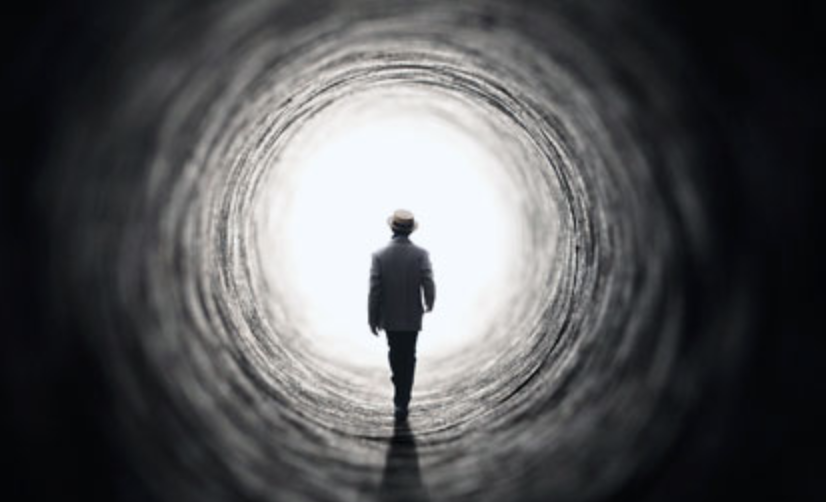
No one much likes to speak of death. It’s too final, too impolite, yet it waits for us all, punctual as ever. But then, to write about surviving death, I must first pull up a chair for death itself, let it speak, let it interrupt.
This video below is not for the cardigan-hearted. Look closely at the woman in black on the right. She is you. She is me. At that moment she didn’t know what was about to unfold. You wouldn’t either. There was no warning. Or was she, like us all, a tragic hostage of her own assumption that there’s always a tomorrow?
You’ll need to click “Watch on YouTube” and then on “I understand and wish to proceed”.
We believe we’re due more time. That life, for all its chaos, obeys some schedule we set in our digital calendar. That death rings ahead, maybe emails.
It doesn’t.
And that is my point. We live with this exquisite ignorance of what’s heading our way. We never know the last time we’ll do anything, that last school run, the last sigh of relief at the end of a busy day, the last eye-roll at a spouse’s joke.
We walk through our lives with the poise of circus acrobats on dental floss, convinced there’s a net beneath us.
There isn’t.
Consider this: it is said that a vaginal birth can be more physically traumatic for the baby than death. That the passage from not-being into being is a rougher ride than the way back out.
Of course, that statistic doesn’t include a departure by long-term illness or by multiple stab wounds, but the fact remains, existence is the wound, not the cure.
And we are always healing from it, until we don’t.
Let’s look, then, at some of the more Darwinian examples – the macabre comedy of human overconfidence.
- The couple who died taking selfies on a cliff edge
- The urban explorer who fell into an abandoned lift shaft looking for meaning in the rust
- The couple who stopped in the right hand lane of a freeway for a quickie, not even on the roadside, both killed by a cargo truck that crashed into them.
These are cautionary tales, yes, but they are also tragic sonnets to the lie of invincibility. They believed, like we all do, that their story wouldn’t end that particular day. That the book wouldn’t snap shut mid-sentence.
Am I writing about death to be macabre? Who knows. I’m certainly writing this to elevate your awareness of potential danger so you avoid an untimely death; when you amble through a shopping mall, go sunbathing on a popular beach in Tunisia, not expecting to be surprised muggers, abusers of whatever nature, by AK-47 carrying gunmen, or even when you lean over a piece of working machinery and your necktie gets caught.
It happens. You know the rest.
How do you do become more alert to unexpected danger? Read Gavin de Becker’s “The Gift of Fear“. It’s bristling with survival information you and your children need, in advance of needing it.
The Gift of Fear book review: “In this empowering book, Gavin de Becker, the man Oprah Winfrey calls the US’ leading expert on violent behaviour, shows you how to spot even subtle signs of danger – before it’s too late. Shattering the myth that most violent acts are unpredictable, de Becker, whose clients include top Hollywood stars and government agencies, offers specific ways to protect yourself and those you love, including: how to act when approached by a stranger; when you should fear someone close to you; what to do if you are being stalked; how to uncover the source of anonymous threats or phone calls; the biggest mistake you can make with a threatening person; and more. You can learn to spot the danger signals others miss. It might just save your life.”
We don’t get alerts for our last moments. No herald for the final school run, no trumpet blast for the last breath exhaled.
Every one of us suffers from the delusion of continuity. That tomorrow is booked and waiting. That fate honours calendars.
I’ve come to think of death not as a full stop but a return ticket back to wherever we came from in the first place. Back home, if you will. The weeping, the hankies, the condolences are not really about the departed; they’re for the empty space in our lives that follows their absence, the space at the table that’s just a little too silent.
That’s what we mourn; the echo, not the exit. But really, if we were honest, if we had any sense of symmetry or poetry, we’d cry tears of joy. Because someone made it back home.
We are mere visitors to this planet, coming from and returning to the same place.
But still, we shuffle along the tightrope, pretending there’s that net.
There isn’t.
Let’s look at some of the Darwin Award deaths, if only to acknowledge that these people walk amongst us.
https://www.bestnursingmasters.com/darwin-awards
Graeme DInnen
ResourcesForLife.net
Leave a Reply