
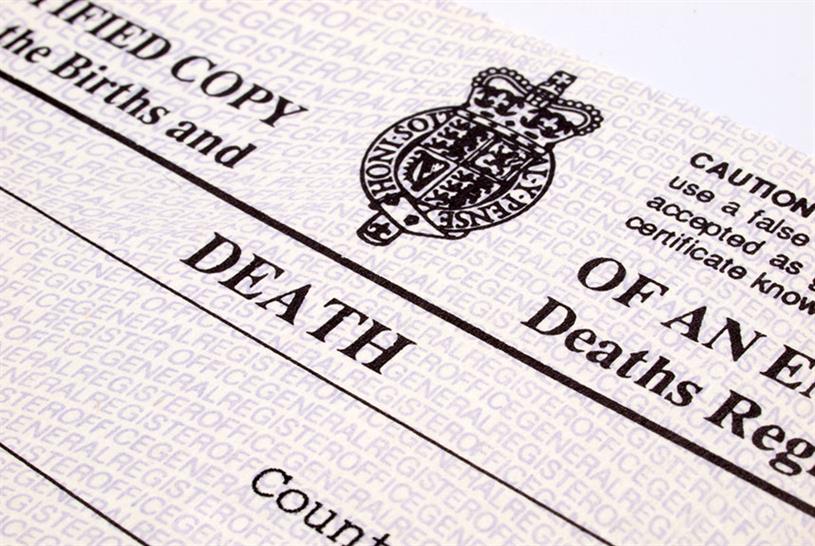
Let me tell you about the last joke your government plays on yo, not taxes, no, that was the penultimate one. The final gag, the real cosmic punchline, is the death certificate.
That thin, officious slip of paper, part clerical ritual, part bureaucratic séance, that informs the world, with the steely impersonality of a bank statement, that you’ve shuffled off your mortal coil.
You see, the death certificate is the state’s way of confirming your existence by, well, confirming you no longer exist. It’s like discovering you’re in the club only once you’ve been chucked out.
It is at once the most definitive document and the most disturbingly vague.
You would expect, wouldn’t you, that the moment of death, that sacred, cinematic final exhalation, would be wrapped in solemn certainty, swaddled in accuracy, stamped by science.
But no. The truth is, your death will be signed off by a GP who hasn’t seen you since the Blair years, squinting at your notes and muttering, “Ah, yes. Cardiac failure. That’ll do.”
“That’ll do.” There’s your curtain call.
Death certificates are where reality goes to have a crisis. I’ve seen a few, real ones, that declared a cause of death as “senility.” That’s right. Officially, they died of being old.
Another noted “failure to thrive.” Which sounds like a line from a Sylvia Plath poem, not a legitimate medical diagnosis. And try not to giggle when you discover that “natural causes” is still a thing.
Natural causes? As opposed to what – supernatural ones? A hex? Did Aunt Mavis drop dead because an ancestral ghost whispered something frightening in her ear?
The language is bloodless, delicately euphemistic, like a menu in a posh restaurant.
“Myocardial infarction” sounds grand, doesn’t it? As if you were personally invited to your own fatal coronary by some handlebar-moustachioed doctor in a tailcoat. Nobody ever dies of “heart exploded like a crisp packet on a bonfire,” which would be closer to the truth of it.
And yet, the absurdity isn’t just semantic. The real weirdness, the darkly comic farce, comes in the process. Dying, for all its permanence, requires a positively Kafkaesque paper trail.
You need the certificate to cancel your Netflix subscription, close your bank accounts, to stop the electoral commission inviting you to vote in a by-election. Irony of ironies, you can still get called for jury duty after you’re dead, but you’ll need that certificate to get out of it.
It must be signed, stamped, witnessed, shuffled from registrar to funeral director to probate lawyer like a sacred relic, only less respected and more likely to be accidentally left in the back of a taxi.
And God help you (or more accurately, your grieving family) if the cause of death isn’t immediately clear. Then the whole system clanks into investigative mode, like a detective series written by health-and-safety inspectors.
Autopsies are ordered, boxes ticked, forms triplicated. Coroners descend with clipboards and dispassion. You begin to realise that what they’re really certifying isn’t your death, but your paperwork. Death itself is incidental.
Occasionally, a death certificate will contain a typographical error. This is not uncommon. A man in Essex was once declared “died of accent.” His accent, apparently, was from Newcastle. Another was listed as having succumbed to “acute marital infarction.” His widow insisted that was fair.
Of course, this final document is never written with you in mind. It’s not yours. It’s for the institution, the banks, the pensions, the scowling clerks in municipal offices who ask for it with a tone that suggests you’re trying to return an old kettle without a receipt.
It’s less a tribute to your life and more a ticket out of the system, punched and stamped and filed in the great grey carousel of bureaucracy.
What’s most maddening, most humanly comic about the death certificate, is that it tries to reduce life’s magnificent messiness to a single line. “Cause of death.” As if everything that led up to it, the grand and grotesque theatre of existing, can be explained with a squiggle on a line.
I rather like the idea of my own, one day, reading simply: “He died of being too much.” Too curious, too cross, too inclined to order a second bottle. But of course, it won’t. It’ll say something bloodless and obvious. It always does.
And then, someone will hand it to a weeping relative across a counter that smells faintly of antiseptic and tea. A formality. A full stop. A joke so dry it barely raises a smirk.
What you’ll never see, not once, not even in the fine print at the bottom of a death certificate, the final receipt of your bodily lease is the phrase “death by parasitic infestation.” Oh no. That would be too honest. Too gothic. Too squirmingly accurate. That would hint at something unclean, something medieval, something that scuttles.
But make no mistake, parasites are very much in the room when you die. They’re just discreet about it. They don’t sign the paperwork. They leave that to cancer, to heart disease, to the polite euphemisms of organ failure and “underlying conditions.”
Parasites don’t crave attention. They crave your gut lining, your lymph nodes, your neurotransmitters, your myelin sheath. They kill by proxy, cloaked in the more fashionable coats of modern maladies.
You see, parasites are the great ventriloquists of medicine. They manifest not as themselves but as mimicry, as IBS, as Crohn’s, as chronic fatigue, as inexplicable rashes and fogged thoughts and suddenly problematic organs.
They don’t want to be diagnosed. They want to inhabit. They want to inherit. They are the squatters of the soul, rearranging the furniture while you wonder why the walls feel damp and the lights keep flickering.
If medicine were honest, if coroners were brave, if registrars had a poetic bone between them, they’d start scribbling it in: Cause of death: long-term internal sabotage by freeloading microbial bastardry.
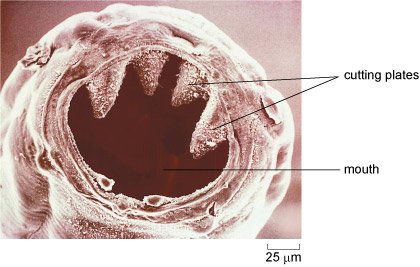
Because for all the talk of degenerative diseases, of idiopathic syndromes (a medical term which literally means, “we haven’t the faintest idea and we’re tired of trying”), so many of the ailments we politely pin to lifestyle or luck are actually the handiwork of something with legs. Or tendrils. Or the sort of mouth that opens in layers.
Parasites don’t just eat at you, they live in you. They do admin. They’re long-term tenants with a passive-aggressive relationship to your immune system. They siphon off nutrients, scramble hormonal signals, disrupt cellular communication like teenage hackers in your biology.
And still, we let them slip under the radar. Why? Because they’re embarrassing. Parasites reek of dirt, of unwashed vegetables and unspeakable toilets. They’re supposed to happen to other peopl, barefoot children on faraway continents, not respectable folk in mid-sized homes with fibre broadband and probiotic yoghurts.
And yet, they’re here. They’re the Hells Angels In your colon. In your bloodstream and eyeballs. Happy to cause chaos there.
We are all, in one form or another, hosts. Some of us to ideology, others to ideology’s more literal cousin: the worm.
And when you do finally go, after the scans and the misdiagnoses and the crumpled prescriptions for something that never quite worked, the certificate will say “cancer” or “organ failure” or “natural causes.”
Not: “systemic dysfunction triggered by the slow-motion mugging of a thousand invaders too small to see and too clever to blame.”
But really, death by parasitic infestation deserves top billing. Not just for its precision, but for its poetry. It’s not just a medical truth, it’s a social metaphor.
Because in life, as in the gut, what finally gets you isn’t the brute force of one dramatic calamity, but the persistent nibble of something you didn’t see coming, that wore your face, mirrored your voice, and made you think the symptoms were all in your head.
Until they weren’t.
Graeme Dinnen
ResourcesForLife.net
PS The parasite issue (and many other poor health issues) is covered in my book ‘The Body Speaks: Tracking The Signs and Symptoms Of Deteriorating Health’
Leave a Reply