
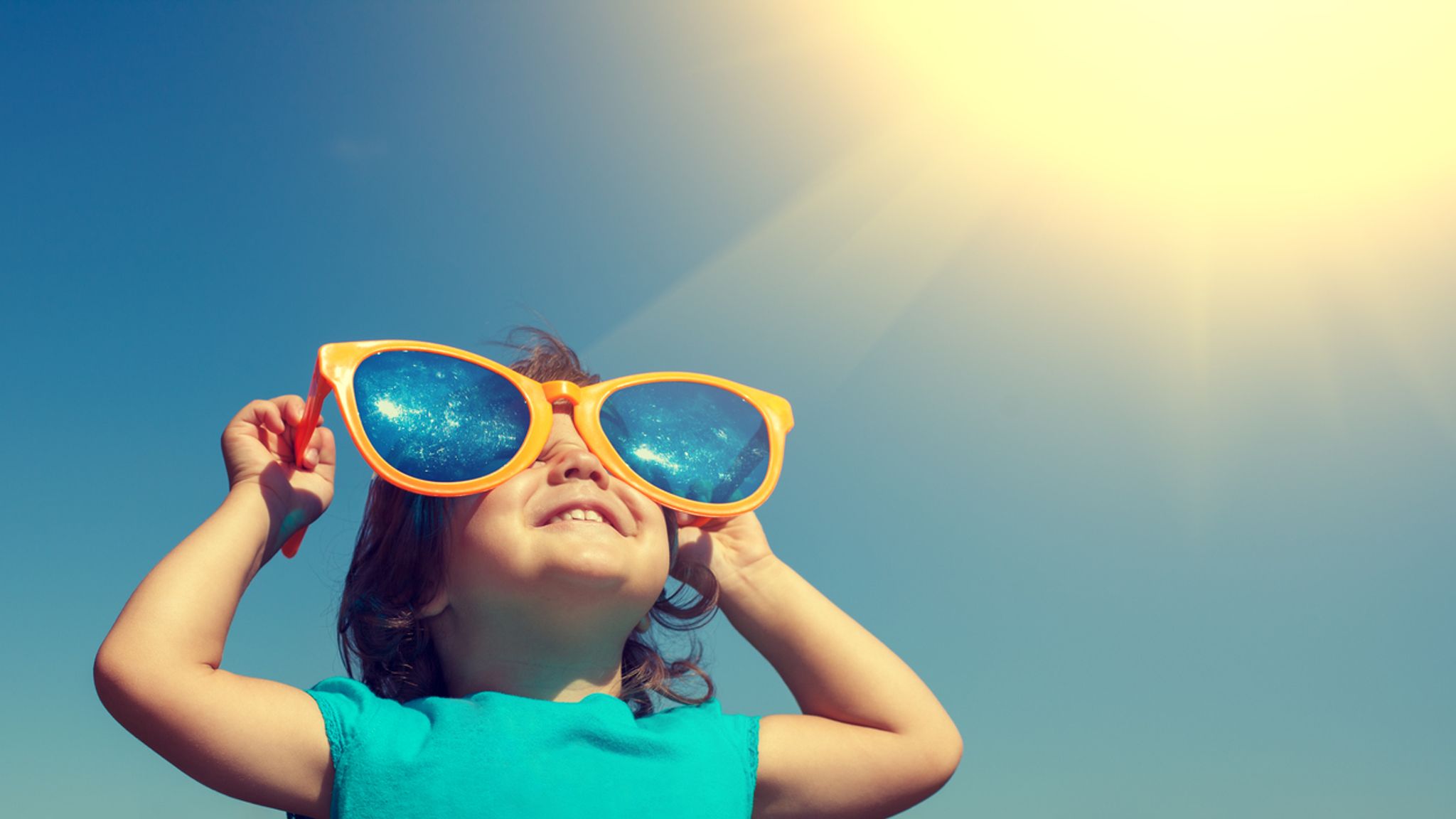
We, the descendants of barefoot apes who once danced beneath the sun like jubilant maniacs, have taken it upon ourselves to do something exquisitely stupid: we wear sunglasses.
Not to fend off searing glares, but as a cultural statement, a chic nihilism strapped to our face, eyes shuttered against the very star that bequeathed us life.
We’ve turned our eyeballs into bourgeois prisoners of Ray-Ban penitentiaries.
Now, some science, if we must. Light, real light, the kind that doesn’t come filtered through glass or branded plastic, is not just illumination. It is instruction. It tells your body what the time it is.
Literally. Your suprachiasmatic nucleus is the brain’s timekeeper and gets its marching orders from photons streaming into your eyes.
And from there, a cosmic game of biological billiards: your organs, glands, skin, and mitochondria all fall into rhythmic harmony. Hormones are summoned. Repairs are scheduled. Appetite is modulated. Melanin is mobilised.
And what do we do? We wear sunglasses, thus tricking the body into thinking it’s dusk at noon, suppressing valuable cortisol and serotonin production.
Of course, there’s always a caveat. To avoid harmful glare from snow, sand, water, yes, wear sunglasses unless you fancy your cornea medium-rare. But the rest of you? Take them off. Let the sun have your irises for breakfast.
Overcome by the desire to look “cool” we become chronically jet-lagged in our own skin.
You might just feel… alive.
Dr Jack Kelly Kruse writes “When UV rays enter our eyes, our body receives the signal that we are outdoors and our protective melanin is activated. However then we cover our eyes and expose our skin, our body is unprepared for the sunlight, resulting in damage. Furthermore the use of carcinogenic body lotions, sunscreens and many personal care products, even chemicals in clothing exacerbates issues.
Most skin cancers are caused by wearing sunglasses“
EYEGLASSES: FILTERING THE WORLD THROUGH CORPORATE CONCERN
Your specs, those noble prosthetics of modern myopia, are also sunblock in disguise. UV-filtering little traitors. Do your eyes a favour: slide them down your nose like a disapproving librarian and let nature in for once. Or, if you’re fancy, buy the artisanal blue-blocking ones with a discount code from some disturbingly earnest Instagram yogi.
Because nothing says enlightenment like affiliate marketing.
CONTACTS: THE INVISIBLE BARRIERS
Contacts are the sleek, invisible culprits in this drama. Alcon Dailies, apparently, are the lone exception, UV-free and perhaps the only lenses that let you see the world without treating it like a biohazard.
Why do so many others block UV? Because sun panic sells. But if your eyes are naked and your soul is willing, skip the filters and squint like a Greek philosopher.
LASIK AND CATARACTS: THE SURGICAL SCOFFLAW’S GUIDE TO SUNLIGHT
So you had surgery. You traded your imperfect natural lenses for something that came in sterile packaging. And now you’re told the sunlight is forever your enemy.
Nonsense. Your skin has photoreceptors. Your very cells are eavesdropping on light. You are a walking, photosensitive miracle. The sun will still speak to you. Don’t fret over what’s done. Mourn not your lenses. Go outside, let light find you, and remember: your mitochondria have a better memory than your regrets.
THE CULT OF SUN-FEAR: A PUBLIC HEALTH PRANK
The Sun, once the muse of poets and gods, has been recast as a carcinogenic predator. A yellow pervert in the sky, to be avoided at all costs. Slip, slop, slap, seek and slide.
Australia turned it into a jingle. America monetised it. Dermatology cashed in. And now we huddle indoors like moles with Wi-Fi.
But here’s the rub: all that fear? It’s based on laboratory studies using isolated UV beams, no warm infrared, no full-spectrum glow, just sterilised light rays in sterile rooms. That’s like judging jazz by listening to a single clarinet note.
Real sunlight is symphonic. It’s UVA, UVB, infrared, visible light, all of it, together, in an ancient choreography your body understands on a primal level.
Melanoma? Yes, it exists. But so does nuance. Chronic sun deprivation can dig its own grave, heart disease, depression, autoimmune conditions. Death by shadow.
And if that’s not enough, Daniel Roytas has something important to tell you – Daniel is the former Senior Lecturer of Nutritional and Naturopathic Medicine at one of Australia’s leading universities. In 2022, he relinquished his position after becoming disillusioned with the curriculum he was teaching.
https://www.facebook.com/reel/9411167728931002
THE REDEMPTION OF RAYS
Want to live longer? Don’t be afraid of the sun. Get outside. A 20-year Swedish study showed that avoiding sun was as deadly as smoking. The women who basked lived longer, died less often from just about everything.
Sunshine is not a curse. It’s not a carcinogenic demon orb sent to melt your mascara. It’s a star, and you need it. Not just emotionally, spiritually, romantically, though yes, yes, all that too, but biologically. Physically. Medically.
You are a wilting, undernourished houseplant in need of 10 to 15 unadulterated, unclothed, unapologetic minutes of midday radiance. No SPF. No linen. No parasol. And absolutely no Instagram.
But here’s the rub, the bit you’ll try to weasel out of: you must actually expose yourself. Not in the tabloid way, not trench coat in the park, but if the sun never sees your skin, it can’t very well do anything with it, can it? Walking about swaddled in shirts, sleeves, and social decorum will get you no closer to vitamin D than drinking tea in a blackout.
So go on, take your shirt off. Be brave. Sit in the garden like a lazy lizard with purpose. Give your poor, pale torso a bit of celestial attention. Just don’t burn. Wear a hat and a T-shirt. No one looks heroic in aloe vera.
Regular exposure reduces risks. It doesn’t cause chaos, it corrects it.
And cancer? Breast, colon, even melanoma in long-term exposure cases? Sunlight didn’t just spare them. It saved them. Not sunburn. Not blitzkrieg weekends of SPF negligence. But daily, humble communion with the sun.
Yes, sunscreen, modern life’s talcum-slicked shield against the apocalypse of a mild tan can swat away valuable ultraviolet B rays and bring collateral damage to our delicate biochemistry.
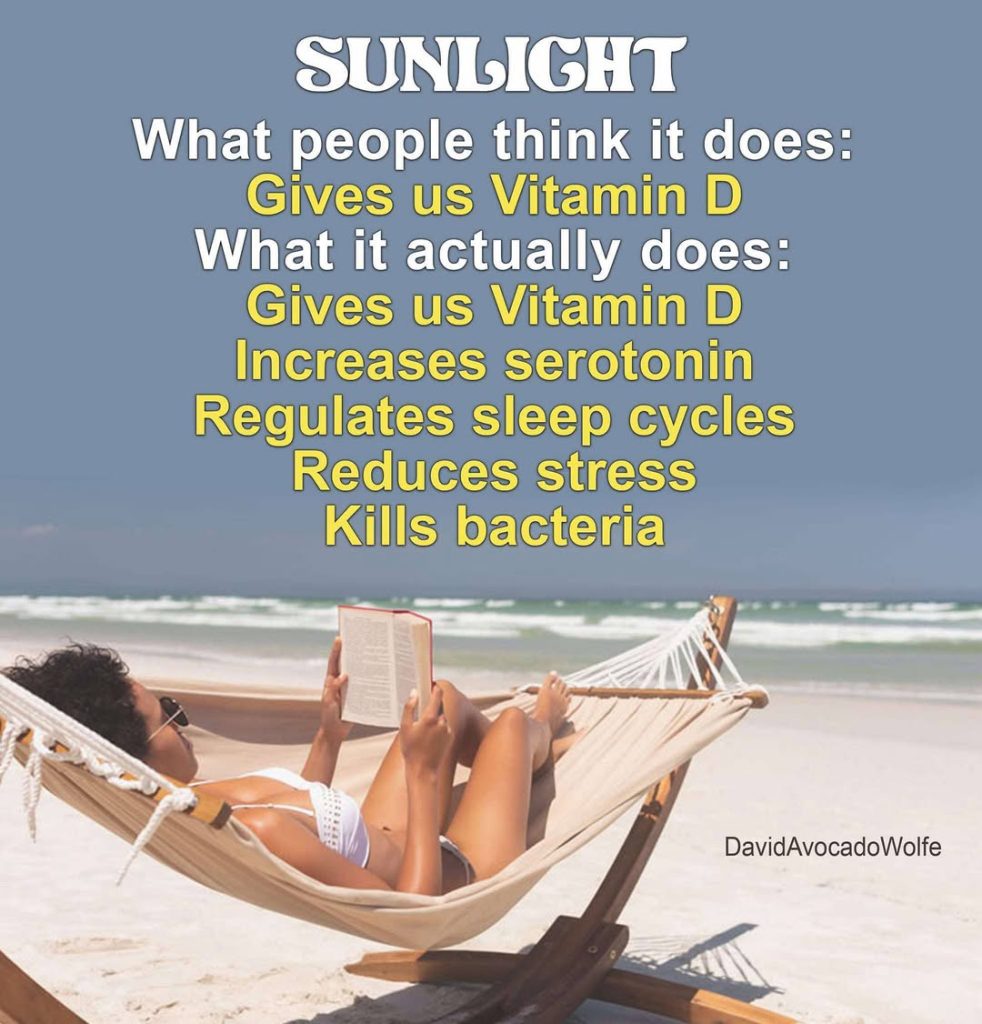
Vitamin D, that sunny little hormone is brewed right there in the skin when those very UVB rays land like a celestial kiss. But lather on the SPF 50, and you’ve essentially hung a Do Not Disturb sign on your epidermis. No sun in, no D out.
Safety, it seems, is not without its side effects.
THE CONCLUSION: A CALL TO DIGNIFIED PHOTON WORSHIP
You want to feel better? Strip off your trauma, your sunglasses, your pharma-fuelled paranoia, and go outside. Let the light hit your face like an aria. Reclaim the elemental knowledge your body still remembers: the sun is not your enemy. It is your ancient, eternal benefactor.
So stand in it. Absorb it. Honour it. For God’s sake, don’t fear it.
And please, whatever you do, don’t wear sunglasses in a café. You’re not fooling anyone.
Graeme Dinnen
ResourcesForLife.net
PS. Vitamin D is technically both a vitamin and a prohormone, but functionally, it acts more like a prohormone in the body.
Here’s why:
- Vitamin (by definition): It’s classified as a vitamin because humans can’t synthesize enough of it through diet alone (especially in low-sunlight conditions), so it must be obtained through diet or supplementation.
- Prohormone (biological role): Once vitamin D is consumed or synthesised in the skin via sunlight (UVB radiation), it undergoes two hydroxylation reactions in the liver and kidneys, to become calcitriol, its active form. Calcitriol functions like a hormone, regulating calcium and phosphate metabolism, bone health, immune function, and more.
The only way to activate it? Sunlight.
Leave a Reply