
Medicine’s greatest con is played out in plain sight, as brazen as a drunk dinner guest yet dressed up in the white coats of clinical respectability.
It relies on an unsung marvel: the body’s stubborn refusal to die on schedule.
We are built with a ceaseless itch to rebalance, to drag ourselves back to homeostasis no matter how many chemical bricks Big Pharma drops on our heads.
Forensic journalist Sharyl Attkisson, who’s made a career of dragging skeletons out of corporate closets, points out that adverse drug reactions are now the third leading cause of death in America.
That’s 250,000 coffins a year before we even get to the meat of the scam.
The darker twist is that the rest of us are limping about because our bodies are continually dodging, metabolising, and repairing the damage, an unpaid maintenance crew in a world of vandals.
If we really were as delicate as doctors’ waiting-room leaflets suggest, the whole pharmaceutical empire would collapse in a fortnight. But we’re not. We’re cockroaches in tailored suits, adapting to each synthetic insult with ingenious workarounds.
Each time a pill suppresses one symptom, the body reroutes, improvises, and produces another, new business for the same dealer. It’s the medical version of arcade whack-a-mole: allopathic medicine, a philosophy literally defined as “against symptoms,” gamely bashing away at the body’s intelligent responses without the faintest idea of what they’re trying to achieve.
Attkisson’s roll-call of side effects reads like the diary of a surrealist taxidermist. Risperdal, an antipsychotic, can give five-year-old boys breasts.
Antibiotics can gift you a black, hairy tongue, ruptured tendons, or a detached retina. Fosamax, a bone-strengthener, can rot your jaw until it falls open like a coal scuttle and snap your femur as a party trick.
Ambien will tuck you into the driver’s seat at 2 a.m. and send you off to make soufflé in your sleep. Antidepressants might turn your urine blue, your skin teal, and your libido into a Roman candle.
None of these are accidents, they’re the body’s countermeasures, chemical origami folded to detoxify a molecule it never evolved to recognise.
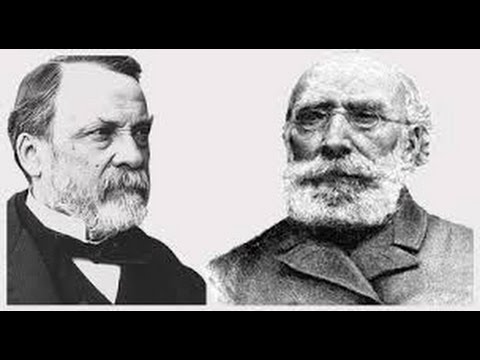
The whole tragic pantomime is staged on a warped set: the germ theory of disease. Louis Pasteur’s neat villain-and-weapon story, bugs invade, drugs kill, was a pharmaceutical goldmine.
Antoine Béchamp’s terrain theory, which suggested that microbes are opportunistic janitors turning up to clean damaged tissue, was booted off stage and buried without ceremony. Pleomorphism, the shapeshifting of microbes depending on their environment, was an inconvenient subplot.
If true, you couldn’t sell a pill for every ill, because the “ills” were the body’s own repair crews.
In the current script, antibiotics are the cavalry. In reality, they’re vandals with sledgehammers, forcing bacteria to change costume into fungi or resistant strains.
Doctoring the truth
Fluoroquinolones, the designer antibiotics, don’t just fail to cure, they vandalise the scenery: connective tissue shredded, perineums torn, nerves fried, minds tipped into hallucination.
Meanwhile, the supporting cast of wonder-drugs is equally treacherous. Statins shred muscle and sometimes kill kidneys. Acid-blockers thin your bones. Antipsychotics cause permanent, grotesque facial tics. Antidepressants are capable of nudging you towards suicide.
Sleeping pills give you worse insomnia when you stop. Blood-pressure tablets make your pressure spike on withdrawal. Xanax might turn you into an extra from a Tarantino bar fight. It’s a perverse industry where the cure not only becomes the disease, it does so on schedule, like a recurring bill.
Valued doctors like Tom Cowan, who’ve spent decades watching the pattern, say it plainly: every symptom means something. It’s part of a purposeful process, not random pathology.
Mark Gober goes further, arguing virology itself is a parlour trick, viruses inferred but never isolated, bogeymen conjured from dying cells in toxic broths. The medical establishment calls this conspiracy; history will likely call it marketing.
The terrain model, by contrast, is comfortingly grown-up: symptoms are signals, bacteria are allies, and health is a collaboration with your body’s design, not a hostile takeover. Chronic disease and the national pharmacy habit aren’t nature’s work, they’re manufactured dependencies, the industrialisation of discomfort.
And so the choice is set before us, like two menus. One is the current bill of fare: symptom suppression as a degustation menu of side effects, each course more exotic and costly than the last, with the sommelier offering a lifetime subscription.
The other is the terrain table: trust the body, feed it, clear its drains, let it finish its work.
One path fattens the pharmaceutical ledger; the other may actually make you well, though there’s no profit in that, which is why it’s the least advertised product in medicine’s shop window.
The case of Dr Philip Bradfield Stowell
A now-retired GP, he was born into a multigenerational family of doctors, and entered medical training in the UK almost entirely unprepared for what the practice of medicine actually entailed.
He did not care much for the increasingly bureaucratic, algorithmically-driven model of medicine that he encountered both in the UK, and in Australia after he emigrated there.
He found the modern profession less Hippocratic than bureaucratic: a clerical religion of forms, tick-boxes, and algorithms dressed up as empathy.
Stowell persisted in the quaint delusion that medicine was about people rather than policy. He was hauled before an investigative tribunal to account for his three sins: spending too much time with his patients, ordering unusual tests, and not prescribing enough drugs.
In other words, he was guilty of being a doctor.
Graeme DInnen
ResourcesForLife.net
Leave a Reply