
If you’ve ever felt guilty skipping a vet appointment, you need to read this.
By doing annual vet visits, buying premium food, and arranging regular vaccines, you’re not doing your dog any favours. I need to tell you what a 40-year study found.
And your vet isn’t going to like it.
A woman with a clipboard and a conscience – the sort who says “interesting” when she means “oh dear” – spent forty years peering into the mortal arithmetic of dogs.
From 1980 to 2020 she tracked fifteen breeds, from the nervy aristocracy of toy poodles to the doleful stoicism of retrievers. Her hypothesis was as plump and well-groomed as a show Labrador: the most cosseted dogs, those with laminated vaccination cards, artisanal kibble, and a Christmas card from the vet, would outlive the scruffier set.
They did not.
Veterinarians HATE this 40-year study. The dogs that lived to 18? They barely saw a vet. The ones with perfect health records? Dead by 11.
The Methuselahs of the kennel – the ones shambling past 18 with cloudy eyes and the gait of an old sea captain – had barely darkened the door of a surgery. They ate the sort of food sold in sacks, missed half their boosters, and regarded antibiotics as an exotic rumour.
Here’s why: The over-vaccinated dogs developed autoimmune disorders – their immune systems started attacking their own bodies. The premium grain-free diets? Linked to heart disease. Annual vet visits meant annual antibiotics for every little sniffle, destroying their gut microbiome.
The neglected dogs, by contrast, were not so much mistreated as unmanicured. They met the world without a chaperone. Their immune systems were obliged to practise. They fought things off. They got dirty. They healed.
In immunological terms, they trained. In lifestyle terms, they lived.
Veterinary immunologists, poring over quantities of data, described the mechanism plainly: mammalian immune systems require exposure. Constant pharmacological interference can induce a kind of physiological dependency.
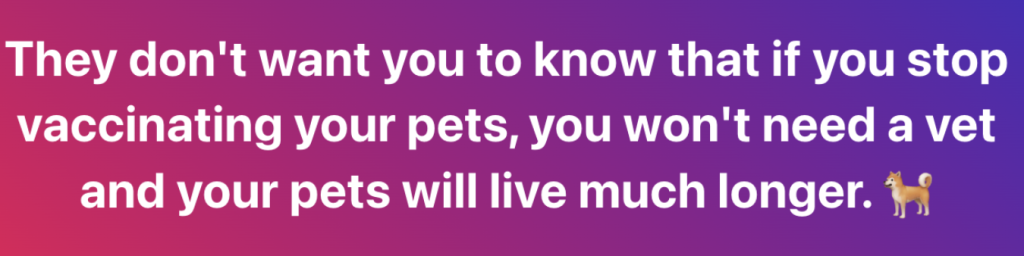
If the body is perpetually supplemented, it may reduce its own production. Miss a booster and the system, having been cosseted into complacency, falters. The rough-and-ready dogs, the ones raised without a medical chaperone, developed broad, resilient responses that endured.
This is the part that makes the industry bristle like a cat in a bath. Modern veterinary practice is built on annual visits, booster schedules, prescription diets, preventative everything. It is not villainy so much as structure: clinics have rents, staff, and machines that go ping.
A dog that requires nothing beyond a yearly pat on the head is a charming creature but a poor client. Protocols, once established, calcify into doctrine. Doctrine becomes morality. To question it is to be accused of loving your dog insufficiently.
Thus two tribes now eye each other across the dog park.
The Devout spend $5,000 a year on premium food, supplements, and vaccines administered with the punctuality of a Swiss train network. Their dogs die at 10+.
The Laissez-Faire skip boosters, buy bulk food, and only visit the vet when something’s actually wrong. Their dogs, statistically at least, amble into their late teens, grey-muzzled and faintly astonished to still be here.
Both love their dogs. Only one is accidentally loving them to death.
The question, then, is not whether to care. It is what care means. Is it relentless intervention, a war on every microbe and molecule? Or is it the confidence to allow a body – canine or otherwise – to encounter the world and answer it?
We have mistaken activity for virtue. We vaccinate as if stamping a passport, prescribe as if seasoning food, and buy diets with the fervour of pilgrims.
So what is killing modern dogs – neglect or care? The answer is uncomfortable: we’re so afraid of doing too little, we’ve built an industry around doing too much.
Biology is not impressed by expenditure. It rewards resilience, not receipts.
Your vet won’t tell you this. But the data just did.
Graeme Dinnen
ResourcesForLife.net
PS. A few necessary words of legal-speak before the pitchforks and solicitors are summoned.
This article is intended as information, not instruction; conversation, not prescription. I am not a veterinarian, nor do I play one on the internet. The pages that follow represent a collection of research by qualified vets, books, studies and opinions that readers may find interesting enough to discuss with other professionals or practitioners.
Before acting on anything contained here, examine the evidence yourself, and speak to your vet. Your dog deserves more than the medical equivalent of a comment section.
Nothing in this article should be taken as veterinary advice. Any decisions regarding the health, treatment or vaccination of an animal should be made in consultation with a suitably qualified veterinarian.
This is my opinion and what I would do if I had a dog. I accept no responsibility for any injury, illness, loss, damage or other misfortune suffered by any person or animal as a result of relying on, misunderstanding, enthusiastically embracing, or otherwise acting upon anything contained in this article.
Leave a Reply