

The Modern Body Under Siege
For the first time in history, we humans live under a sort of permanent atmospheric assault: underfed and overexposed, chemically pickled, nervously exhausted, electronically simmered.
The old covenant between man and his environment has been quietly revoked. Food no longer nourishes with any conviction. Water arrives carrying the ghostly residue of industry and pharmaceuticals.
The air tastes faintly of combustion and solvents. The soil, once black with mineral richness, has been strip-mined into a dead substrate propped up by synthetic fertilisers that keep crops upright but leave vitality somewhere back in the previous century.
Meanwhile the body, that absurdly optimistic sack of organs, is expected to absorb an endless drizzle of additives, pesticides, plastics, medications, heavy metals and environmental toxins, all accumulating with the efficiency of unpaid parking tickets.
And then we wonder why everyone doesn’t perform at their best.
Most people aren’t ill in the dramatic, traditional sense. They’re just running on empty. Deficient, depleted, chemically confused – like racehorses being fuelled on instant noodles.
In America, prescriptions are handed out with the casual abundance of casino loyalty cards, many commonly prescribed medications being given to patients despite the risks often outweighing the benefits.
When Medicine Becomes a Chemical Burden
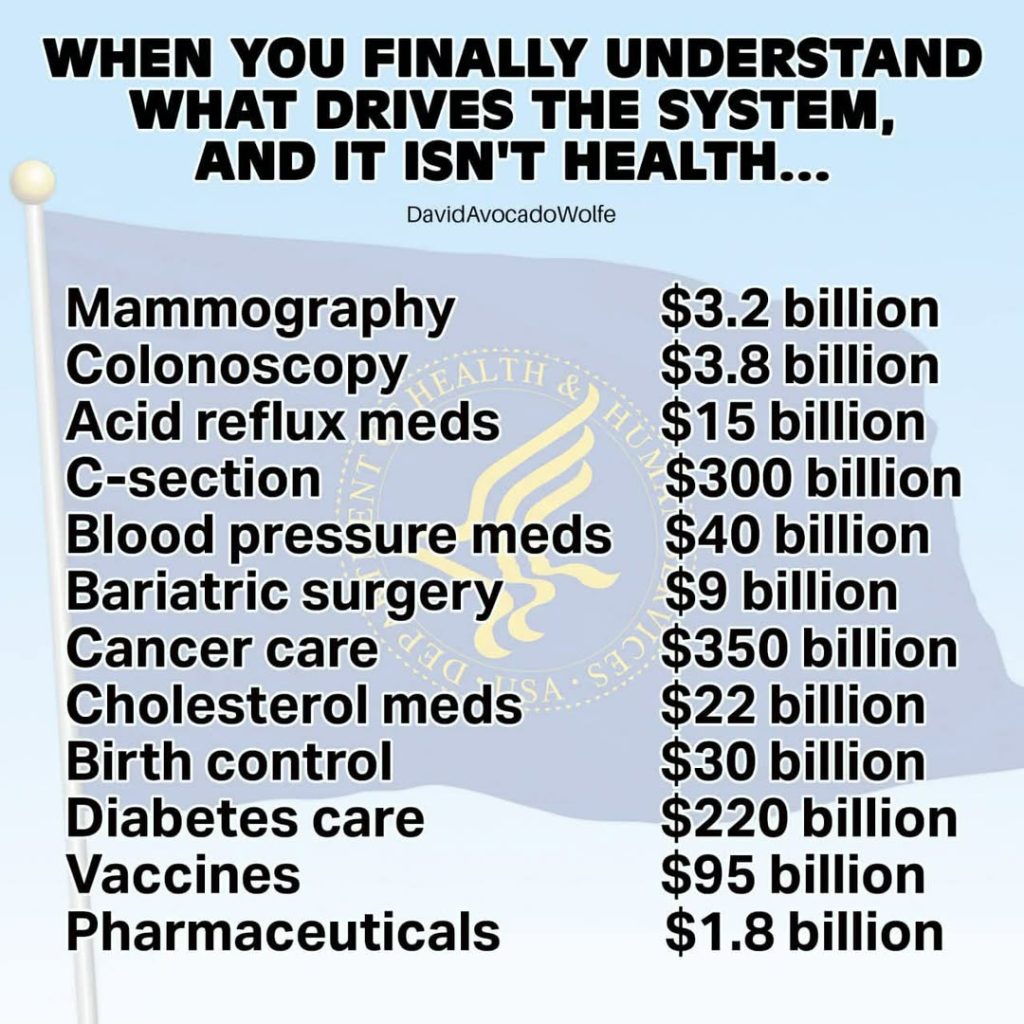
In the USA, two-thirds of adults are estimated to be carrying at least one pharmaceutical chaperone, and the average citizen collects nine prescriptions a year, as though accumulating medications were some suburban hobby, like birdwatching or artisanal barbecuing.
One of the more dispiriting sights in medicine is the elderly patient arriving not so much as a person but as a rattling chemistry set, burdened by a plastic bag of pills that weighs more heavily than the ailments they were intended to treat.
The modern patient is often treated less as a human being than as a series of biochemical opportunities.
When a doctor hands you a prescription, most of us accept it with the same unquestioning faith we reserve for airline pilots and plumbers. The pill arrives in a box, the doctor wears a reassuring expression, and that is usually the end of the inquiry. Safe? Of course it’s safe. Otherwise they wouldn’t be giving it to you, would they?
But certainty, like sausage meat, becomes less appetising the closer you get to its manufacture.
How does the doctor know it’s safe? Largely because somebody from the pharmaceutical company told him so, accompanied by glossy literature, graphs marching obediently upwards, and references to clinical trials whose conclusions appear satisfyingly authoritative.
Most doctors, being busy and human, stop there.
The awkward question is how the drug company knows. The answer, disturbingly often, is that it doesn’t. Or worse, that it knows rather more than it admits. Modern medicines pass through elaborate and expensive trials, yet the raw data underpinning those reassuring conclusions frequently remains hidden from public scrutiny.
The company presents the verdict; the jury is never shown the evidence.
Research papers are especially theatrical performances. Few readers venture beyond the executive summary, which is convenient because that is often the part most carefully polished by marketing departments.
Ghostwriters compose, sponsors influence, and eminent academics occasionally lend their names like aristocrats opening supermarkets.
Meanwhile, out in the real world, patients become the final phase of testing. A doctor may gradually notice that a surprising number of people taking a new drug are developing high blood pressure, strokes, or something equally inconvenient.
Reporting systems exist, but they are underused and underpowered.
Sometimes the truth emerges only after years of prescriptions and funerals. Vioxx remains the cautionary monument: a drug linked to tens of thousands of deaths before the full scale of its dangers became impossible to ignore. The scandal was not merely that people died. It was that somebody knew more than they said.
A case in point if you’re offered, or are taking medicines for Alzheimers: https://www.facebook.com/reel/3329113093930228
Take statins. I’ve repeatedly stressed that their benefits are frequently sold with the enthusiasm of a timeshare presentation. Yet, at best, five years of dutiful swallowing may purchase an extension of life measured not in months or even weeks, but in a handful of days.
Meanwhile, a substantial minority of statin users acquire unwelcome souvenirs: muscle pain, mental fog, and the unsettling sense that their medication is making them feel older rather than younger.
The absurdity of this pharmaceutical arms race was illustrated rather neatly by a 2007 study. Simply stopping the least necessary medications produced a 23 percent reduction in mortality and an 18.2 percent drop in hospital referrals.
And as always, when doctors go on strike, the death rate always plummets.
You might imagine such a result would trigger a moment of collective reflection. Instead, it disappeared beneath the relentless momentum of a medical culture that regards an empty prescription pad with the same suspicion a banker reserves for an idle pound note.
The direction of travel remains stubbornly one-way: more drugs, more combinations, more opportunities to medicate the side effects of the medications prescribed to treat the side effects of the previous medications. The patient becomes an afterthought, somewhere beneath the paperwork and pill bottles.
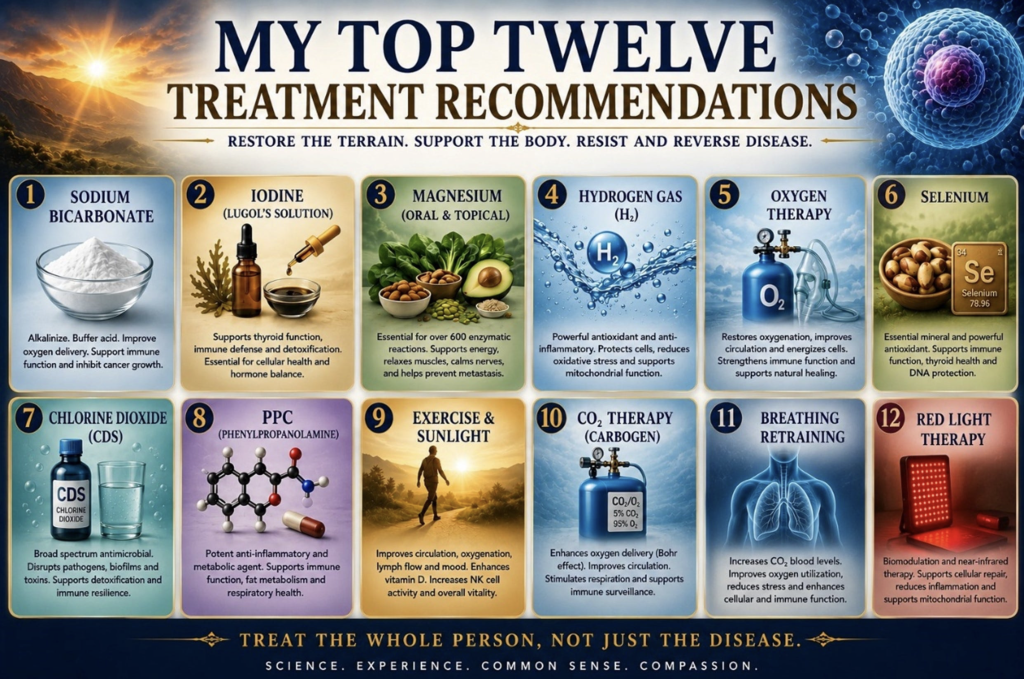
What can we do? With thanks to Dr Mark Sircus for this sensible chart.
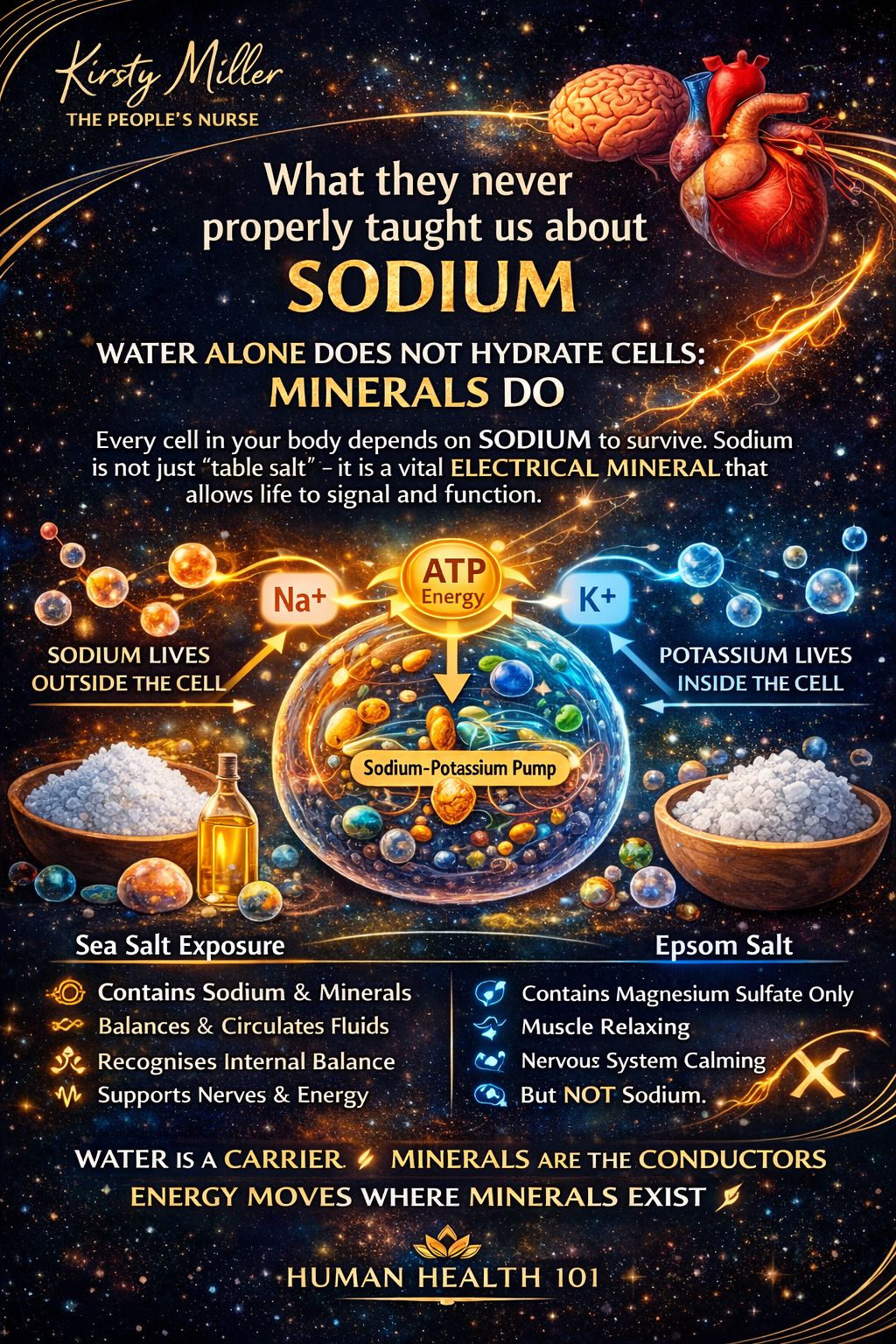
Kirsty Miller was a Nurse in the system. She says that sodium was usually the first protocol administered for every patient, yet they tell you salt is bad!
“This Is what they never properly taught us about sodium” she said.
Kirsty was trained to tell people to drink more water. She was trained to fear salt. She was trained to repeat guidelines without ever questioning the biology underneath them.
Then she started asking why people were still exhausted, dizzy, foggy, inflamed and unwell despite “doing everything right.”
Here’s the truth most people are never told
- Water alone does not hydrate cells. Minerals do.
- Water is the carrier. Minerals are the conductor. Energy moves where minerals exist.
Every cell in the human body depends on sodium to survive. Not as seasoning. Not as a villain. But as a primary electrical mineral that allows life to move, signal and function.
No bleached table salt, proper earth salt. Celtic Sea Salt. I hope you don’t eat table salt, because it is industrially processed.
The body isn’t dry. It’s demineralised. I’ll write it again – water is a carrier, minerals are the conductors. Energy moves where minerals exist
“I didn’t learn this from a pamphlet,” says Miller, “I learned it from watching real people suffer while being told they were “fine.” I learned it by stepping outside the system and actually following the physiology. I learnt it by questioning everything I was taught and discovering pathways to independent healthier life choices.”
Mineralisation is not an alternative. It is foundational biology.
You cannot think clearly, move properly, regulate your nervous system or truly hydrate your cells without adequate sodium.
This isn’t opinion – it is cellular physiology.
And once you see it, you can’t unsee it.
Graeme Dinnen
ResourcesForLife.net
Leave a Reply