
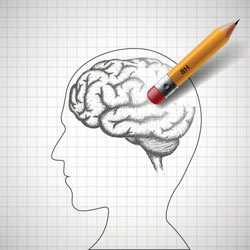
People often imagine science as a straight path: each discovery bringing us steadily closer to the truth.
Alzheimer’s disease has never followed that path. Instead, its history looks more like a long debate, one that has gone on for decades without clear agreement.
This story begins in 1901 with a German doctor, Alois Alzheimer, who examined the brain of a woman named Auguste Deter after her death. She was the first person to walk down memory loss lane as we know it today.
He wanted to understand what had caused her severe confusion.
By 1905, the disease had been named after him. Researchers noticed unusual clumps of protein in the brain, later called amyloid plaques.
These plaques became the centre of Alzheimer’s research. Scientists developed the “amyloid hypothesis”: the idea that amyloid plaques are the main cause of the disease.
The theory seemed logical and attracted enormous funding. Governments, including the National Institutes of Health, invested billions of dollars in treatments designed to remove amyloid from the brain.
Despite this investment, Alzheimer’s remained difficult to treat.
Some newer drugs, including monoclonal antibodies that target amyloid, can reduce plaque levels in the brain. However, their effects on memory and daily functioning have been, at best, modest, and some can cause serious side effects such as brain swelling and small brain bleeds.
In 2003, French neuroscientist Sylvain Lesné declared that his research pinpointed amyloid plaque as the cause of Alzheimers. In 2022, they found his highly influential research to be fraudulent – investigators reported image irregularities in his published papers. But he got away with it for years and diverted genuine research in the wrong direction.
Meanwhile the National Institutes of Health hd been duped into spending $300 million dollars a year to attack amyloid plaque. Today, pharma continues to produce medicines that they know don’t provide any real benefit but are happy to accept healthy annual subsidies.
One example: Aduhelm – A drug steeped in controversy
The Alzheimer’s story is beginning to look less like a triumphal march of science and more like one of those expensive expeditions that discovers, several billion pounds later, that it may have been reading the map upside down.
The unsettling possibility is not fraud or conspiracy, but that an entire orthodoxy grew fat on evidence that was partial, shaky and simply too eagerly embraced.
Science, gloriously, is built to correct itself. Less gloriously, it often does so at the speed of continental drift, particularly when careers, reputations and fortunes have been invested in the prevailing wisdom.
Researchers are now asking a more awkward question: why does amyloid accumulate at all? A growing number suspect it may not be the villain of the piece, but part of the brain’s emergency services – a biochemical paramedic rushing to sites of injury, inflammation or even infection.
Amyloid, in this telling, may be less the arsonist than the fire brigade.
Meanwhile, the unglamorous business of living well still matters. Sleep appears to help the brain clear away its metabolic rubbish, while exercise is associated with sharper cognition and may even encourage the growth of new brain cells.
Alzheimer’s resists simple explanations. The real failing may have been intellectual overconfidence: a field so enamoured of a single theory that it stopped looking over its shoulder.
Natural health author and researcher Patrick Holford (BSc in experimental psychology), attended a conference on mental health at which he presented papers evidencing the causes outside the theatre of amyloid plaque. His research was ignored, his question to the panel went unanswered and he wasn’t invited back the following year.
Cognitive Reserve
As for reducing dementia risk, one important concept is cognitive reserve. This refers to the brain’s ability to cope with damage by using alternative neural pathways.
But the brain is fundamentally lazy. Once it masters a task, it puts it on autopilot to save energy. ⠀ You can do a crossword or Sudoku puzzle every single morning for 10 years. But after a while, your brain isn’t actually working hard anymore. It’s just driving down a well-paved road.
The real secret to a bulletproof brain? Cognitive friction. It’s the habit of consistently doing things you are absolutely terrible at. ⠀
When you force yourself to learn a new language, pick up the piano at 50, or even just navigate a new city without GPS, our brain gets uncomfortable. It has to burn energy to build entirely new neural pathways. Even handwriting, an almost forgotten art, engages cognitive friction.
Our culture tells us that getting older means finally getting to be comfortable. But neurological comfort is a trap.
If your daily routine is perfectly predictable, your brain is slowly going to sleep. If you want to keep your mind alive until the very end, you have to drop the ego.
Embrace the frustration of being a beginner again. Every single day, give your brain a reason to wake up.
Blood Quality Means Everything
Your brain is the most energy-hungry organ in your body.
Although it represents just 2% of your body weight, it consumes an extraordinary 20–25% of all the energy you produce. Every thought, memory, decision and moment of focus depends on one thing above all else: an uninterrupted supply of blood-delivered oxygen and glucose.
Healthy blood flow is not simply important. It is fundamental to vitality, cognitive performance and healthy ageing.
Blood is your body’s crimson river of life. It nourishes every cell, removes toxins, repairs damage and defends against infection. Without efficient circulation, the brain cannot perform at its best.
Blood reaches the brain from the base upwards, and then travels from back to front. The last area to receive this supply is the prefrontal cortex, the command centre responsible for concentration, planning, judgement and decision-making.
When blood flow is less than optimal, this critical region may be among the first to feel the effects. Brain fog, poor concentration, mental fatigue and declining cognitive performance can gradually become part of everyday life.
Many people simply accept these changes as an inevitable consequence of ageing.
They are not.
Modern life places enormous demands on the brain. Stress, inflammation, poor sleep, environmental toxins and the ageing process itself can all compromise circulation and cellular energy production.
The good news is that there is something you can do.
Vielight’s technology offers a simple, non-invasive way to support healthy circulation, cellular energy production and brain function – all from the comfort of your own home.
Shining therapeutic light through the nasal passages may sound unconventional, yet the science is compelling. The nasal cavity contains an exceptionally rich network of blood vessels, providing an ideal gateway for delivering light energy to circulating blood and supporting whole-body health.
The MIP is available without prescription or referral. But compare that investment with the true cost of cognitive decline: lost independence, diminished quality of life, and the heartbreak experienced by families watching a loved one slowly fade.
The choices you make today will influence how clearly you think, how independently you live and how fully you enjoy the years ahead.
Waiting rarely improves health. Taking action can.
Your future self may thank you for acting today.
Explore the Vielight range . Scroll down to Brain and systemic health – Portable and determine which model suits you best.
IMPORTANT: Use Code RFLBIO and save yourself 10%

Graeme Dinnen
ResourcesForLife.net

Leave a Reply