
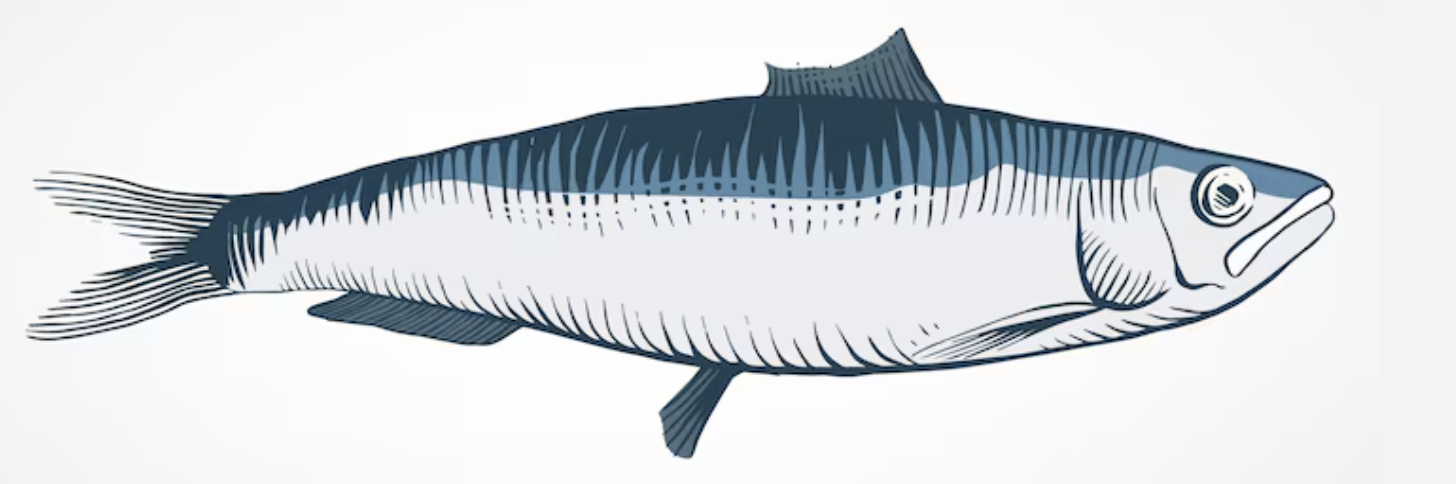
There is something wonderfully humble about the sardine. It arrives without fanfare, costs a fraction of fashionable seafood, and yet quietly delivers more nutrition than many foods commanding many times the price.
Long before “superfoods” became a marketing buzzword, sardines had already earned their place on dinner tables across Europe, the Mediterranean, Asia and the Americas.
Long before nutritionists discovered hashtags, sardines had already been sustaining fishermen, labourers and families from Lisbon to Tokyo. They didn’t require branding. They simply worked.
The name itself is thought to come from the island of Sardinia, where the fish once gathered in shimmering shoals so vast they seemed less like wildlife than weather. For millennia they have fed coastal communities, preserved in salt, smoke or oil against leaner seasons.
They were the original convenience food, except they contained actual food.
Unlike the marine aristocracy – tuna, swordfish and their swaggering predatory cousins – the sardine lives a refreshingly uncomplicated life. It matures quickly, breeds enthusiastically and spends its days nibbling plankton rather than swallowing everything smaller than itself.

Consequently it accumulates very little mercury or other environmental nasties, making it one of the cleanest fish on the menu and one of the most sustainable. Nature, it seems, knows exactly what she’s doing.
Travel the world and the sardine wears many disguises. In Portugal it crackles over charcoal fires, sending fragrant smoke drifting through narrow streets. In Britain it finds sanctuary atop buttered toast. Around the Mediterranean it slips effortlessly into salads alongside tomatoes, olives and capers, while elsewhere it disappears into pasta sauces, lending them the sort of deep savoury richness chefs prefer to call umami because “delicious” somehow no longer sounds sophisticated enough.
Its reputation for being aggressively fishy is one of gastronomy’s great libels. A fresh sardine is delicate, almost sweet, its flesh firm but tender beneath skin that crisps beautifully over a flame. Canned sardines, meanwhile, mellow into something altogether richer. Packed in olive oil, tomato sauce, spring water or mustard, they develop a depth of flavour that belies their modest price tag.
Then there are the bones.
Most diners approach them with unnecessary suspicion. Yet these softened little skeletons, rendered almost creamy by the canning process, are nutritional gold dust. They disappear almost unnoticed while delivering calcium in quantities that many expensive supplements can only dream about.
Few foods naturally unite calcium and vitamin D in quite the same convenient package. Because the bones are eaten whole, a single serving contributes meaningfully to maintaining skeletal strength, something one tends to appreciate rather more once birthdays begin arriving faster than expected.
Indeed, sardines possess an almost embarrassing concentration of goodness. Within one modest serving lurks complete protein, generous quantities of omega-3 fatty acids, vitamin D, vitamin B12, calcium, selenium, phosphorus, iodine, iron and magnesium. If nutrition were measured by cubic centimetre, sardines would be difficult to beat without resorting to laboratory equipment.
Their greatest celebrity, of course, remains omega-3. These remarkable oils help maintain healthy blood vessels, support normal heart rhythm, moderate inflammation and contribute to lower triglyceride levels. Unlike the synthetic concoctions that occupy entire shelves in health food shops, sardines deliver these fats exactly as nature intended, complete with the supporting cast of minerals and protein.
The brain also thrives on omega-3 fats, particularly DHA. Together with the generous helping of vitamin B12 found in sardines, they contribute to healthy nerve function, memory and cognitive performance. They are not magic bullets against dementia or Alzheimer’s, but they supply many of the nutritional bricks from which a resilient brain is built.
There is another virtue rarely celebrated: value. At a time when supermarket receipts increasingly resemble mortgage applications, a humble tin of sardines remains astonishingly inexpensive. For less than the price of many nutritionally bankrupt snacks, you acquire a complete meal rich in protein, healthy fats and essential minerals, with a shelf life that makes it a dependable ally in any cupboard.
Perhaps that is the sardine’s greatest triumph. It has steadfastly refused to become fashionable. Fashion would only spoil it. It has remained exactly what it has always been: honest, nourishing and quietly magnificent.
Sometimes we spend our lives chasing culinary peacocks while overlooking the sparrow sitting contentedly on the garden fence. The sardine asks for no applause. It simply turns up, feeds us superbly, asks almost nothing of the oceans in return, and slips away without ceremony.
The sea, it seems, has always known that its greatest treasures need not be the largest. Sometimes they arrive in silver jackets, packed neatly in a tin, carrying enough goodness to make foods costing ten times as much look faintly ridiculous.
Bon appétit
Graeme Dinnen
ResourcesForLife.net
A Simple and Healthy Sardine Meal:
This Sardine spread isn’t just delicious, it’s loaded with omega-3s, protein and calcium for strong bones, sharp focus and glowing skin. ✨
Made with simple ingredients – sardines, egg, butter and lemon juice, it is the perfect nutrient-dense snack for busy days or post-workout fuel.
• Spread it on sourdough bread/toast
• Dip it with veggies
• Or enjoy it straight from the bowl!
Ingredients:
- 2 tins sardines in olive oil
- 40g butter
- 1 boiled egg
- 1 small red onion
- 1 teaspoon capers in white wine vinegar
- a few sprigs of fresh parsley
- 1 teaspoon mustard
- boost the taste with 1/2 teaspoon Fleur de Sel (Celtic Sea Salt)
- 1 tablespoon lemon juice
Instructions:
1. Add all ingredients to a blender or food processor.
2. Blend until smooth and creamy (or keep it slightly chunky if you prefer texture).
3. Taste and adjust seasoning, add more lemon juice for brightness or mustard for a kick.
4. Chill for 15–20 minutes before serving (optional, for a thicker texture). Enjoy!

Leave a Reply