
Schumann Resonance
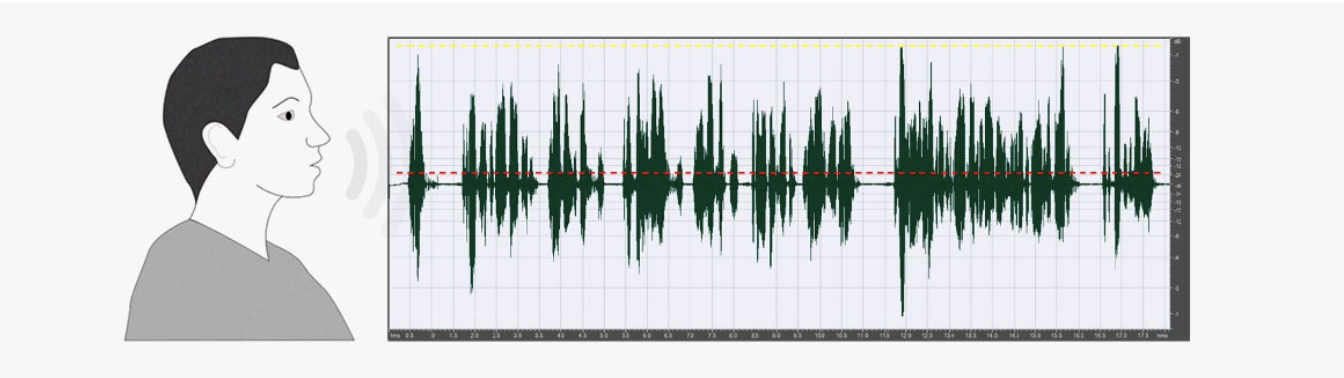
The Schumann Resonance is Earth’s natural electromagnetic pulse, the rhythm that hums through our planet 24/7.
It’s born when lightning flashes strike the Earth about 45 times every second (that’s 8 million strikes a day), their energy bouncing between the ground and the ionosphere, that charged veil of atmosphere hovering roughly 100 km (60 miles) above us.
Think of it like Earth’s own radio station, broadcasting a frequency of 7.83 Hz, too low to hear, but powerful enough to be felt. Like a heartbeat, it thrums beneath everything that lives.
Earth is a giant bell, resonating since the dawn of time. Every flash of lightning sends waves that circle the globe, weaving a continuous symphony that every living being evolved within. We are not separate from it, we are made of its rhythm.
Here’s the fascinating part: that 7.83 Hz tone mirrors our own brain’s alpha waves (8–12 Hz), the frequency of calm, creativity, and flow, and theta waves (4–8 Hz), the state of deep meditation and healing.
It’s as if humanity has always been tuned to Earth’s frequency…..we just forgot how to listen.
Music as Medicine: Our Brain on Sound
What’s really happening in our brains when healing frequencies move through us? The answer is poetic neuroscience: a story that links your ears to your brain, your brain to your heart, and your heart back to the Earth itself.
The Sacred Pathway: How Sound Becomes Healing
Inside your inner ear, 15,500 tiny hair cells act as divine translators, turning sound waves into electrical signals that your brain can understand. Those signals travel a sacred route, through your brainstem, thalamus, and into your auditory cortex, which is mapped like a piano keyboard across your mind.
But here’s where it gets magical: Sound doesn’t just stay in your head. It connects directly to your emotional centres, memory circuits, and through intricate neural pathways, even to your heart.
The Clinical Proof
Strengthening Fading Memories
In dementia therapy, rhythmic music helps restore what memory loss took away. Patients who couldn’t remember their own names suddenly sing every lyric to a song from their youth. That’s not nostalgia, it’s neural reconnection. Music rebuilds the bridges between memory, motion, and emotion.
Calming Racing Minds
Sound directly speaks to your autonomic nervous system — the subconscious conductor of your heart rate, breathing, and stress responses. Within 30 minutes of calming frequencies, your body shifts from fight-or-flight into rest-and-heal. Your nervous system exhales: “it’s safe now.”
Soothing Sleepless Nights
When researchers played sound designed to mirror slow-wave sleep, participants didn’t just fall asleep faster, their brains dropped into deeper, more restorative states. The music didn’t just lull them to rest, it tuned their bodies to the rhythm of renewal.
The Heart–Brain Connection
This is what moves me most, sound literally synchronises your heart’s rhythm with your brain’s waves.
Through the vagus nerve, the golden bridge between brain and body, healing frequencies guide your entire system into harmony.
Ancient cultures understood this long before science could explain it. When you listen to music around 60–90 BPM, your heart remembers its natural rhythm. Your brain releases its grip. Your body remembers peace.
Beyond Boundaries
Modern research is catching up with ancient wisdom.
- Patients in minimally conscious states rebuilt neural connections after weeks of sound therapy.
- Those with fibromyalgia experienced up to 81% improvement from 40 Hz tones.
- Group drumming reduced depression and even shifted immune profiles toward healing.
Sound is not passive. It’s active medicine.
Ancient Wisdom, Modern Science
What emerges is a profound truth: We are not separate from vibration….we are vibration.
When sound rebuilds neural pathways, synchronizes heart and mind, and awakens the body’s memory of balance, we realize music was never mere entertainment. It was always the medicine.
A Harvard study showed that children with no prior musical experience who took music lessons for just over a year literally changed the structure of their brains.
The magnetic resonance imaging revealed:
Growth in motor regions — enhancing finger coordination and control
Expansion of the corpus callosum — strengthening communication between brain hemispheres
Development of the auditory cortex — sharpening sound perception and processing
But that’s not all. These young musicians also improved in:
• coordinated movement of both hands working together
• Improved melodic and rhythmic sensitivity
• musical skills related to both playing and listening
Music didn’t suddenly boost vocabulary or general I, its effects were beautifully targeted. It reshaped the brain precisely in the areas needed to make and understand music, forging stronger neural pathways and deeper capabilities than ever before.
Because it’s not just about talent. It’s about building the brain itself.
Celebrated musicians and their work
Let’s look at the connection:
J.S. Bach – Mathematical / Divine Order
“The universe written in music.” Bach’s music reflects symmetry, proportion, and logic, like architecture in sound. It feels governed by cosmic or mathematical law.
Wolfgang Amadeus Mozart – Natural / Organic
“Music that breathes like life itself.” Mozart’s phrasing often matches the rhythm of natural human breathing and speech. It’s effortless, balanced, and “alive.”
Ludwig van Beethoven – Emotional / Human Will
“Music of struggle and triumph.” Beethoven’s music mirrors human emotion and conflict, the drama of the inner life, of tension and release, of freedom and destiny.
Frederick Delius – Nature / Sensual Flow
“Music as landscape breathing – the sound of life dissolving into light and air“
The Painter of Sound – Delius’ music doesn’t argue or strive; it unfolds. It often feels like you’re listening to nature think – slow rivers, shifting sunlight, or summer fields in sound. There’s no sharp rhythm or classical “architecture”; it’s continuous and organic, as if time itself were stretching and relaxing.
Franz Schubert – Lyrical / Heartfelt Emotion
Music of longing, tenderness, and melancholy, like the poetry of the human soul.
Franz Liszt – Theatrical / Spiritual Ecstasy
Virtuosity that borders on mysticism, the search for transcendence through passion.
Frédéric Chopin – Introspective / Psychological
Music as inner monologue; small forms (nocturnes, preludes) that reveal vast emotional landscapes.
Claude Debussy – Sensual / Impressionistic
Sound as light and color; music that dissolves boundaries and imitates the fluidity of water and air.
Igor Stravinsky – Rhythmic / Primal Energy
Music tied to the pulse of ritual and the raw physicality of movement.
Johannes Brahms – Structural / Intellectual Emotion
Deep feeling contained within classical discipline, like emotion through architecture.
Sergei Rachmaninoff – Romantic / Nostalgic Memory
Music of longing for the past, drenched in harmonic richness and melancholy.
Joseph Haydn – Cheerful / Natural Order
Balance, wit, and good humour, music as the expression of reason and joy in nature.
Erik Satie – Minimal / Dreamlike Irony
Sound as atmosphere; simplicity with a wink, music that suggests, not declares.
Like Mozart, Gregorian Chant also matched the relaxing ins and outs of breathing, stimulating the vagus nerve and synchronising brain waves.
So next time you’re anxious, aching, or seeking balance, don’t reach for silence. Reach for sound and let those frequencies remind your being what harmony feels like.
Graeme Dinnen
ResourcesForLife.net
Leave a Reply