
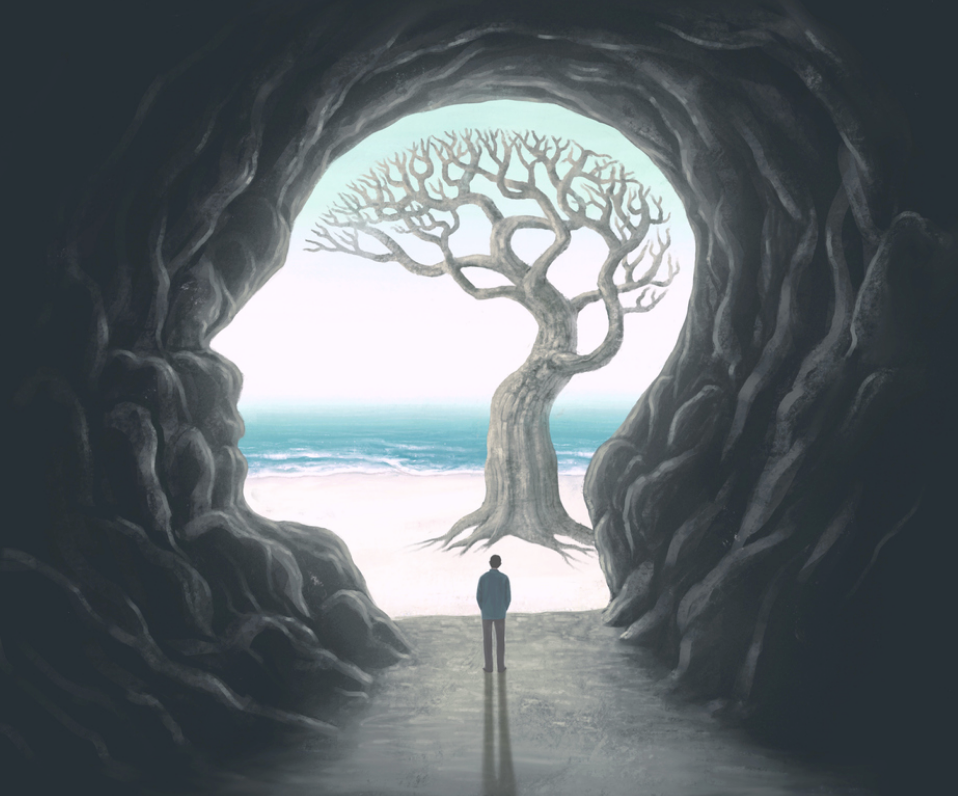
I gave this the title ‘Exploring the Fading Landscapes of Her Mind’ for a reason.
It was October of 2022 when my wife Phylipa, was given a formal diagnosis that confirmed the unease I’d been harbouring for some time – a name for what had already become a resident in our lives.
Alzheimers Disease.
Her mind, once a marvel of intelligence and easy charm, had started to play tricks, slipping in and out of itself like a hesitant dancer.
It all began, as things often do, on an unremarkable night.
October 2018: We were killing time at an airport hotel in Bali, waiting for a midnight flight that would whisk us away to the Philippines for two months. Bags in hand, we started towards the entrance to get a taxi.
Phylipa excused herself to go to the ladies, located across the lobby. Five minutes passed. Ten. By fifteen, I was pacing, treading furrows into the carpeting, imagining all the female banalities that might explain her delay.
I walked across the lobby, stood outside the ladies toilet and called out her name. No response. I asked a Japanese lady walking in to see if there was anyone else in there. All I got was a polite smile and a perplexed shrug.
When the lady left, I went in myself and checked every corner. No-one.
To spare you the minute-by-minute analysis, I found her 40 minutes later on a busy street outside the hotel, standing on a rock.
I felt, in that moment, like I’d narrowly escaped a major calamity.
Relieved beyond belief, I asked what had happened. She wasn’t sure. Seems she’d exited the ladies, turned right instead of left, walked down a corridor until she came across a lift which took her, Alice-like down a different rabbit hole that led not to Wonderland, but to the bleak concrete belly of an underground car park. She walked through that out onto the street.
That Was Just The Beginning
But….that was just the beginning, the point at which the things we take for granted slip through the fingers, one by one.
Subsequent “blips” were occasional but noteworthy.
• within minutes of leaving a restaurant she’d ask if we’d already eaten and if so, where (2019)
• I lost her in a Singapore shopping mall. She’d forgotten where we arranged to meet a mere 5 minutes later (2020)
• she went ‘walkabout’ in Newquay (2022) resulting in a police search that took 30 minutes to find her.
I find myself recounting this not because it provides any answers, but because it seems almost indecent not to share. There is a particular horror in watching a loved one’s life become a puzzle you cannot solve.
The signs began innocently enough, like all creeping horrors tend to. Then it picked up steam, this parade of absence, this villain in the night that took to swiping entire chunks of our shared reality.
I’d catch her squinting at the grandchildren, the way you do with old school friends at reunions, when you know their faces but haven’t the foggiest who they are. And so it went on: names lost, places blurred, even the kettle became a mystifying contraption.
They’ll tell you it’s called forgetfulness, as though that makes it easier to swallow. But on the front lines, we know the beast has a name and it’s far less comforting.
Alzheimer’s Disease. Two words heavy with finality, laden with the kind of inevitability you can’t outrun.
I took her for a live blood analysis (Darkfield Microscopy) in August 2022. And there, in her blood, something that ought never to be…..Graphene oxide: The stuff of cautionary tales; tiny particles, like minuscule shards of glass, capable of disrupting the body’s natural order in ways that are almost poetic in their cruelty. How it got there still mystifies me.
Blood clots, damaged lungs, even a mangling of the very fabric of our DNA. The idea of it haunts me; that something so small, so seemingly inert, could quietly unleash a cacophony of chaos within her, within us.
Slowing Down The Deterioration
Enter Dr. Keith Scott-Mumby and his timely explanation of the Vielight Neuro. This was 2021; with the swiftness of a desperate man, I bought one.
If I couldn’t wrestle the disease into remission, then at least I could find out how to slow it down. And, by God, that little neuro device worked wonders.
I know this because I’d come toi know others with the same condition, watching them spiral faster, fall further – while Phylipa held her ground. Maybe not a grand victory, but a victory nonetheless.
Fast forward to October 2022, the medical white coats confirmed what we already suspected at a brain scan at the Bodmin Hospital. Stark as a church bell at midnight.
Prevention Is Better That Cure
But here’s the thing: we thought we’d seen it coming and could prepare for it, but the origins could be as much as thirty years before the symptoms start to show. I listened to every online webinar available, hoping to steal back a little time. And in this game, a little time can make all the difference.
We’ve all heard the health sermon before, haven’t we? The many ways to ward off a thousand maladies – everything from drinking green sludge in the mornings to eating enough avocados to line the insides of a London bus.
But this isn’t just a public service announcement about general wellbeing. This is Alzheimer’s. The great taker. The silent thief that swipes everything you hold dear. So yes, I’ve thrown in every last measure I can muster. I’ve doused her in a laundry list of natural remedies and coconut oil in the hope it keeps her with me just a little longer.
How To Respond
For anyone treading this same path, my advice is simple: love them with a ferocity that outstrips their forgetfulness. Let them be as peculiar as they like, and answer every oddity with patience and warmth.
Remember who they were, even if they can’t, and hold onto that with every ounce of strength you have. Because what you’re seeing isn’t a personal attack – it’s a cosmic stroke of bad luck, nothing more.
Embrace their quirks and don’t take the mood swings personally. They’re not aimed at you; they’re just echoes of a mind retreating to places only it knows, and you are one of the few safe spaces they can release to.
If you’ve read past newsletter articles written by Phylipa, it’s because she did write them, probably some years ago. All I did was refresh them and keep her name as the author.
I was reminded of Dr. Dale Bredesen’s work (thank you Dr Chris). Bredesen’s name you’d do well to remember, along with Patrick Holford, who I recently heard interviewed in What Doctors Don’t Tell You.
It was Dr. Bredesen who put it starkly, painfully, “Everyone knows a cancer survivor; no one knows an Alzheimer’s survivor.” And there it is – the point I’ve been circling around.
We’re all aware of the mental health crisis, but the quiet truth no one seems to face is that Alzheimer’s and dementia are preventable. We’ve been trained to deal with disease when it afflicts us.
Dementia and Alzheimer’s is preventable.
But it takes awareness, vigilance, and above all, a dedication to sidestepping the minefield of dietary horrors that lie in wait.
No, I’m not about to launch into a spiel on nutrition. God knows, the world’s overrun with opinions. But I will share a few hard-won truths:
- Give sodas (especially Coke and Pepsi) a wide berth. You could be drinking fluorescent nanoparticles.
- Rapeseed oil? Great if you have a tractor. It has no place in a human body.
- If food is processed or ultra-processed, eat it sparingly
- Sugar is a wolf in sheep’s clothing, and its unnatural cousins like aspartame are nothing short of a slow poison.
- Avoid artificial trans fats, found in many baked or fried foods – double trouble for heart health
If you find yourself still on the fence, listen to Robert F. Kennedy Jr.’s recent clip. There’s a political end to it but the message is important. “Enough is enough.” (5:44)
It’s a call to arms, not just for the big issues, but for the little choices we make every day that quietly, inexorably add up. Because when it comes to our minds, our souls, and the people we love, enough really is enough.
What most people don’t realize is that Dementia and Alzheimers are preventable. You heard that right – preventable. We’re not talking about the mythical fountain of youth here, but science, real science, telling us that those first faint signs of cognitive decline can be picked up decades – thirty years, to be exact – before the grim reaper comes calling with a diagnosis.
And that means you can do something about it, starting now. You don’t want to be saying ‘I wish I’d….” in thirty years time.
Cognitive Function Test
Here’s the thing: the world isn’t going to knock on your door and beg you to take control of your own mind. You’ve got to want it, to fight for it. There’s a tool – a Cognitive Function Test, as they call it – ready and waiting, and it’s free to boot. AND IT’S FREE.
The clever minds over at Food for the Brain have crafted a digital test that can pinpoint your cognitive weak spots. It’s not one of those silly online quizzes; this is what the clinicians measure in their sterile memory labs. Only this one’s yours, in the comfort of your home, and without the awkward fluorescent lighting.
Answer honestly. After all, you’re the only one who stands to benefit from a true reflection of your cognitive state. Once you’ve got your results, you’ll know precisely where the danger zones lie in those eight domains that make up your mental fortress.
And the next steps? Well, that’s where the work comes in. Tackle those areas, and then keep at it. Take the test again next year, and the year after that, because it’s all about seeing the payoff of your efforts.
So, why not start now? Go to Food for the Brain, get your test results, and chart your course. You’re the captain here, and every action you take is a step toward a mind resilient enough to defy the odds.
Apart from the many natural remedies I have her on, from MCT coconut oil to Lion’s Mane, Shilajit, DMSO and Methylene Blue, we are both taking Patrick Holford’s recommended Brain Food Upgrade package (B Vitamins, high strength Omega-3 and high strength Lecithin) from Patrick Holford’s site.
After all, if you can Alzheimer’s-proof your life, why wouldn’t you? An example chart is displayed below.
Graeme Dinnen
ResourcesForLife.net
PS. I became a ‘Friend of Food for the Brain’. This gives me access to the personalised, interactive behaviour change programme COGNITION and the research they’re engaged in. I’m not selling anything – the aim is to make COGNITION more and more effective by encouraging people to do the free test. After all it’s in their best interests and will, help prevent cognitive decline. Please contact me if you have questions.
Important books on the brain by Dr. Dale Bredesen and Patrick Holford

Leave a Reply