
The Art and Science of Pulse Listening
The human pulse is a miracle with manners. It announces itself with an almost British discretion, never barging in, never interrupting, simply tapping you on the wrist, a light knock-knock from beneath the skin to remind you: yes, you’re still here, still upright, still avoiding the infinite nothingness by about seventy-two polite drumbeats per minute.
Diagnosing the pulse is one of those ancient acts, like blowing out candles, that bridges the pagan with the clinical. It predates thermometers and stethoscopes, predates blood pressure cuffs, X-rays, and whatever ghastly thing it is that involves a camera going into your colon and coming out traumatised.
The pulse is basic, primal, the original bodily alarm. Before there were Fitbits and Instagram fitness influencers with abs like Lego bricks, there was just the pulse, beating its iambic pentameter beneath the thin parchment of your wrist.
Doctors, those time-travelling shamans in white coats, still check it, of course. But they do so more out of respect than utility, like reading Chaucer in the original Middle English.
Today’s medicine runs on machines that beep, graphs that climb and fall like bad stock market predictions, and digital readouts with enough data to make Alan Turing weep. Yet the pulse remains, gloriously analog.
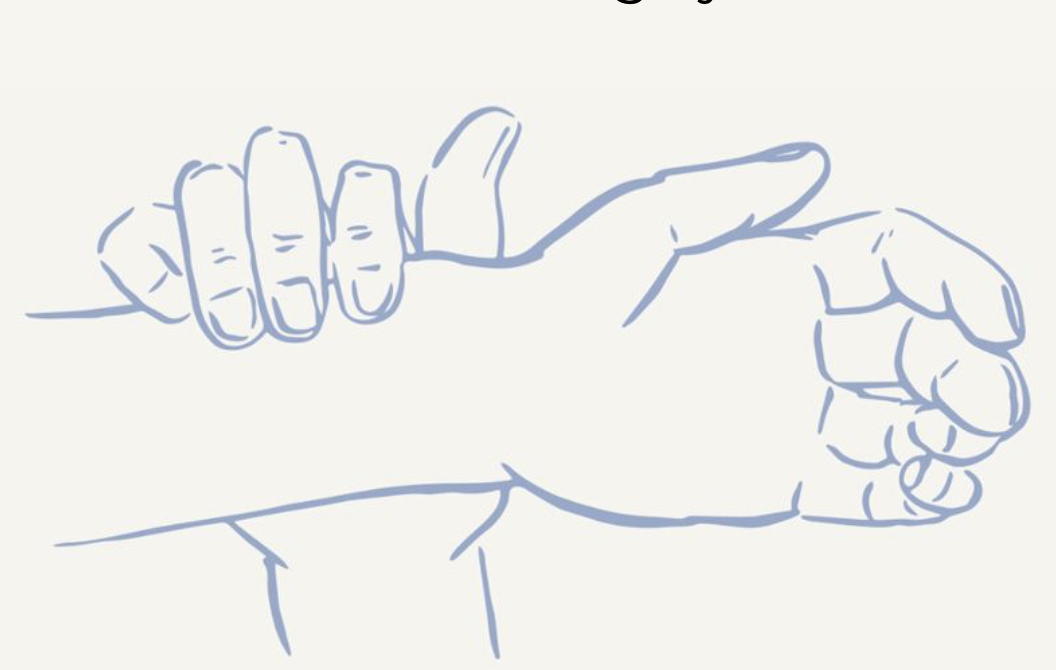
It’s the drumroll before every medical appointment, that first ritualistic move. Two fingers, never the thumb, which has its own secret pulse and lies, pressed gently against the radial artery.
A moment of silence, as though you were listening for the spirit of the patient, to see if it’s in, or stepped out for a sandwich.
There is a particular elegance to the places we check for the pulse. The neck, of course, where the carotid does its earnest business just beside your windpipe like a stern librarian. The neck is the Hollywood detectives’ point of choice before announcing “He’s dead!”
There’s the wrist, where the radial hums along in time with your life, hidden among the sinews and regrets. Behind the knee, if you’re some kind of Victorian adventurer. And my personal favourite: the ankle. There’s something deliciously gothic about the posterior tibial, throbbing away beside the Achilles tendon, a pulse for the doomed and the tragic, for lovers who walk barefoot in the rain.
But what does the pulse say, exactly? Apart from “Yes, it’s still beating,” it is a fount of physiological gossip. The rate, the rhythm, the regularity, they all have stories to tell. A slow pulse, known as bradycardia, may suggest the fitness of an Olympian or the ennui of a man who’s heard it all before. A rapid pulse, tachycardia, could mean anything from dehydration to impending doom, or simply that you’ve seen someone too beautiful to survive emotionally.
Doctors feel the pulse like cardsharps reading a deck. Is it thready, like a whisper through the underbrush? Bounding, like an excited Labrador? Irregularly irregular, like jazz drumming or Boris Johnson’s ethics?
They count the beats per minute while pretending not to, murmuring something neutral about weather patterns or asking you to breathe normally, though the act of being observed guarantees you won’t stop inhaling entirely, awaiting further instruction like an elevator at the wrong floor.
The Chinese, those tireless herbalists and philosophers, once believed the pulse could diagnose everything from heartbreak to haemorrhoids. Their ancient texts describe dozens of pulse types: floating, slippery, wiry, choppy.
It’s less medicine, more poetry. A woman might have a “soft, soggy pulse,” which could mean pregnancy or simply that she’s been listening to Leonard Cohen.
And yet, for all its imprecision, there is something deeply human about checking the pulse. It’s the tactile admission that we are machines of meat and rhythm. It’s not blood pressure, cholesterol, or triglycerides. It’s just there, pulsing away like a good metaphor, unprovable, undeniable, alive.
I rather like that, in an age of algorithms and AI diagnoses that can spot a tumour on a Tuesday before your body knows about it, there’s still a place for fingers on flesh, for the ancient assessment of life’s tempo.
It’s not precise, not surgical, but it’s intimate, warm. A moment of shared biology between one who checks and one who is checked.
And so, let them check your pulse. Offer up your wrist like a gesture in a courtly dance. Let them press and feel and count, as if the meaning of your life were written in Morse code under the skin.
Because maybe, just maybe, it is.
Graeme Dinnen
ResourcesForLife.net
Want to learn more? Matthias Roth offers “The Artist’s Guide to Pulses”
Leave a Reply