
An Elegy for the Inner Eye
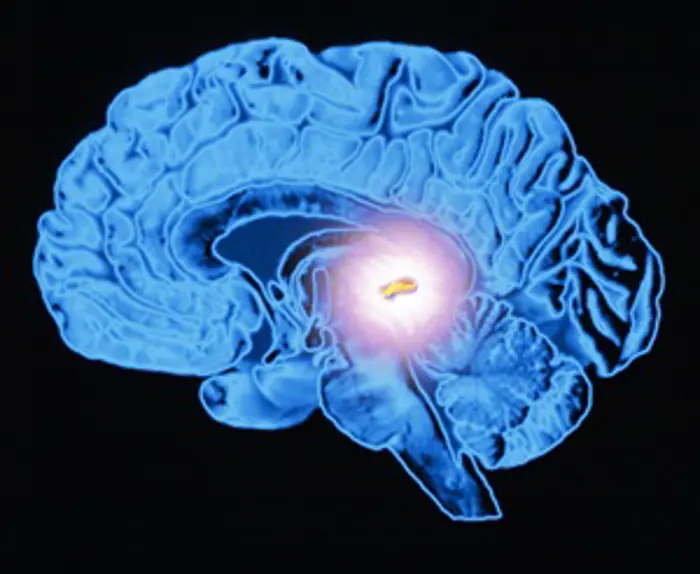
Buried deep in the shadowy, secret corridors of the brain, like a monk in a forgotten cloister, sits the pineal gland, a speck of a thing, no bigger than a grain of rice with delusions of pinecone grandeur.
It’s the sort of organ you’d usually overlook, yet it is, astonishingly, the body’s celestial metronome.
This humble blob is the conductor of our circadian symphony, orchestrating sleep and wakefulness with the pomp of a Swiss watchmaker and the subtlety of a whispering priest.
It dribbles out melatonin, not exactly a glamorous substance, but vital, like a good mattress. When the pineal is hale and hearty, it ushers us into the deep velvet of REM sleep, where dreams are stitched, brains are tidied, and souls are reset for another go-round of mortal absurdity.
Neuroplasticity, detox, hormonal harmony, these are the backstage mechanics of consciousness, and the pineal gland, tiny tyrant that it is, flicks every switch. Ignore it at your peril. Worship it with dark rooms and regular bedtimes. It may be small, but like so many tyrants, it rules more than its size would suggest.
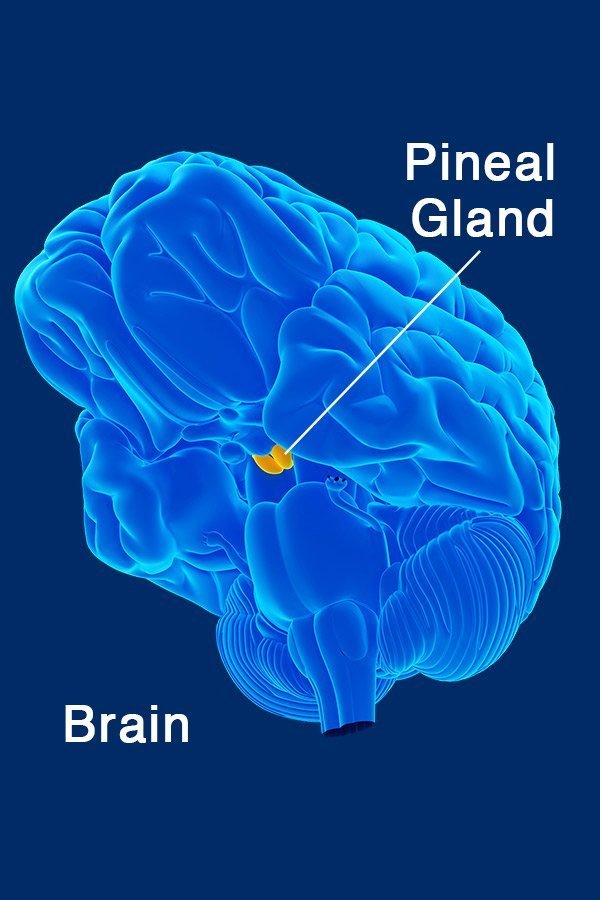
They said it was vestigial. An evolutionary leftover, like a coccyx or a belief in politicians. The pineal gland, they called it, an anatomical footnote, a spiritual appendix. Somewhere between mysticism and mucous.
But nestled in the velvet umbra of your cerebellum is not a relic but a container for holy relics: a glittering speck of photoreceptive magic that Darwin never quite managed to grasp.
It is, frankly, fabulous.
But like all fabulous things, it’s under siege. Not from sin or sex or bad manners, but from fluoride and aluminium, yes, the dreary elements of toothpaste and deodorant. This tiny gland, with its dainty chandelier of microcrystals.
It sits outside the blood-brain barrier like a doorman at a nightclub, sucking in every passing neurotoxic insult until it calcifies into silence.
The result? You get dumber. Slower. You sleep like a startled pigeon. Your dreams become reruns. Your clarity curdles. And slowly, gently, your soul takes early retirement.
But, and here’s the glorious bit, it’s not irredeemable. This is not some irreversible mummification of the mind. No. This is not death. It’s just domestic neglect.
Over 90% of pineal petrification can be coaxed into remission, not by prayer circles or tantric smoke signals, but by science: chelation, photobiomodulation, acoustic resonance, sunlight, breathwork.
It’s not fringe, it’s Frontiers in Neuroscience, Nature, JAMA Neurology. The fringes are becoming the hem of the robe.
And what else does it crave? Sunlight. Breath. Rhythm. Not ayahuasca or acoustic yoga from a man named Skywolf (though they might help), but science. Real science. Peer-reviewed, grant-funded, double-blind science. The kind with footnotes, not feathers.
Inside that gland are microcrystals that respond to light and sound and, if you believe the more poetic journals, possibly even thought. Little tuning forks vibrating to the symphony of reality.
When they’re clean, you see clearly. When they’re crusted, you don’t even notice the world’s gone grey.
This isn’t wellness. It’s war. A cold, slow war on your ability to perceive divinity, to feel wonder, to know what time it is without a screen telling you. The pineal isn’t your third eye, it’s your first sense of sovereignty, and it’s been quietly chloroformed by dental hygiene and fluorescent lighting.
“If thine eye be single…” yes, well, if it’s not, then it’s bifocal, blinking at a phone, wondering why you feel perpetually jetlagged in your own life.
So clean it. Wake it. Honour it. Not for health, but for the riotous, technicolor act of being properly, incandescently alive.
Graeme Dinnen
ResourcesForLife.net
Leave a Reply