
In school biology classes, we were encouraged – no, browbeaten – into scribbling down endless notes on the amoeba, spirogyra, and a cavalcade of obscure microscopic creatures that, I can safely say, have never troubled me since.
Not once has an amoeba knocked at my door, demanding recognition. Yet there we were, filling notebooks with facts as though our scholastic lives depended on knowing the lifecycle of pond scum.
And what did we not learn? Anything of real use. Not how the organs of our body function, the intricacies of our nervous system, or even how to breathe properly. No guidance on how to become and stay healthy, just the promise of a vague adulthood where we’d shuffle into the offices of people in white coats who would peer at us with furrowed brows and solemn nods, diagnosing us with words longer than a bus route.
“Well, that’s what they studied for,” you might say. True, doctors spend years in medical school, cramming their heads with arcane knowledge. But isn’t there something perversely backward about waiting until we’re broken to seek out repair? Wouldn’t it have made more sense if our biology teacher had taught us how to stay out of the repair shop in the first place?
Instead, we were fed a rinse-and-repeat diet of disconnected facts, and when we finally got to college or university, we were instructed to think for ourselves – though heaven help you if you’re in medicine.
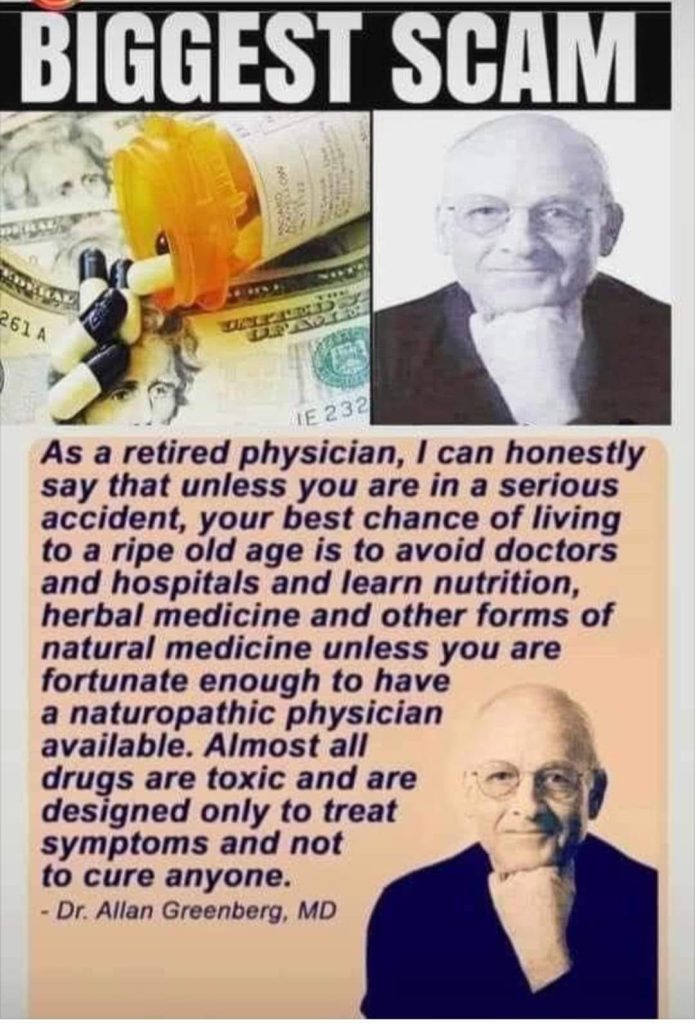
There, it’s less about thinking and more about dancing to the tune of the pharmaceutical industry that’s generously subsidised your tuition. You scratch their back, and in return, they’ll give you the quota-measured privilege of pushing their pills for the rest of your professional life.
And who, precisely, does that benefit? Certainly not the patient.
A study from the Mayo Clinic in the U.S. tells us that doctors are wrong in their initial diagnosis 88% of the time. That’s nearly nine times out of ten. Medical errors are now jockeying for position among the leading causes of death, and yet we persist in treating doctors as the high priests of our physical salvation.
To be fair, that’s not their job. They’re there to patch you up when things go wrong. Staying healthy – that’s 100% on you.
The fact that so many people shuffle off to the doctor for the most trivial of ailments speaks volumes about how little we know regarding our own bodies.
And doctors feel the pressure, especially in winter, that cruellest of seasons, when they’re inundated with the wheezing, sniffling masses, all desperate for a panacea, or at least a prescription.
And what happens? Well, naturally, they’re left with no time – time, that most precious of commodities, slipping through their fingers like sand. The art of asking, of probing with the right questions, becomes a luxury. Without the full suite of information, how on earth can they arrive at anything that resembles a conclusion, let alone a realistic one?
The answer, of course, is that they can’t.
One study suggested that if even 5% of people stayed home, it would save 50,000 appointments. That’s the time your GP could spend with patients who truly need it, but we’ve become a nation of health illiterates, running to the doctor every time we sniffle.
Meanwhile, the pharmaceutical industry sits pretty, raking in a cool $1.27 trillion in 2023. And how much of that went towards teaching people how to actually stay healthy? Not a cent. They’re not in the business of health. They’re in the business of profits. And businesses answer to one god: their shareholders. They don’t want you well; they want you popping pills like a kid at a Pez dispenser.
If you think I’m being melodramatic, consider this: chronic illness has reached epidemic proportions in the West, and Big Pharma couldn’t be happier. They’ve got a pill for everything, and we’re lining up like good little customers. The term “selling sickness” has never felt more apt.
Now, let’s get practical. If you’re not exercising, not eating well, not sleeping, not hydrating, and avoiding the sun like a vampire, no magic pill or medicine will fix you.
Start right there.
Pick up a copy of “The Body Speaks,” which I’ve recently updated. It’s more a reference guide than bedtime reading, but it’ll give you the tools to approach health from a different perspective. Learn CPR at your Village Hall. Get a grip on basic nutrition. Find out which oils you should never touch with a frying pan.
And while we’re talking about what you’re eating, let’s face facts: the stuff lining the supermarket shelves is barely food. It’s synthetic, it’s laced with microplastics, and it’s what’s making you sick.
Overfed and starving to death is a phrase that springs to mind.
We’re stuffing our faces but starving our bodies of real nutrients. Buy a potato from a farmer’s market, and it’ll have ten times the polyphenols (healthy compounds found in plants) of those sad, freezer-bound French fries in the supermarket. Probably cheaper as well. That’s the difference between food and its hollow, processed ghost.
If you’re interested in learning more, there are crash courses in anatomy, physiology, and a whole host of alternative therapies that go beyond the pharmaceutical juggernaut.
Anatomy & Physiology,, Quantum University and lectures in places like TED/health.
Learn about Acupuncture, Ayurveda, Herbal Medicine, Homoeopathy – there’s a whole world out there beyond the prescription pad.
One emerging approach that fascinates me is New German Medicine, which takes a radically different view of recognising and managing disease.
But whatever you do, for the love of all that’s sane, do something.
Graeme Dinnen
ResourcesForLife.net


Leave a Reply