
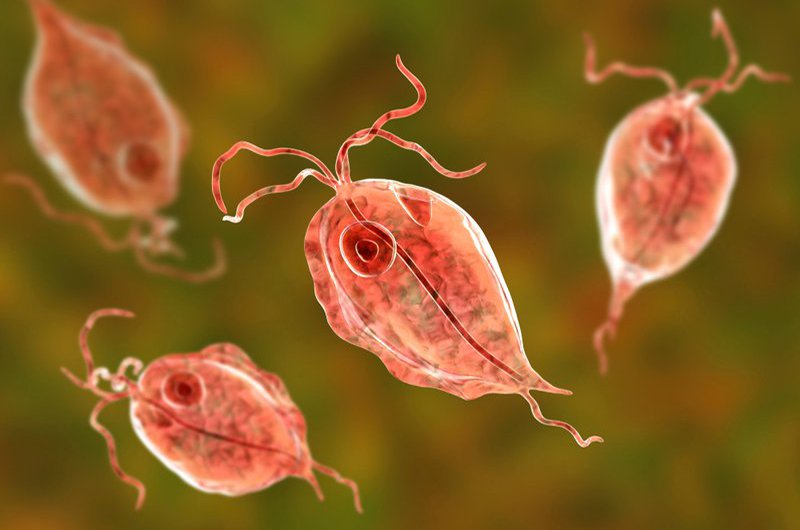
If you have a pet, you have parasites.
Not “might.” Not “possibly.” Not in some theoretical, exotic, post-grad parasitology thesis sense.
You picked them up from your pet. Welcome to the club. It’s less “My Little Pony,” more “My Little Bloodsucking Nightmare.”
If you suffer from a chronic illness, one of those persistent, head-scratching, test-shuffling, fatigue-laden syndromes that drags behind you like a second duvet in July, there’s a very good chance that deep down, in the dark, warm bits of your biology, something is wriggling. And it’s not metaphorical.
Season 1 Episode 17 of National Geographic reported “Parasites have killed more humans than all the wars in history”.
Parasites are those often microscopic critters that cause immense internal damage, and most of us, if not all of us, have them. It’s not a case of whether or not you have them but how many you have and what types they are.
“The most under-diagnosed health problem in the West, parasites may be responsible for a multitude of conditions from joint pain and chronic fatigue to many general disorders of the gut and immune system.” What Doctor’s Don’t Tell You
If you’ve been diagnosed with cancer: tumours, polyps, masses, growths, ominous shadows in scans, you may in fact be playing host not to malignancy, but to egg sacs. Yes, parasitic egg sacs. Unhatched horror in histology.
Now, before the medical establishment faints into its own lab coats, let’s talk Ivermectin, that old, humble anti-parasitic, until recently loitering unnoticed in veterinary clinics and livestock drawers.
And then, suddenly, it pops up in oncology wards, clearing tumours like rain off a windscreen. Why? Because it’s not curing cancer. It’s evicting tenants. It’s throwing out the worms.
What if, just for one lurid moment, we stopped treating cancer like an inscrutable evil and considered it might be a squatter infestation? What if, instead of napalming the entire human body with chemotherapy and radiation like a particularly cruel science experiment, we just dewormed the patient?
You won’t hear this from your oncologist. Not because they’re cruel, but because they simply don’t know. They weren’t taught to look for parasites, let alone identify tumours as their possible nesting pods. If they don’t look, they won’t find. And if they don’t find, you won’t be told there are treatments that don’t involve the biomedical equivalent of a car wash set to “lethal.”
Autoimmune diseases such as Rheumatoid Arthritis, Lupus, MS, Fibromyalgia, those foggy, stubborn ailments with the bedside manner of a tax audit? 70% of them may have the same root: a parasitic one.
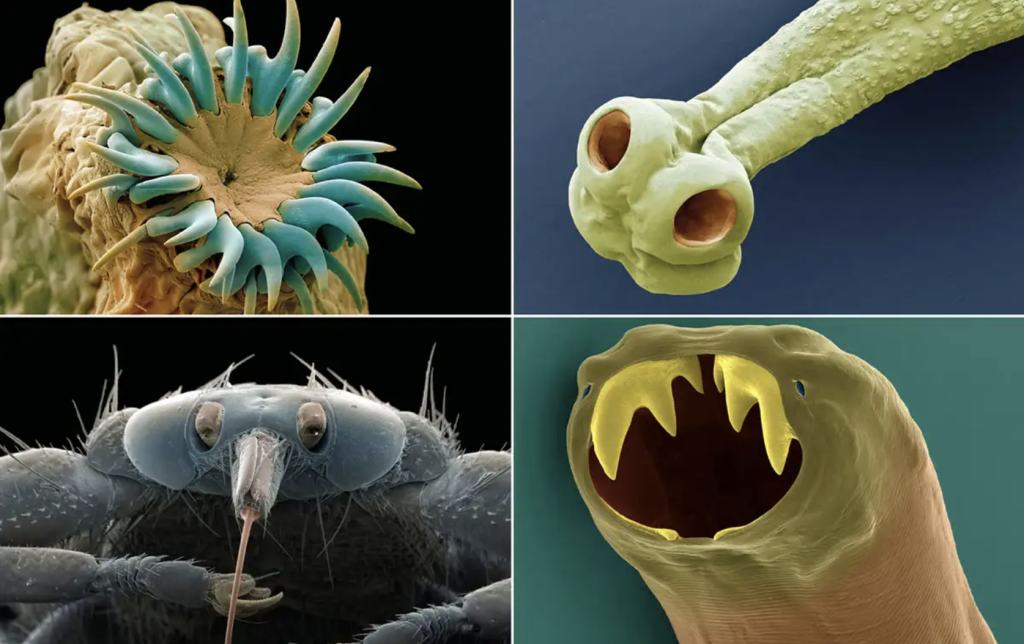
Let’s meet some of the little darlings:
- Schistosomiasis: A blood fluke that sets up shop in the bladder.
- Liver flukes: think of them as bitter exes who moved into your bile ducts and redecorated in rage.
- Toxoplasma gondii: The James Bond of parasites, charming, clever, and capable of causing everything from ocular tumours to meningiomas.
- Cryptosporidium: a name that sounds like a cryptocurrency, but it crashes your colon, not your wallet.
- Trichomonas vaginalis: lives in the cervix and prostate, which is sort of like renting out Buckingham Palace as a dive bar.
Tapeworms steal your meals before you digest them, leaving you starving despite a well-fed life. Others gorge on your red blood cells like they’re at an all-you-can-suck buffet, causing anaemia. Some just lay eggs – itchy, sleepless, sanity-fraying eggs. Lovely.
And where do these freeloaders thrive? In the presence of heavy metals, of course. Mercury, once a treatment for syphilis, now a nostalgic favourite for dentists who seem weirdly keen on putting neurotoxins in your mouth.
Heavy metals attract parasites like free Wi-Fi attracts influencers. Sugar is their food of choice, glucose, sucrose, fructose: it’s all foie gras to a fluke.
Which raises the question, why are sugary sweets visible in every checkout aisle of shops, and why are the airwaves fattened with fizzy drinks and fast food ads? Why, indeed, is nearly every edible thing on television designed to keep you sweet, sluggish and crawling?
I avoid anything advertised on TV. If it’s got a jingle, it’s got an agenda. But hey, that’s just me.
The death toll? Many hundreds of thousands die yearly from parasitic diseases. Malaria alone kills an estimated 600,000 a year, mostly in Africa, mostly quietly. The numbers are probably much higher that the statistics admit as we don’t count them properly. But then we never do count the casualties of things we pretend don’t happen to us.
Africa needs more mosquito nets, not more drugs.
Parasites cause inflammation, allergic reactions, and play hide-and-seek in your bile ducts, brain, bladder, and bowels. They block. They inflame. They suck.
In the gut, they’re called fatigue. In the brain, brain fog. On the skin, acne. In the immune system, chronic infection. In your bowels, nutrient theft. But don’t worry: the GP will give it a long name and a short prescription.
So perhaps it’s time to stop rolling our eyes at the mention of worms and start paying attention to what’s eating us, quite literally.
Doctors, God bless them, are like overworked waiters in a collapsing French bistro, frazzled, half-listening, and inevitably bringing you what you didn’t order. They hear “stomach ache” and deliver a prescription for “ulcer.” Say “tired” and you’re served a side of Prozac with a garnish of vague reassurance.
They don’t teach basic parasitology in medical schools. Any lectures on microbiology tend to be elective rather than mainstream. Physicians and practitioners regardless of their field of specialty should have a good understanding of parasitic infections and their symptoms so they can at least consider a parasite-based disease when it is present and know how to effectively recognise, treat and prevent its recurrence.
The point is: in the white coat world of Western medicine, symptoms are treated with the fervour of a child smothering a smoke alarm while the house burns down.
Parasites are the squirming, slithering stowaways of the human condition. These unwelcome guests are rarely invited to the diagnostic dinner party. Instead, their subtle, insidious sabotage is dressed up as something more palatable, more familiar to the modern GP who’s more comfortable prescribing than probing.
A roundworm wriggles in, and voilà, your reflux is christened Gastroesophageal reflux disease (GERD) and bathed in a cocktail of Prilosec and Nexium. Threadworms spark a fiesta in your gut, and the doctor thinks “heartburn.”
Amoebic colitis? No, no, that’s “ulcerative colitis,” says the man in the white coat, puffing up with misplaced confidence before slinging you a steroid and bidding you good day, leaving the actual amoeba smirking in its mucosal lair.
And what of the eternally exhausted, the chronically knackered? Chronic fatigue and suspicious yeast overgrowth? Could be Giardia, a parasite with the manners of a stag party in Magaluf.
But instead of treatment, you’re handed a bottle of SSRIs and a leaflet about mindfulness. Brilliant.
Irritable Bowel Syndrome? That glorious catch-all for anything below the diaphragm and above the knees that mystifies the medical profession. Could be a parasite, but why dig for the root when you can label the leaves?
Even blood sugar imbalances, diabetes and hypoglycemia, might be the legacy of a tapeworm nesting inside like some hideous biological Airbnb guest. No one checks. You’ll be prescribed meds, told to eat less sugar and do some yoga. Namaste.
And why, you ask, is the obvious so obscure? Well, parasitology, like etiquette and Latin, is consigned to obscure corners of medical academia, namely “tropical disease” departments. Translation: things that happen to other people, in places with jungles, malaria, and currency no one can spell.
But the truth is: parasites are not exotic. They’re not just for barefoot children in dusty villages or brave volunteers in sweaty climates. They’re in suburbia. They’re in your gut. They’re here.
And even when a brave doctor does suspect them, the tests are like looking for a black cat in a dark room that’s wearing a cloak of invisibility. Parasites are masters of hide and seek. Their eggs, cysts and full-grown freeloaders don’t turn up on cue in your Tuesday morning stool sample. They’re cleverer than that. If they weren’t, they’d be extinct.
But as it stands, they’re not extinct. They’re thriving. And so is our wilful ignorance.
The Rod of Asclepius. The guinea worm, a parasitic creature (Dracunculus medinensis), that sounds like a Harry Potter curse and behaves like one, too. It infects humans by burrowing under the skin, often growing several feet long and causing intense pain. Symptoms may take up to a year to appear.
Though rare in the West, it remains relevant due to international travel. Traditionally, the worm is removed by slowly winding it around a stick over several days. This method likely inspired the Rod of Aesculapius, the medical symbol of a serpent on a staff. While commonly thought to depict a snake, some suggest it actually represents the guinea worm, making the healer one who extracts this affliction.
It would also make good sense of a quote from the Bible, concerning the Israelites on their migration back from Egypt: “And the Lord sent fiery serpents among the people, and they bit the people; and much people of Israel died.. And the Lord said unto Moses, ‘Make thee a fiery serpent and set it upon a pole; and it shall come to pass that everyone that is bitten, when he looketh upon it, shall live’.” NUMBERS 21:6
Suggested Remedies
There are over 4,000 types of identified parasites, 1,000 of which infest us humans. Parasites are the unseen puppet masters of our malaise, wriggling about in our bowels and brains, causing everything from fatigue to fibromyalgia, plausibly even the divorce rate.
A remedy that’s sufficiently broad spectrum to apply to each and every parasite group simply doesn’t exist. Raw garlic, oregano, papaya and pumpkin seeds work for certain groups. Most remedies contain wormwood, but Bachir Abu Kazaal, Master Herbalist in Damascus, told me years ago that wormwood, taken over a long period can become addictive.
Thankfully cloves have a direct action on parasite eggs.
Not every case of ill health can be blamed on parasites. But if symptoms persist or reoccur at regular intervals after you’ve been treated for some other diagnosed ailment, then parasites should be suspected.
Scour the shelves of a bookshop and you’ll find a range of books on cancer and heart conditions, but you’ll never find a book on parasites.
Here are a few you can find online:
Carl Zimmer – “Parasite Rex”
Anne Louise Gittleman – “Guess What Came To Dinner?”
Hulda Clark – “A Cure For All Cancers”. (the title alone says it all)
Hanna Kroeger – “The Enemy Within”
Use a binder during a detox to eliminate parasites and their eggs.
What To Do For Starters
- Check the toilet for things that look like rice grains (probably parasites) or angel hair pasta (definitely not angels).
- Sit in the sunshine. Twenty minutes a day in the sun triggers your body to release over 200 antimicrobials that fight fungi, parasites and viruses.
- Always close the toilet lid especially the morning after a mutton vindaloo. Flushing causes a microhaze that can last for up to two hours, settling on your towels, flannels, toothbrushes and soap.
In the late 1970’s I bought a book on Medical Biology at a second-hand bookstore in Ventura, California. The book had been written by a Scots doctor and he emphatically made the point that parasites are a substantial threat to the wellbeing of mankind, adding that if nothing significant was done about the problem immediately, it would become epidemic.
His book was published in 1914. 110+ years later we’re well into a health crisis which we fail to comprehend simply because we can’t see it. I’d call that a hair-on-fire problem!
Over the years I’ve spoken with experienced medical practitioners who emphatically deny that parasites exist in humans or at all in Britain. A leading Vet categorically denied that parasites existed anywhere other than animals. If it wasn’t part of their training, it doesn’t exist.
Written in 1996, Naturopathic Doctor Ross Anderson’s “Are You Clear Of Parasites?” is essential reading. He explains in straightforward terms what parasites can get up to in our bodies. You may not be comfortable reading it yet what he writes could make a difference to your way of thinking.
My advice? Don’t read it after dark if you want a good night’s sleep.
I met with Dr. Ross Anderson on two occasions in Los Angeles. He was very helpful to me. To broaden my understanding on this subject I also spent two days with world renowned and knowledgeable parasitologist Dr. Omar Amin at the Parasitology Clinic in Scottsdale, Arizona.
If you want to dig deeper, Dr Amin’s site parasitetesting offers a wealth of information.
IMPORTANT: If you have any unresolved long term condition you should consider the possibility of internal parasitic activity. If you’re a model who swallowed a hookworm to lose weight an you now have other health issues to resolve, you now know why.
GenEngNews: Parasite Linked with Alzheimer’s and Parkinson’s Diseases, Epilepsy, and Cancer

Gu Syndrome
For those of you with an interest in Traditional Chinese Medicine, the subject of ‘Gu Syndrome’ appears to be disappearing from the mainstream curriculum. Search the internet for Gu Syndrome and look for the work of Heiner Fruehauf.
In the late 1990’s his paper entitled ‘Demons of the Body; Demons of the Mind’ explained how Gu featured prominently in the I Ching (Book of Changes) originating “…as a metaphor for stagnation, debauchery, degeneration, and hidden evil.”
While Gu is a broad description for a wide range of demonic activity, including parasite infestation, it is by no means limited to this.
What’s clear from this document is that parasites can cause physical trauma to the body by perforating major organs as well as the circulatory system (leaky gut, anaemia, ulceration), block organs by ‘lumping’ into a ball (tumours), rob us of vital nutrients (ever felt hungry after a meal?), poison of our body by dumping metabolic wastes which we have trouble expelling.
Essentially they destroy our cells faster than we can regenerate them, and that’s only the physical effects.
Where parasitic activity is difficult to determine at a mental level, we must include nightmares, depression with suicidal tendencies, personality changes, insomnia, mood swings, hyperactivity and short attention spans in children as a distinct possibility.
Parents and teachers must be open to the prospect of parasitic infestation before administering drugs to children questionably diagnosed as ‘attention deficit’.
Gu doesn’t show up on paper. It shows up in despair.
Graeme Dinnen
ResourcesForLife.net
Leave a Reply