

I’ve been paying my dues to Examine for the better part of three years now, and it has been, quite simply, superb.
You needn’t be a tincture-swilling evangelist of the natural healing set to appreciate it. You could just as easily be a mildly anxious parent, peering into the pantry and wondering if you might do better by your lot.
Examine offers something rare: advice that feels unsullied, allowing you to decide rather than be directed.
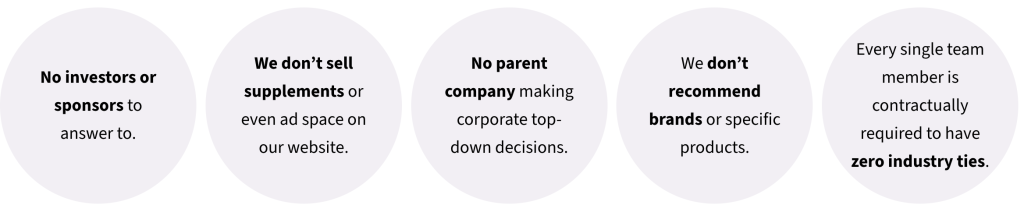
Examine is an entirely independent organisation, and does not accept any money from outside sources. It’s a small outfit, unencumbered, no shadowy hands on the tiller, no corporate ventriloquism, and no ads (yay!) Just research, left to stand or fall on its own merits.
Consider the things that flutter across the public mind. Aspartame, for instance, once splashed across headlines after the WHO muttered darkly about “possible carcinogens.” You’ll know if you’ve ever cracked open a Diet Coke, and felt the ripple.
Millions rushed to Google in search of clarity and emerged, as ever, gloriously muddled.
I googled this myself. The first result, puffed up and sponsored, looked authoritative enough, until I noticed it wasn’t the WHO at all, but a polished offering from the American Beverage Association.
When billions are at stake and even public health bodies can’t quite agree which end is up, truth becomes a rather slippery customer.
This is where Examine earns its keep. Its study summaries are brisk, lucid, and mercifully free of jargon. Whether you’re a clinician, a trainer, or simply a curious soul with a browser and a question, it distils the noise into something readable.
Each piece places a study in its proper context – what it means, what it doesn’t, how it fits into the larger body of evidence. You’re given the particulars: dosage, duration, outcomes. And, crucially, the caveats, the frayed edges, the methodological sins, the lurking conflicts of interest.
In short, it doesn’t tell you what to think. It hands you the tools and trusts you to do the thinking yourself, which, these days, feels almost indecently luxurious.
Here’s a list of the subjects Examine covered in recent months:
February 2026
- Nighttime light exposure is associated with higher cardiovascular disease risk
- Taurine may improve multiple cardiometabolic risk factors
- Coffee and atrial fibrillation: New evidence challenges conventional wisdom
- A healthy lifestyle can support cognitive function in older age
- Legumes may provide fewer calories than you think
January 2026
- Can magnesium bisglycinate help improve poor sleep?
- Collagen peptides for improved knee osteoarthritis symptoms
- Sucralose may worsen blood sugar control
- A handful of almonds a day nudges cholesterol the right way
- The effects of adding eggs to a healthy diet
December 2025
- “Exercise snacks” for health: Do bite-sized exercise bouts bring big benefits?
- Garlic may lower blood pressure as much as some antihypertensive drugs
- Can personal beliefs about gluten influence irritable bowel syndrome symptoms?
- Does red light therapy work?
- Are emulsifiers bad for gut health?
It’s up to you: place your faith in an independent research outfit with no strings trailing back to Big Pharma, or nod along to advice from someone whose livelihood quietly rises and falls with the monthly tally of prescriptions. You certainly want to avoid embarking on a recommended remedy because you saw it on FaceBook!
Here’s Kamal Patel, Co-Founder of Examine (1:10)
Alongside that choice, you’ll find supplement guides, curated research feeds, a thorough database, and an “Ask Me” corner for everything else. A great place to validate your intuition and/or suspicions.
Click here to access the Examine website. There’s a free trial.
Graeme Dinnen
ResourcesForLife.net
Leave a Reply