
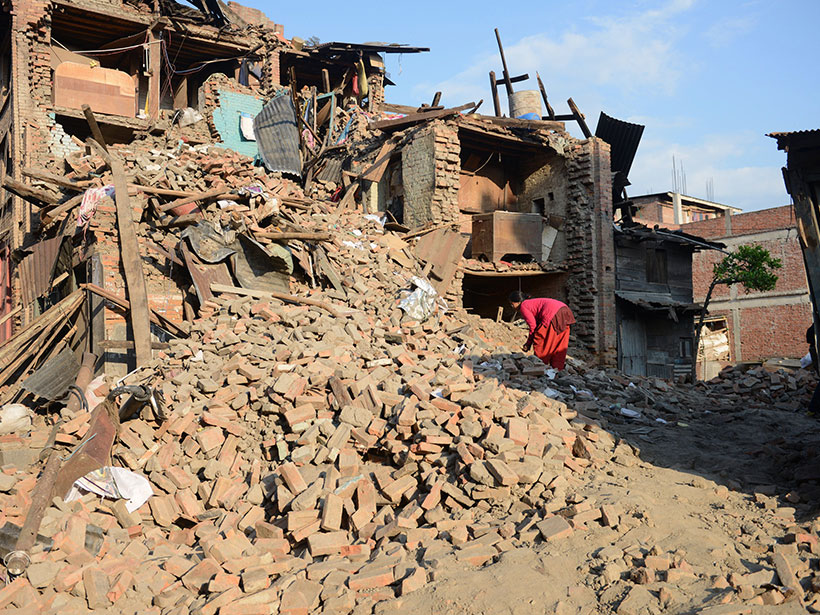
I lived in Jakarta, Indonesia, for 5 years, during which I’d occasionally feel the gentle rhythm of the earth rumbling beneath me. Scientists recorded two earthquakes a day on average in Java.
Lesser wave amplitudes on the Richter Scale no doubt, more of a shiver than a shake, more background noise than headline event. Volcanic grumblings, or tectonic plates shuffling their way to a more comfortable position.
Sometimes, I’d come home and adjust a picture frame or two, but mostly, the tremors went unnoticed. Life in Jakarta was a lot of things, but rarely unstable.
Mount Galunggung simmered for 9 months and when the wind blew in our direction, fine dust fouled up air conditioning systems and turned every car in the city to a volcanic grey colour.
Then, there was Taiwan. My first night in Taipei, on a lofty floor of a concrete hotel tower, I was rudely awakened as the bed began to move around the room on its wheels, as if it had finally grown tired of its spot and decided to explore.
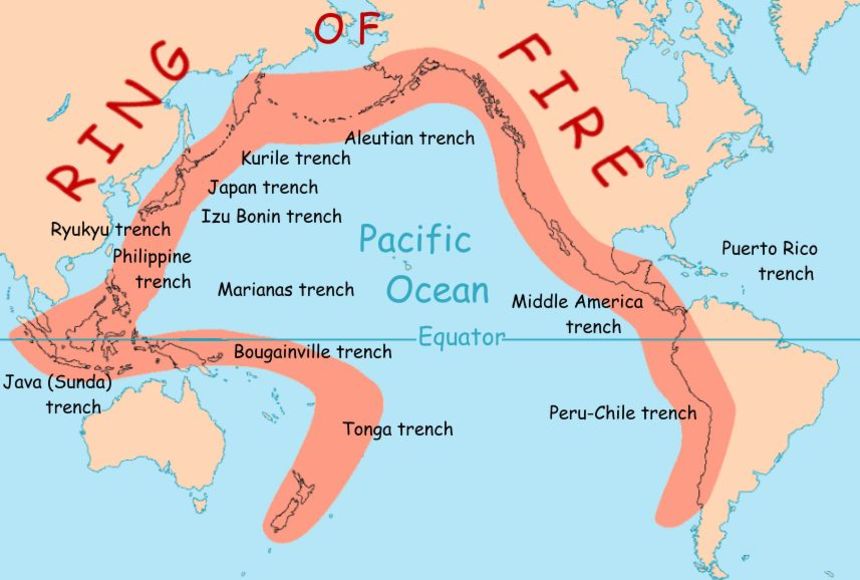
It was an earthquake, of course, but the kind of quake that makes you question whether perhaps you’re still dreaming. Utterly exhausted, I dropped back to sleep, only to be shaken awake again by the encore aftershock. Not so much a greeting as a reminder: welcome to Taiwan, it told me, and to the Ring of Fire.
A Proper Respect for the Ring of Fire
I’d climbed the slopes of volcanoes before: Calbuco – Chile (a few weeks before it blew its top), Gunung Agung – Bali, Gunung Merapi – Yogyakarta, Banda Api, Banda Islands, Kawah Ijen – East Java, celebrated for its mesmerising nighttime “blue fire” flames and the world’s largest highly acidic turquoise crater lake.
I’d learned enough to hold a proper respect for the Ring of Fire, this deadly necklace of 400-plus volcanoes where earthquakes and eruptions are as routine as a Sunday roast. Indonesia itself has 130 active volcanoes.
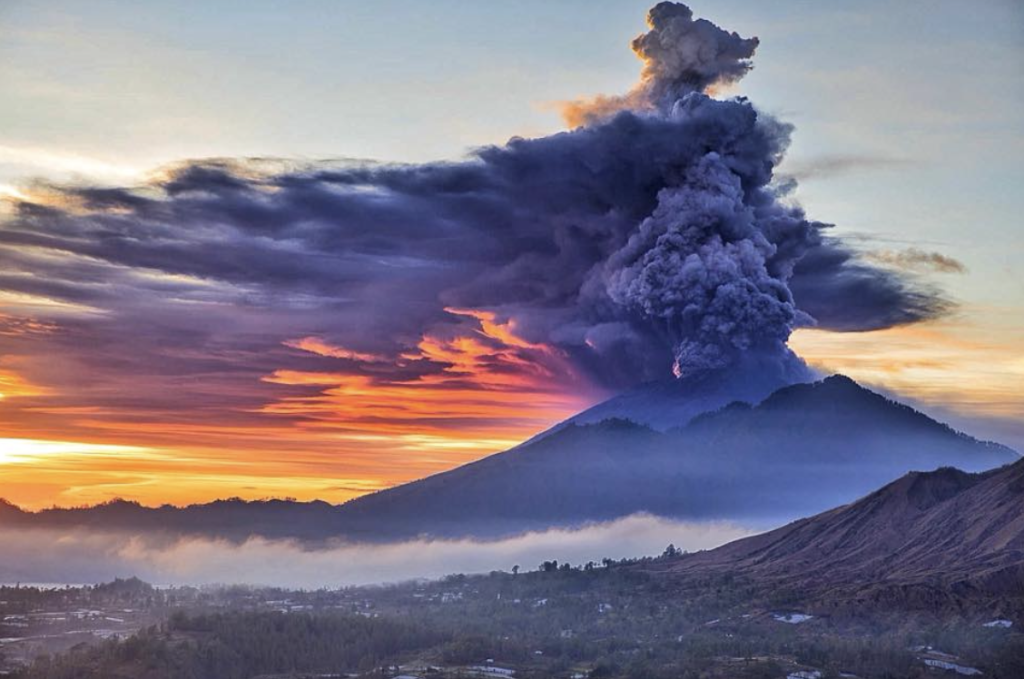
Over our nine years in Bali, on several occasions we were jolted awake in the wee hours, the room quivering violently; walls shuddering, objects rattling, and the floor beneath us heaving. Heart racing, confusion and fear would collide as reality dawned. It took seconds before my mind screamed EARTHQUAKE!
I’d grab Phylipa by the arm, escape from the building quickly and head for the garden. Standing on the grass outside our bedroom, we’d struggle to keep our balance. Our swimming pool took on a life of its own, doing its best to emulate a tsunami with the water sloshing back and forth, escaping the confines of the pool at each end.
It’s a dubious part of the charm, I suppose, this dance of tectonic plates, the loud reshuffling of the earth’s crust beneath our feet.
A Small Point About Feeling Safe
Which brings me to a small point about feeling safe.
Don’t skip the next bit simply because you live somewhere you regard as geologically respectable. The Earth has a longer memory than we do.
You may go on holiday to somewhere exotic with beautiful beaches and leaning palm trees and wish you’d remembered this……
And if you are unfortunate enough to experience a serious earthquake there, surviving the initial shaking is only the beginning.
1. The Encore: Aftershocks
Earthquakes, rather like unsuccessful comedians, sometimes come back for another go.
Aftershocks may occur minutes, hours, days or even longer after the main event. Many are strong enough to cause further damage.
Stay away from damaged buildings.
If the ground begins moving again: Drop, Cover and Hold On.
Don’t rush outside while the shaking is underway unless you are already somewhere that is immediately unsafe. Falling masonry has an irritating habit of arriving before you do.
2. Injuries
Common sense – look after yourself first, then help others.
If any communications are working, contact emergency services for life-threatening injuries. They’re too busy for anything lesser. Don’t move someone seriously injured unless leaving them where they are presents an immediate danger.
Be particularly alert for crush injuries, shock and cuts that are deeper than they look.
Adrenaline is a remarkably efficient liar. You may feel perfectly well immediately afterwards and discover later that a falling bookcase has made rather more of an impression on you than you realised.
3. Buildings That Are No Longer What They Were
A building can look perfectly respectable after an earthquake while quietly contemplating collapse.
Watch for:
- Cracks in walls, ceilings or foundations.
- Leaning chimneys or walls.
- Loose masonry, glass or roof tiles.
- Damaged staircases.
- Sagging ceilings or floors.
Never re-enter a seriously damaged building to retrieve your daughter’s favourite teddy bear until the appropriate authorities say it is safe.
Your house may have survived the earthquake. That doesn’t necessarily mean it survived the earthquake well.
4. Gas, Electricity and Fire
If you smell gas, hear hissing or suspect a leak, leave immediately.
Do not light a match, candles or use lighters. Don’t operate electrical switches, appliances or vehicles nearby. An earthquake has already created enough problems without you adding an explosion.
Also watch for damaged electrical cables and broken water pipes.
5. If You Are Near the Sea
A strong or long-lasting earthquake near the coast can mean a tsunami. Move to higher ground or inland even if the authorities haven’t given any warnings.
If you see the sea suddenly withdrawing an extraordinary distance, don’t stand there taking photographs and wondering whether this might make an interesting Facebook post.
Leave.
Immediately.
The sea is not being helpful. It is getting ready to return, with interest.
6. Ignore the Rumour Mill
After a disaster, misinformation spreads almost as quickly as panic.
Use official emergency alerts, radio broadcasts and local authorities for instructions. Text messages are often preferable to unnecessary calls, since phone networks may be overloaded.
The neighbour who claims that his cousin’s brother-in-law has heard that another earthquake is definitely coming at three o’clock is not an emergency warning system.
7. Expect Life to Become Inconvenient
Electricity, water, mobile networks, roads and shops may all be disrupted.
If possible, keep available:
- Drinking water.
- Essential medication/a first-aid kit.
- A torch with batteries
- Warm clothing and blankets.
- Basic food.
And wear sturdy shoes.
After an earthquake, broken glass, nails and rubble have an extraordinary ability to turn a perfectly survivable natural disaster into an unnecessary trip to A&E which will already be working to capacity.
Are There Really More Earthquakes?
Whenever several major earthquakes make the news in quick succession, it is natural to wonder whether your patch of the planet has suddenly become more restless.
Perhaps.
But probably not in the way we imagine.
Earthquakes are clustered in both geography and time. One large earthquake may be followed by hundreds, even thousands, of aftershocks. Several major earthquakes occurring within a short period can create the impression that the entire planet is becoming increasingly unstable.
That doesn’t necessarily mean it is.
The Earth is an extraordinarily complicated machine, powered by forces operating over timescales that make human history look like a lunch break. Large earthquakes in different parts of the world are usually the result of local tectonic processes rather than evidence that one side of the planet has somehow set the other wobbling.
But that should not be confused with safety.
We tend to imagine that earthquakes happen elsewhere: Japan, Indonesia, California, Chile. Places with dramatic volcanoes, spectacular fault lines and people who have the good sense to build emergency kits.
Then again, Edinburgh Castle sits on a volcanic plug.
The volcano is dormant.
Perhaps.
The point is not to spend your life waiting for the furniture to move. The point is to understand what to do if, one day, it does.
Because when the Earth decides to remind you that the ground beneath your feet is not actually fixed to anything, the initial earthquake is only the opening act.
The aftershocks may be waiting. The activity of animals will warn you first.

Leave a Reply