

Every so often there’s a much-needed resurgence of quality in consumer products driven by a counter-movement to mass production, homogenization, and corporate apathy.
Past examples include:
1. Beer – The Campaign For Real Ale – CAMRA (UK, 1971 onwards)
- Problem: Corporate breweries standardizing and mass-producing bland, fizzy lagers; traditional ales disappearing.
- Response: CAMRA founded to promote real ale, traditional brewing methods, and preservation of pub culture.
- Impact: Massive craft beer movement, especially in the UK and later globally, restoring pride in small-scale brewing and diversity of beer styles.
☕ 2. Coffee – Third Wave Coffee Movement (1990s–present)
- Problem: Instant coffee and low-quality commodity blends dominated the market.
- Response: Specialty roasters and baristas emphasized origin, freshness, roasting techniques, and brewing precision.
- Impact: Local coffee shops, micro-roasters, and premium brewing methods became mainstream — think Chemex, Aeropress, and latte art.
3. Bread – Artisan Bread Revival (1980s–present)
- Problem: Supermarket bread with preservatives, poor texture, and no flavour.
- Response: Bakers returned to sourdough, long fermentation, and stone ovens.
- Impact: Artisanal bakeries grew, and sourdough became a symbol of quality (even more so during the 2020 pandemic).
4. Wine – Natural and Organic Wine Movement (2000s–present)
- Problem: Over-processed, over-sulfited commercial wines lacking character.
- Response: Growers and winemakers pushed for minimal intervention and terroir-driven wines.
- Impact: Natural wine bars and organic/biodynamic wine producers are now a big trend, especially in urban markets.
5. Music – Vinyl and Analog Revival (1990s–present)
- Problem: Compressed MP3s and mass-produced CDs decreased audio fidelity and tactile engagement.
- Response: Vinyl, cassettes, and analog gear saw a resurgence.
- Impact: Audiophile culture rebounded, and pressing plants reopened; “listening” became intentional again.
6. Photography – Film Photography Comeback
- Problem: Digital saturation, over-edited images, loss of tactile process.
- Response: Hobbyists and professionals returned to 35mm and medium format film for its aesthetic and slower process.
- Impact: New film stock released, old cameras gained cult followings, and labs reopened worldwide.
7. Clothing – Slow Fashion and Heritage Workwear (2000s–present)
- Problem: Fast fashion, poor materials, and exploitative practices.
- Response: Movements toward durability, ethics, and tradition, e.g., raw denim, made-in-Japan garments, and mending culture.
- Impact: Brands like Patagonia, Levi’s Vintage, and countless independents now champion quality, repairability, and sustainability.
8. Chocolate – Bean-to-Bar Movement (2000s–present)
- Problem: Mass-produced chocolate with poor-quality cocoa and unethical sourcing.
- Response: Small makers began sourcing single-origin, ethically farmed cocoa and making chocolate from scratch.
- Impact: Explosion of independent chocolatiers and an educated consumer base seeking flavor complexity and fair trade.
Today’s subject – Olive Oil
One current initiative is with olive oil, the liquid whisper of the Mediterranean – a bottle of golden deceit and sanctified sensuality. It is both altar oil and kitchen lube, worshipped with the fervour of a cult and flogged with the dishonesty of a street magician’s watch. It is healthful, heartful, and, quite often fraudulent.
The problem with olive oil is that everyone thinks they know it. They’ve watched a Nigella lick it from a spoon like some obscene Eucharist, or a Tuscan peasant in a Sunday lunch segment glistening a bruschetta with it as if christening a child.
And so we assume we’re all fluent in olive – when in fact, most of us are being sold snake oil with a Mediterranean accent.
Let’s be blunt: not all olive oil is created equal. In fact, most of it isn’t even on speaking terms with quality. There is extra virgin, which sounds like a contradiction in terms – how can something be both exuberant and pure?
This is the elixir the Gods would have drizzled on ambrosia, had they run a trattoria. It is pressed cold, kissed once by the mechanical lips of a stainless-steel press, and bottled with the reverence of a good Chablis.
But even here, skulduggery abounds. Bottles labelled “extra virgin” may have the moral integrity of a thug in a trench coat. Many are blends “cut” like bad cocaine, with lesser oils or heat-treated rubbish masquerading as the sacred stuff.
Then there’s “virgin” olive oil, which is like being offered the understudy when you’ve paid for Beyoncé. It’s the oil that wasn’t quite good enough to get into the extra virgin club – still technically okay, but with a faint whiff of bitterness or a past indiscretion.
Below that, things descend into the Orwellian world of “pure” olive oil, which is neither pure nor particularly olive. This is usually the leftovers – refined, deodorised, chemically neutered and blended back with just enough virgin oil to stop you noticing it smells like a bin collector’s socks.
What makes a good olive oil is terroir, varietal, harvest, and the sort of obsessive lunacy that makes winemakers insufferable dinner guests. The best oils are small batch, unfiltered, thick with sediment, and green enough to make absinthe blush.
They smell of cut grass, tomato leaves, and sometimes – magically – of artichokes, almonds or freshly cracked pepper. They are meant to be used raw, like a naked model in a life drawing class – never sautéed into anonymity or deep-fried to oblivion.
And yet, the average British kitchen keeps its olive oil like it’s WD-40, tucked in a dark cupboard, used without thought, and replaced only when the bottle makes that choking, terminal gurgle. This, frankly, is culinary vandalism.
So here’s the truth: olive oil is not just a condiment. It’s a confession, a philosophy, an edible morality tale. It demands discernment. And if you can’t taste the difference, maybe you deserve supermarket sludge.
Yes, I’ve bought supermarket olive oil. Of course I have, lured by dark glass bottles and carefully designed labels that imply providence. I once believed that a few extra pounds bought me sun-dappled groves and wizened farmers with generations of experience.
We think we’re upgrading, that this is the liquid gold of the ancients. In truth, it’s probably been siphoned out of a tank in Rotterdam by a man named Paolo who’s never seen an olive that wasn’t in a martini.
But I’ve always been on the hunt for something else – something better. Not just oil, but something with memory, character, and the faint, bitter tang of righteousness. Which is why, after years of playing Russian roulette with bottle labels, we’ve signed up to Citizens of Oil.
It sounds like a cult, and in some ways it is. But instead of asking for your soul, they deliver you salvation. Run by women – appropriately – since it’s usually women who do the actual harvesting, bending in the sun with the steady grace of a Renaissance fresco – they send bottles of choice from Mediterranean growers monthly, straight to your door, like an edible subscription to hope.
These oils don’t taste of compromise. They’re dense with polyphenols, those militant little antioxidants you read about in the sort of magazines that also tell you to chant affirmations to your kidneys. They come from smallholdings where the only pesticide is stubborn pride and the farmers know the names of their trees…..and probably sing to them.
For us, it replaces the annual delivery we used to get from the Sierra Nevadas – a 25 litre container of pure, punchy Spanish green that was so unfiltered it looked like something you’d dip a brush in and paint a revolution.
That ended, tragically, when the olive grower – our German friend Mathis – died in an accident so profoundly rural it sounds almost biblical: his tractor rolled over and pinned him beneath the weight of his own generosity.
In this era of diminishing food quality, it’s reassuring to know that at least something in our kitchen is not conspiring against us.
If you want to try real olive oil from Citizens of Soil for yourself they generously offer a £5 off your first order and in turn you can do the same with your own family and friends. It won’t make you rich but your digestive tract will thank you for years to come. Click this link for details
Members can choose to set their delivery frequency for olive oil and seasonal recipes to monthly or every two months and benefit from recipes and guides. And for the eco-conscious amongst us, there’s a freepost to return the used pouches.
If it’s not to your taste, don’t bin it – pass this along to someone with appreciative appetites.
Citizens of Soil only deliver to the UK – if you live in Europe, the Americas or Down Under, there are aa growing number of genuine olive oil producers in your country. Usually the smaller producers. I encourage you to find them!
Why would you settle for less?
Graeme Dinnen
ResourcesForLife.net
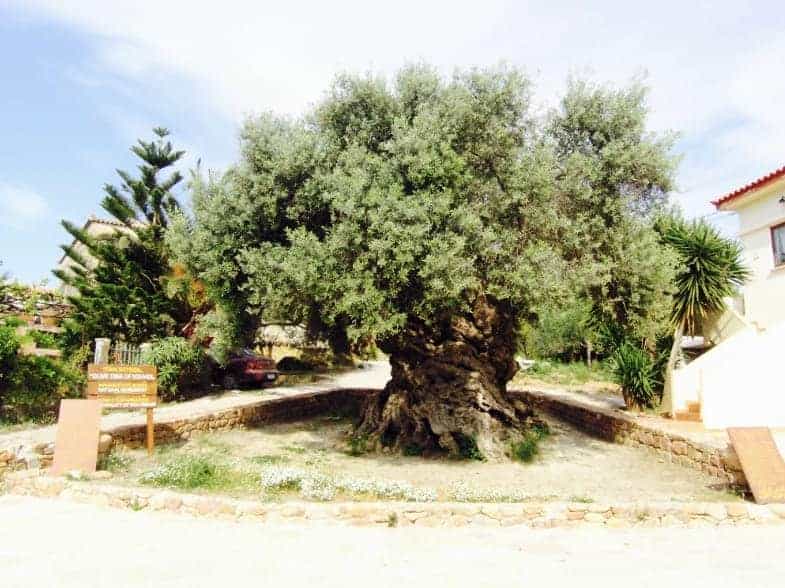
The Olive Tree of Vouves, located in Ano Vouves, Crete, Greece, is widely considered one of the oldest olive trees in the world, with estimates ranging from 2,000 to 4,000 years old. It still produces olives today.
Leave a Reply