

Let me tell you something.
It isn’t cholesterol levels that should be keeping you awake at three in the morning.
Cholesterol is convenient. It’s neat. It comes with numbers and charts and tidy little pills. Doctors can point at it, frown meaningfully, and write a prescription. It behaves like a proper villain.
But the real troublemaker? It’s quieter than that.
It’s your blood.
Not in a poetic sense. I mean the actual stuff moving around inside you. Or rather… not moving quite as well as it used to.
As we get older, blood changes. It thickens. It gets a bit sticky. Less champagne, more gravy. And instead of gliding through your arteries, it sort of lumbers along. The heart has to push harder. The tissues wait longer. Oxygen and nutrients show up late, like a delivery driver who’s only “five minutes away” for half an hour.
And you feel it, but not dramatically.
There’s no sudden collapse, no cinematic clutching of the chest. It’s subtler. You carry the shopping and need a sit-down. The stairs feel steeper than you remember. Your legs feel heavy. Your stamina doesn’t explode, it just quietly resigns.
Now, here’s the part people get awkward about.
Circulation isn’t just about jogging or climbing hills. It’s hydraulic. Blood has to flow well everywhere. And when it doesn’t, things don’t work with the reassurance they once did.
Erectile dysfunction for example (we whisper the words like it’s impolite). It’s often just a circulation problem. An erection is engineering. It requires decisive blood flow into very fine vessels. Narrow those vessels and the structure simply can’t do its job.
The arteries supplying that area are smaller than the ones feeding your heart. So if blood flow starts struggling, that’s often where you notice it first. It’s not a moral failure. It’s a plumbing report.
And it’s not just there.
Think of your body like a city.
The big arteries are the highways – impressive, dramatic. But the real work happens in the tiny backstreets. The capillaries. Those narrow little passages where oxygen gets handed over to your cells and waste gets picked up. That’s where life actually happens.
Now imagine those backstreets slowly narrowing. No dramatic collapse. Just a gradual tightening. Deliveries get delayed. Streetlights dim. Things aren’t maintained properly.
That’s what happens when capillaries constrict.
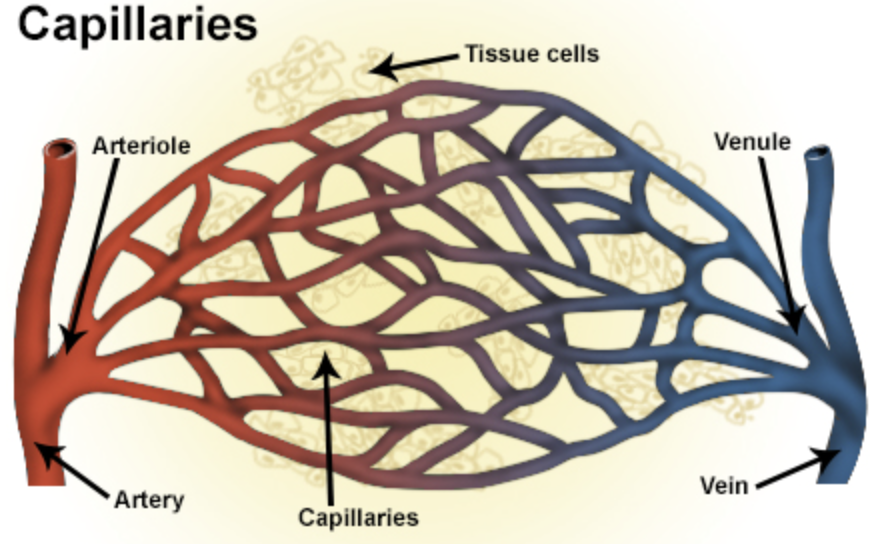
Then there’s your eyes. The retina is demanding. It needs a constant, rich blood supply. Starve it even slightly and you’ll notice the difference. Vision blurs. Night feels darker. Colours look washed out.
Or your brain. When its microcirculation isn’t great, concentration frays. Memory slips a bit. You’re not confused, just not as sharp. The lights feel slightly dimmer upstairs.
Cold hands. Slow-healing cuts. Heavy legs.
It’s all the same story.
And why does this happen?
Modern life.
Too much sugar roughens and stiffens vessel linings. High blood pressure batters them. Smoking irritates and constricts them. Chronic stress keeps everything tight and inflamed. And time stiffens everything (except the one thing you want stiffened!)
What makes this so sneaky is that it doesn’t announce itself with trumpets. It doesn’t shout. It just slowly economises. Rations oxygen. Trims the budget.
The organs that suffer most are the expensive ones: the retina, the brain, erectile tissue. They don’t tolerate “just enough.” They need a generous flow.
So fading eyesight and unreliable erections aren’t random, unrelated embarrassments. They’re messages from the same narrowing streets.
Now the good news.
You’re not helpless.
If you want your circulation to behave better, treat it better, even if the remedies seem obvious.
Cut back on refined sugar. Think of excess sugar as sandpaper on delicate vessels. Eat food that once grew in soil. Move your body often enough that your blood actually has a reason to flow.
Walk regularly. Exercise triggers nitric oxide, an all-important molecule that tells your vessels to relax and widen. Add some resistance training. Muscles demand blood. That demand improves supply.
Don’t sit all day without breaks. Stagnation is the enemy.
Eat like you’ve got Mediterranean relatives to impress – leafy greens, berries, oily fish, olive oil, nuts, citrus. These aren’t fads. They support the lining of your blood vessels.
Stop smoking or at least cut down. It was your parents’ job to warn you about the effects of smoking, not mine. Smoking is sabotage – it damages vessel walls and robs tissues of valuable oxygen.
Stay hydrated. Thick, dehydrated blood doesn’t flow well.
Control blood pressure. Sleep properly. Chronic stress and poor sleep keep your body in a constant low-grade inflammatory state, and inflammation narrows vessels over time.
It’s not glamorous advice.
Eat decently – Move daily. – Sleep properly. – Avoid toxins.
But here’s the truth: the smallest vessels in your body have an enormous say in how well you age.
They’re tiny. Invisible. Easy to ignore.
But when the backstreets close, the whole city feels it.
Additional information for your eyes
It surprised optometrists everywhere, or at least it should have.
Not that they’re a jumpy lot. The eye-care industry prefers its surprises to come in tasteful frames and quarterly dividends. But imagine, for a moment, that the problem with your failing eyesight isn’t age, nor genetics, nor your wicked affair with late-night television and phones glowing like radioactive cherubs in the dark.
You guessed it – it’s your blood.
Not metaphorically, but the actual plumbing. The microscopic capillaries at the back of your eye. The irrigation system. The fine Venetian lacework of vessels that keep your vision crisp, your colours saturated, your world in high definition.
Because eyes don’t run on carrots. They run on circulation.
The Findings of Dr Sydney Bush
Enter Dr. Sydney Bush, a once celebrated ophthalmologist In 1988, he developed the first soft contact lenses. He was also the first to photograph the back of the eye, looking not at the surface but at the supply lines.
His conclusion? The problem – whatever the stated condition – was undoubtedly vascular. The defect consistent. The blood vessels compromised.
He wrote, including to the British Medical Journal. Suggested that restoring circulation could reverse more than 90% of common visual decline.
It had the effect of a nuclear bomb being tossed gently into a billion-dollar industry.
Because if vision loss is largely vascular, if it is modifiable, reversible and preventable, then the business model of managed decline begins to look uncomfortably fragile.
The result? The industry turned on Dr Bush. He was sidelined and his research curtailed, his idea tidied away like an embarrassing drunk uncle.
Whether martyr or maverick, the thesis remains provocative: improve blood flow, restore sight. Even in one’s seventies. And yes, even to 20/20.
It’s Not Your Phone
It’s fashionable to blame screens. Blue light, digital strain, modernity itself. But high-definition sight doesn’t falter because you watched too much television. It falters because tissue starves.
Now we’re reassured that our eyes are metabolic gluttons requiring a robust flow of oxygen and nutrients, we can do something to prevent or remedy any deterioration. Starve them slowly and they dim. Not theatrically – just incrementally, politely, year by year.
Graeme Dinnen
ResourcesForLife.net
Additional information:
https://www.resourcesforlife.net/whats-your-blood-type/
Leave a Reply