
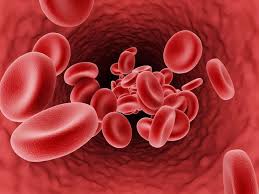
Last week, my article A Circulatory Confession prompted questions about whether a person’s blood type has any bearing on their personality.
My usual answer is “No”, though in Japan and South Korea some people treat blood groups rather like horoscopes, attributing temperament and compatibility to A, B, AB or O. To that extent, blood type has been woven into personality lore.
In 1930, Tokeji Furukawa proposed that temperament corresponded to blood group, an idea known as ketsueki-gata. It remains culturally influential, though biologically unsubstantiated.
The likelier explanation is psychological: tell someone they are meant to be meticulous or mercurial and, before long, they may oblige. I suspect an old self-fulfilling prophecy, rather than a quirk of haemoglobin.
Biology
What blood type does influence is biology. It plays a role in transfusion compatibility, affects clotting characteristics, and is associated with slight variations in disease risk. These are medical realities, not character assessments.
Think of blood as a private dining club. On the surface of red cells sit antigens as molecular name cards, while the immune system acts as maître d’, turning away anything unrecognised.
The most important classification is the ABO blood group system, identified in 1901 by the Austrian pathologist Karl Landsteiner. His discovery transformed transfusion from hazardous guesswork into ordered science.
The Four Principal Groups.
• Type A cells display A antigens and carry anti-B antibodies.
• Type B displays B antigens and carries anti-A antibodies.
• Type AB carries both antigens and no antibodies of this kind, making it able to receive red cells from any ABO group.
• Type O displays neither antigen but carries both antibodies, allowing it to donate widely but receive only from its own type. These antigens are sugar molecules attached to proteins and lipids on the cell surface.
If incompatible blood is transfused, antibodies bind to foreign antigens and trigger a dangerous immune reaction.
This is why O negative red cells are often termed “universal donor” and AB positive “universal recipient,” though in practice matching is done carefully and precisely. Blood group frequencies vary geographically: Type O is common in much of South America, while Type B is more prevalent in parts of Asia.
Such patterns reflect human migration and evolutionary pressures over millennia.
Rh Blood Group
Alongside ABO sits the Rh blood group system, further elucidated by Landsteiner and the American immunohematologist Alexander S. Wiener. The key component is the D antigen. If it is present, a person is Rh positive; if absent, Rh negative. Unlike ABO antibodies, anti-D antibodies usually form only after exposure through transfusion or pregnancy.
This distinction matters particularly in pregnancy. If an Rh-negative mother carries an Rh-positive fetus, her immune system may produce antibodies that attack fetal red cells, causing haemolytic disease of the newborn. Once a serious and often fatal condition, it is now largely preventable through timely administration of anti-D immunoglobulin.
Combine ABO and Rh and we arrive at the eight familiar types: A+, A−, B+, B−, AB+, AB−, O+, O−. They are medically vital labels in a complex biological system, but they do not dictate whether you are bold, anxious, tidy or always late for dinner.
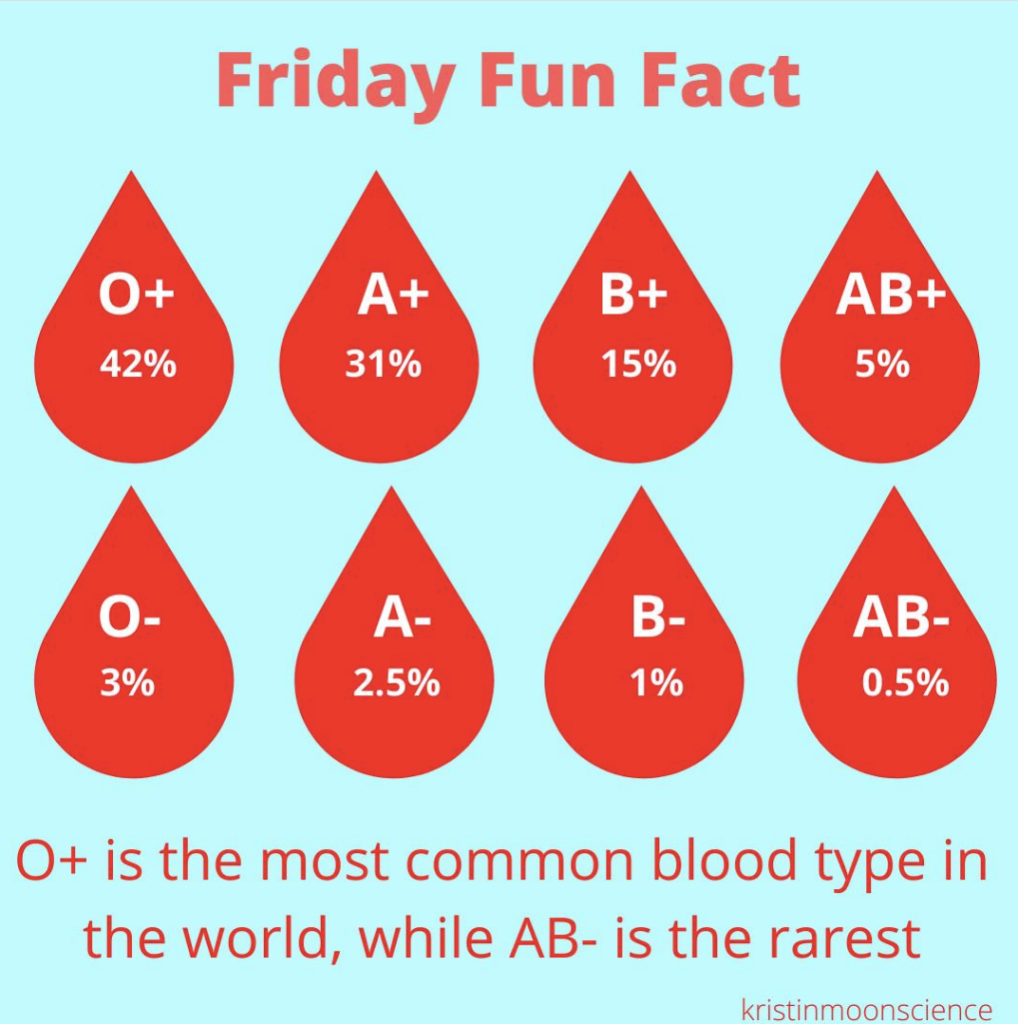
Beyond ABO and Rh, the International Society of Blood Transfusion recognises more than forty blood group systems — a crowded supporting cast to the familiar eight types.
Kell is notably immunogenic, capable of provoking severe transfusion reactions.
Duffy carries an evolutionary twist: many people of West African ancestry lack the Duffy antigen, a genetic absence that confers resistance to Plasmodium vivax malaria — natural selection at work.
Kidd is infamous for delayed haemolytic transfusion reactions, appearing days after a transfusion when trouble seemed safely past.
MNS, involving glycophorin proteins, is genetically intricate and clinically relevant.
Even rarer curiosities abound…..
The Bombay phenotype, first identified in Mumbai, lacks not only A and B antigens but the foundational H antigen. Individuals may test as Type O yet cannot receive ordinary O blood, only blood from the same rare phenotype. Rarer still is Rh-null, or “golden blood,” found in fewer than fifty known individuals worldwide; its absence of all Rh antigens makes it scientifically valuable but logistically challenging for transfusion.
Associations between blood type and disease risk exist, though they are modest. Type O appears protective against severe malaria, and during the COVID-19 pandemic there were suggestions, intriguing but not definitive, of slightly reduced risk of severe illness among Type O individuals.
Behind eight simple labels lies a complex immunological system, medically vital, scientifically fascinating, but not a guide to character.
Graeme Dinnen (O negative)


Leave a Reply