

Mornings begin, as all civilised things should, with heat in a cup. A cup that murmurs “stay a while” while the day tightens its tie and glares at you through the blinds.
For me, that heat comes in tea. Years ago, wandering through the sweat-slicked plantations of Sri Lanka, I was shown how to drink tea as the locals do: unadorned, without the prosthetic comfort of milk or sugar – the sensible way to tell the blends apart.
It took a period of abstinent weaning from my creamy habits, but now I like it black and brutally honest. Occasionally, when the sun heads towards the west on a warm afternoon, I feel the urge for an iced lemon tea, the beverage equivalent of totally relaxing.
The world, meanwhile, can’t agree what to think about coffee. We’ve been told for decades that it both kills and cures, that it leaches calcium and prolongs life, that it wakes the dead and then robs their bones.
The experts, those tireless conjurers of contradictory commandments, change the gospel every few years just to see if we’re still paying attention. Once upon a time, coffee was the devil’s broth; now it’s a health tonic in a hipster cup.
Who to believe? Nobody, probably. But when I drink coffee, I prefer to grind my own beans like a Sufi monk preparing incense, because, for me, drinking the corporate sludge served in chain cafés is an act of intentional self-harm.
Sugar is the real fallen angel. In 1985, after an enlightening encounter with William Dufty’s ‘Sugar Blues‘, by chapter three I decided emphatically to give sugar up. No more sweetened coffee, tea, or sprinkled sugar on my morning cereal. Dufty was persuasive: if sugar were invented today, it would be outlawed faster than heroin.
Hold on a moment! Sugar has a value. It greases the palms of both church and state, so it remains the most respectable of poisons. There’s a long list of aliases for the stuff, skulking through the small print of every label, a rogues’ gallery of saccharine subterfuge.
The checkout aisle of many outlets is its altar, lined with sweets for the faithful, mostly demanding children and the weak-willed.
History, too, has its sweet tooth. What triggered the American War of Independence? Most answers suggest the dumping of tea into Boston Harbour. That merely precipitated the event. The real reason? Taxes, taxes and yet more taxes, finally triggered by an increase in the tax on sugar.
The substitutes are no salvation. Artificial sweeteners and high-fructose corn syrup parade as “natural”, a word now stretched so far it’s practically transparent. The soft-drink empires sell us fizz and phosphoric acid, a cocktail potent enough to strip rust from kettles and, in thrifty Asian farms, kill pests.
- In 1700, the average person consumed about 4 pounds of sugar per year.
- In 1800, the average person consumed about 18 pounds of sugar per year.
- In 1900, individual consumption had risen to 90 pounds of sugar per year.
- In 2023, over 50% of Americans now consume a whopping 180 pounds of sugar per year!
In 1890, only 3 people out of 100,000 had diabetes. Today, almost 8,000 out of every 100,000 people are diagnosed with diabetes. This number continues to rise.
A whopping ten thousand bottles, cans or glasses of soft drinks disappear down gullets every second, each one a sugary suicide note written in corporate font. Coke, Pepsi, Fanta, Sprite, Dr. Pepper, Schweppes, 7-Up and whatever, they’re all bubbles and immune-impacting concoctions in drag.
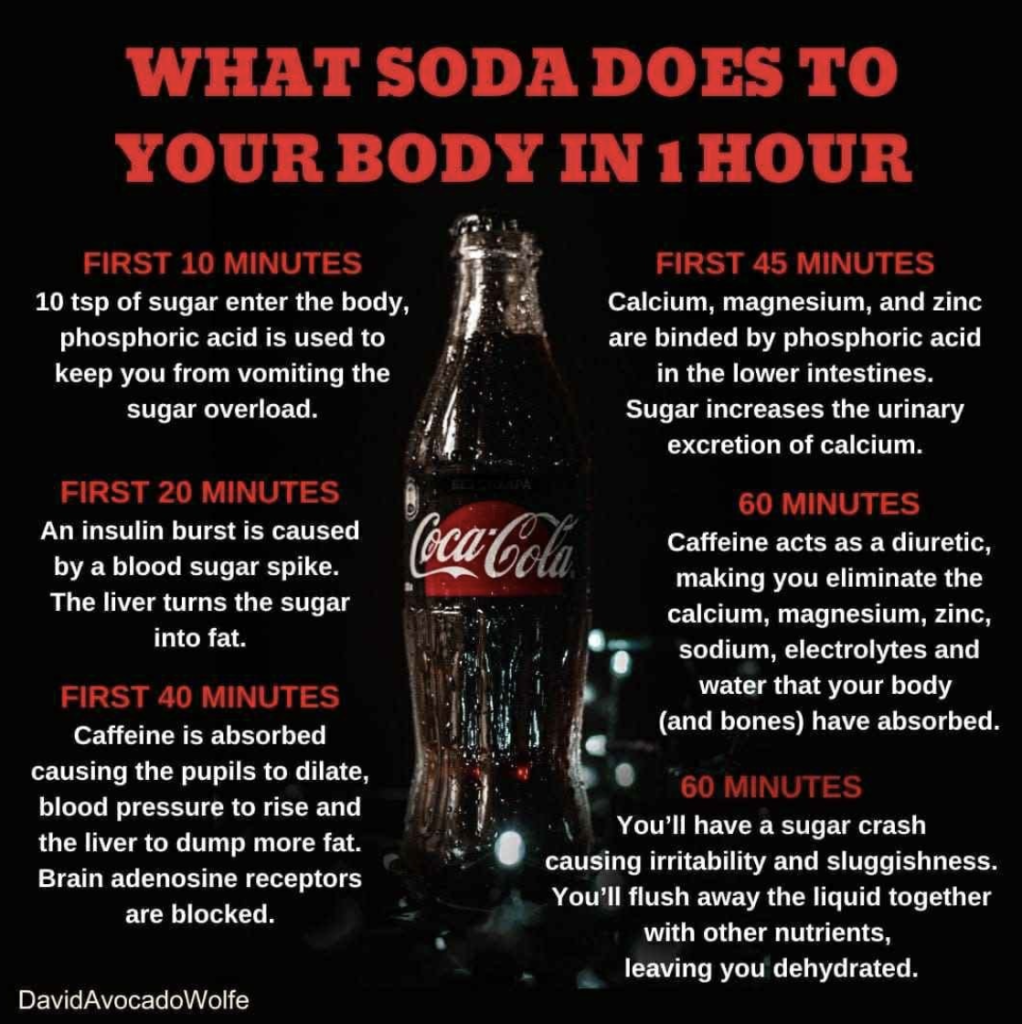
A Michigan study calculated that every can shortens your life by twelve minutes. Drink a six-pack and you’ve skipped lunch with your grandchildren.
Diet sodas are no more than a wolf in sheep’s clothing. For years, ‘Big Soda’ companies have been handing out millions of dollars in an attempt to prove that their drinks are NOT the cause of obesity.
In one example of this, the New York Times exposed one Big Soda company that paid $1.5 million to fund their own research group to convince the public that drinking soda is safe.
The food industry thrives on our ignorance and the labelling laws are flouted to our cost.
Sports drinks are heavily promoted to convince exercise enthusiasts they’re a healthy way to replace electrolytes lost during training. Marketing sleight-of-mouth there. Sports drinks don’t quench your thirst; they actually slow down hydration. In addition….
• you’re probably swallowing more calories (sugar) than you just burned off
• the high sugar content cancels out any electrolyte benefits
• there’s zero protein in sports drinks. Bad news for muscle builders.
• high sugar levels usually cause a subsequent energy crash
The Academy of General Dentistry published the results of a study which measured the high acid content in sports drinks. The report evidenced that damage occurs to the body after only 5 days of consistent consumption. The lead author of the study, Poonam Jain, BDS, MS, MPH, wrote:
“Young adults consume these drinks assuming that they will improve their sports performance and energy levels and that they are ‘better’ for them than soda. Most of these patients are shocked to learn that these drinks are essentially bathing their teeth with acid.”
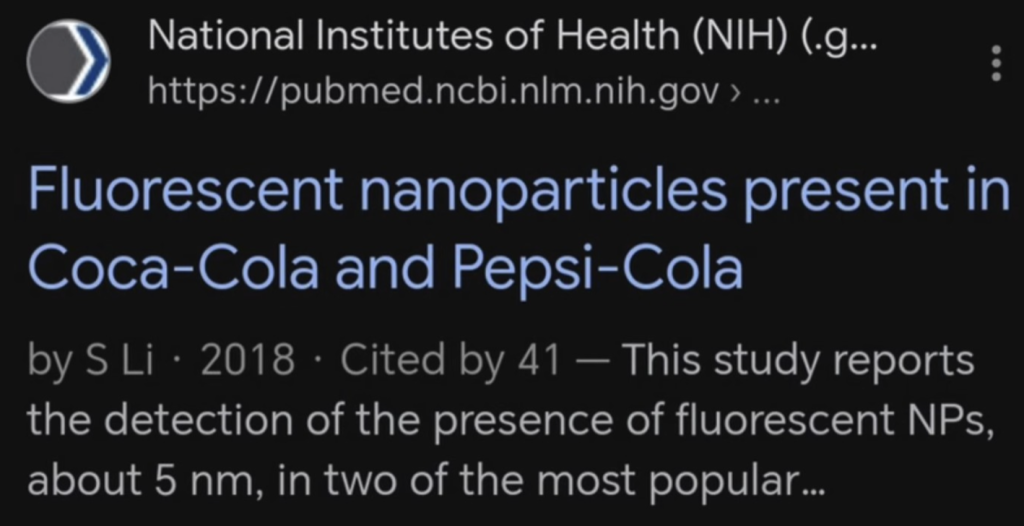
And then there’s the nanoparticles:
But never mind: nuts and bananas can win back the lost minutes, apparently. This is the nutritional ledger we now live by, minutes gained, minutes lost, a Fitbit for the soul.
As for milk, the white lie of childhood, it has been processed, pasteurised, homogenised, UHT-ed into unrecognisable submission. More than 80 percent of so-called “organic” milk in the US is treated to survive the apocalypse.
Seek a farmer and a pail, if you must, but beware: the research linking pasteurised dairy to cancer is enough to curdle even the freshest pint. The government, of course, subsidises Big Dairy with the same benevolent hypocrisy it uses for Big Sugar. The advertisements show moon-faced children with white moustaches, while the fine print whispers osteoporosis.
Nor do the diet versions redeem us. Diet cola, soy milk, artificial creamers. They’re all Trojan horses of chemistry. The manufacturers promise health and deliver laboratories. Water is fluoridated, olive oil adulterated, soy implicated in cancer, and apple-cider vinegar, that cultish elixir, is almost as acidic as a car battery.
We’ve turned our kitchens into petri dishes and call it “wellness”.
So what’s left to drink? Possibly only contrition. A clean glass of water, if you can still find one, and perhaps a measure of humility. Because the truth about diet and drink isn’t hidden in a Facebook reel or a smug nutritional vlog; it’s written on the labels we ignore and the habits we defend. Every sip is a small moral choice disguised as refreshment.
So I’ll still start my day with tea, black as confession and twice as honest. But loose leaf as the teabags themselves are tainted with a poor reputation.
The world may stew in corn syrup and caramel colouring, but I’ll cling to my unadulterated brew, hot, bitter, and not trying to sell me anything. Because in a culture that sweetens everything, bitterness is the last authentic flavour left.
Slàinte mhath!
Graeme Dinnen
ResourcesForLife.net
Leave a Reply