
Ever wondered why governments have suddenly decided that tobacco must die by 2030?
Not because they’ve suddenly found a moral compass, but because they’ve run out of excuses.
Tobacco, a pariah crop that once bankrolled empires and now funds oncology wards, has simply become ‘breaking news’.
Yet from the ashtray of its reputation comes a sly whisper: perhaps nicotine isn’t the villain. Perhaps it’s the company it keeps, the 599 chemical chaperones the FDA approved in the 1970s, including a cocktail of 15 pyrazines that makes the brain purr like a cat in a sunbeam.
Even Harvard, that temple of absolution, agree as much. The problem isn’t the alkaloid; it’s the cocktail.
Nicotine is NOT the reason for smoking-related diseases:
- it is not a carcinogen
- it does not cause lung cancer
- it has minimal effect on causing cardiovascular disease
One study of people diagnosed with mild cognitive impairment, concluded:
“It [nicotine] seems very safe even in non-smokers… in our studies we find it actually reduces blood pressure chronically. And there were no addiction or withdrawal problems, and nobody started smoking cigarettes. The risk of addiction to nicotine alone is virtually nil.”
Nicotine itself is botanical pepper spray, nature’s little death threat to insects. It was never meant to heal anything. But humans discovered that in small doses it flatters the mind instead of frying it. It brightens thought, steadies the trembling, and lends a counterfeit serenity.
A breath of borrowed cleverness.
Writers, soldiers and stockbrokers adopted it as their chemical valet. For twenty glorious minutes you’re a genius: brilliant, brave, unbearable. Then the light dims, and the craving drags you back to the packet of cigarettes like a lover who knows your worst secrets.
In the laboratory, nicotine is a paradox in a lab coat. It appears to protect neurons, perhaps delaying the creeping indignities of Parkinson’s or Alzheimer’s. It has been courted as a treatment for depression and attention deficit.
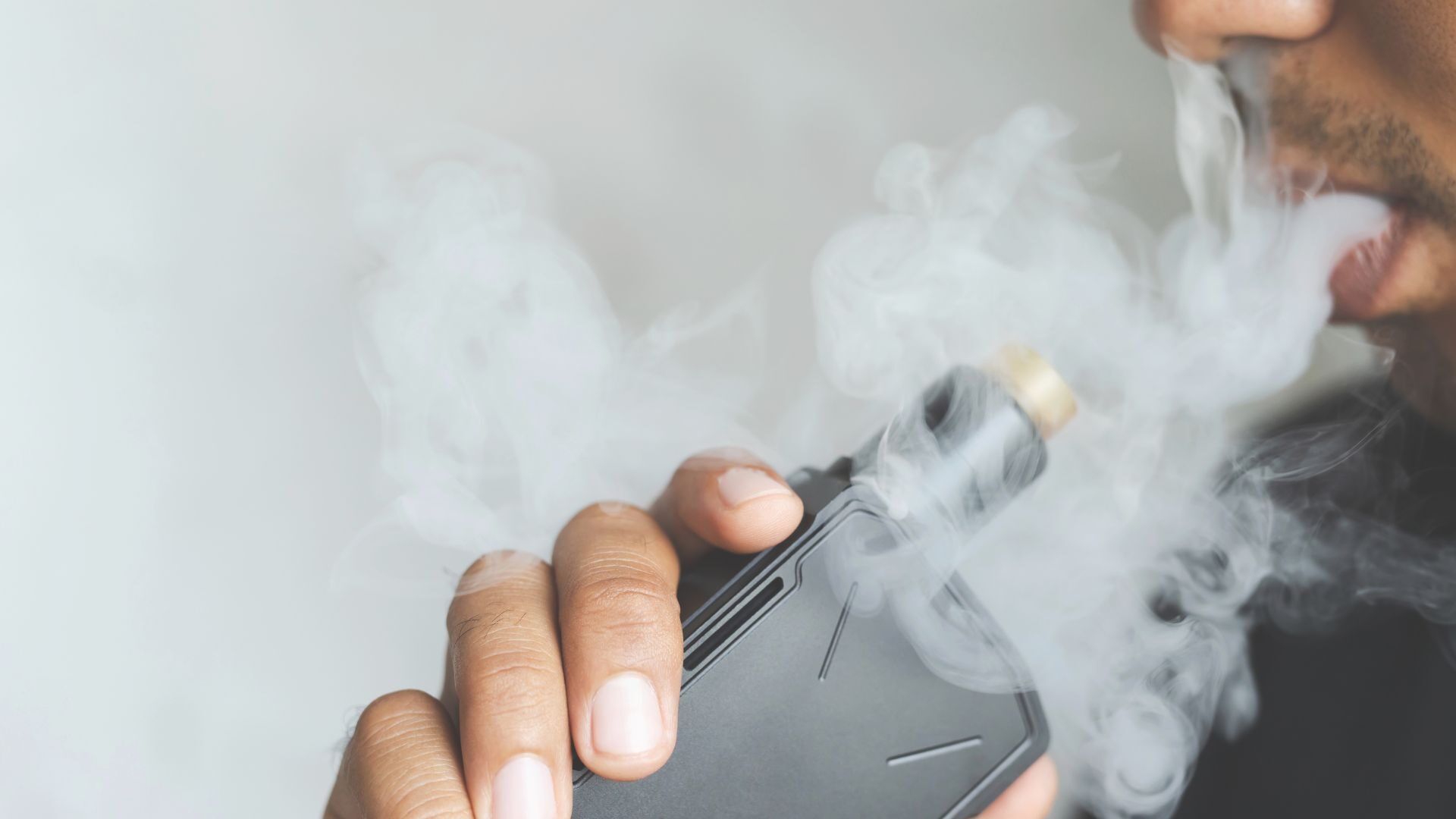
The trouble is not the molecule; it’s the medium. These days cigarettes are a chemical apocalypse of seven thousand compounds, two hundred and fifty toxins and seventy known carcinogens. Vaping, that space-age saviour, replaces smoke with circuitry. Its devotees on the slippery slope towards popcorn lung.
The patches and gums are the efficient puritan cousins. They work because they give the body its nicotine without the infernal extras. Oral nicotine is considered better than patches but only if the person is reasonably healthy – otherwise the oral dosage may be too high.
In that case, start with patches and, if the need arises, work upwards to build a tolerance. Be ultra careful not to dive in headlong and start with 4mg as this could make you dizzy, even sick.
Nicotine fascinates because it does two opposite things at once. It sharpens and soothes, excites and comforts. It’s the conversational equivalent of small talk, filling the silence without solving anything. Smokers call the first drag “relief,” but it’s merely the return to normal dopamine levels after a night’s withdrawal.
It’s not pleasure; it’s homeostasis.
So where does that leave us? With a plant that built fortunes, felled monarchs, and perfumed centuries of repentance. A molecule both muse and murderer, saint and sinner. Governments may one day outlaw tobacco entirely, but nicotine, sly, adaptive, and unrepentant, will slip through the cracks, dressed up in patches, gums, lozenges, and the next great medical scandal.
As for me – I’m using nicotine lozenges to help arrest Phylipa’s Alzheimers condition. We both take low-dosage nicotine lozenges given the over-protective and often dubious stance taken by the medical profession on their ineffective dementia drugs.
The devil, as ever, has excellent bedside manners.
And as for “tobacco essential oil,” trending among the aromatherapeutically bewildered: no such thing exists. Nicotine isn’t an essence, it’s a stimulant. What you’re buying is “tobacco absolute,” perfume for people who miss the smell of their grandad’s blazer.
Vape it and you’ll discover an aroma less reminiscent of Tuscany and more of the trauma ward.
Nature doesn’t do moral lessons. It deals in chemistry, not ethics. And nicotine remains proof that the delicate line between medicine and poison is drawn not by God or government, but by a trembling human hand.
Now we see the reasoning behind the global government’s crackdown on tobacco products.
As is often the case, the internet has written the last chapter of the novel before science has finished the opening paragraph.
There is a welterweight of misinformation online. Instead I recommended reading: Moving Beyond the COVID-19 Lies by Dr Bryan Ardis.
Watch the full interview: https://www.facebook.com/watch?v=4057880204451774
Graeme Dinnen
ResourcesForLife.net
Leave a Reply