
In the following paragraphs, if you allow me, I’m going to pretzel your brain.
There’s a risk that you may come out of this bemused, but, if you’re open to embracing its fundamental nature, you’ll be well on your way to dealing with what lies ahead.
And believe me, what lies ahead will be challenging for every one of us.
The Tao Te Ching (pronounced ‘Dao’) i
The Tao isn’t a thing. It has no corners to knock against, no labels, no barcode. You can’t insure it or inherit it. It is not matter but manner, a current that runs beneath the visible world like plumbing you never see but cannot live without.
Try to define it and it smiles politely and steps aside, for the Tao that can be told is not the true Tao.
It is described as empty, yet it overflows. Hollow, yet inexhaustibly productive. From this supposed vacancy comes the clutter and clatter of everything: stars, stones, emperors, ants. It does not strain. It does not boast. It produces the ten thousand things and then declines the credit. A creator without the vulgarity of ownership.
When anyone tries to explain the Tao, the result is often baffling, especially for those steeped in Western ways of thinking. How did you feel when I told you that the Tao was nothing – no name, no form – and yet its other side is everything, with name and form?
The scholars insist the Tao is insubstantial yet complete. Deep, still, origin without ancestry. Before heaven, before rulers, before the first spark of organisation, there it was. Not with a bang, not even with a whisper. Simply present. If existence were a long novel, the Tao would be the blank page preceding chapter one.
You cannot see the Tao, yet you feel it in the way you feel gravity, an unarguable persuasion. It both exists and refuses to perform its existence. A master of understatement.
Bring this down from the cosmic to the personal and the Tao begins to resemble what we call spirit. Not the melodramatic variety that rattles chains, but the quiet animating principle. The difference between a body, and a body that is alive. It has no measurable weight, yet without it the whole enterprise collapses.
The mind, alas, is another creature entirely. The mind is acquisitive. It hoards opinions, traditions, inherited prejudices and fashionable anxieties. It is a collector of cultural debris. Over time it mistakes this accumulation for identity. We parade our thoughts as though we invented them.
Spirit, by contrast, is uncluttered. It does not argue; it aligns. When the body falls away, the thinking apparatus goes with it – a useful but temporary contraption. The spirit, we are told, returns to the larger current, as water returns to sea.
The instruction is almost offensively simple. Soften. Where there is sharpness, introduce gentleness. Where there is chaos, apply stillness. When emotions flare, and they will, do not answer fire with petrol. Blunt it with composure. Dissolve confusion with a quiet mind. Harmonise with circumstance rather than attempting to throttle it into submission.
This is not passivity. It is calibration.
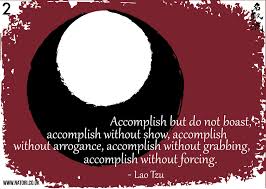
Lao Tzu, the author of The Tao, wrote, “To attain knowledge, add things every day. To attain wisdom, remove things every day.”
Never let the quest for more distract you from the beauty of enough. Perhaps in the stillness of nature, you’ll find your answers.
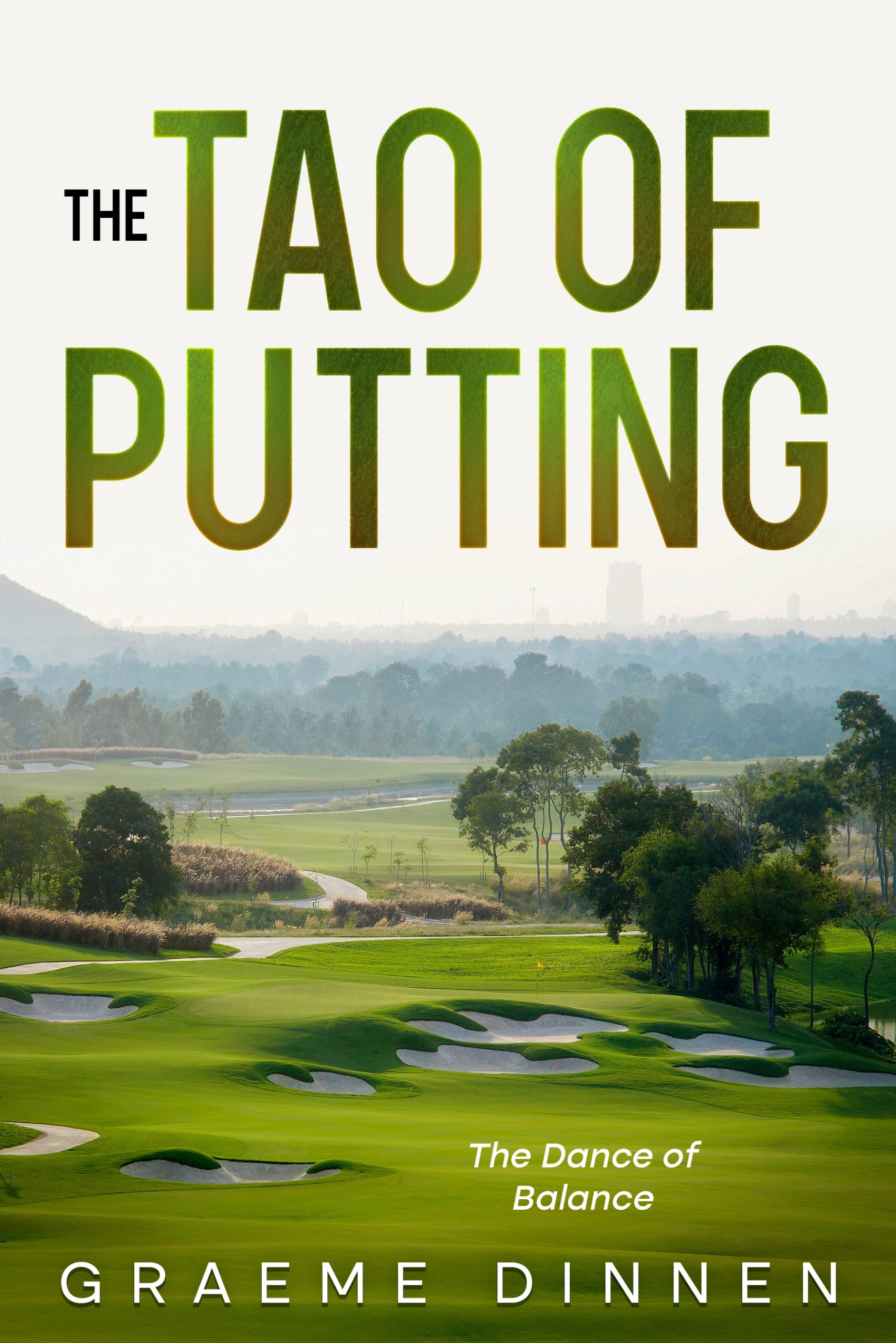
I wrote The Tao of Putting last year. On the surface, it’s about golf, about that small, maddening theatre where grown adults attempt to coax a dimpled white ball into a hole. But that’s merely the camouflage.
Inside, it’s less a manual for golfers than a quiet sermon for anyone who has ever tried to do something well, while their brain insists on doing the opposite. Sportsmen and women of every persuasion will recognise the disease: the tremor between intention and execution, the whispering mind that turns a simple act into a philosophical crisis.
Once again, it isn’t the putting. It’s the peculiar human habit of making life unnecessarily complicated and then wondering why it refuses to behave. The little lessons of patience, attention, humility and the occasional acceptance of failure. These things travel rather well. They wander happily off the green and into offices, kitchens, marriages and boardrooms.
If people nick even a fraction of those lessons and smuggle them into the rest of their lives, the effect would be rather splendid. The world might not become perfect, but it would almost certainly become calmer, kinder and a great deal more accurate over short distances.
So The Tao of Putting isn’t a lesson, it’s a scar. It’s what woke me up, what resurrected me. Like being kissed full in the face by meaning after a long, grey affair with mediocrity. It didn’t whisper; it didn’t coax. It slapped me, spun me around, and said, “Look – this is what it feels like to be blisteringly, breathlessly alive.”
And for a moment, I wasn’t just existing – I was inhabiting myself, every cell drunk on the sheer gall of being awake in the world. It’s earned, not given.
If you blink, you may miss the moment that matters most: the rare, electric experience of truly inhabiting your own life.
Graeme Dinnen (last recorded golf handicap 9)
ResourcesForLife.net
Past Articles:
Leave a Reply