
Lena had lived in the city her whole life. She was used to honking cars, shouting pedestrians, and the hum of distant construction. It was a symphony of chaos, and she never minded it – until one day, it all stopped.
She woke up to complete silence. No traffic, no voices, not even the rustle of leaves. The world outside looked normal, but no matter how hard she listened, she heard nothing. Panic set in. Had she gone deaf overnight?
Desperate, she knocked on her neighbour’s door. Mr. Patel answered with wide, frightened eyes.
“You hear it too, don’t you?” he whispered.
“Hear what?” Lena asked.
“The silence,” he said. “Something took the noise away. And now….it’s coming for us.”
– – – – –
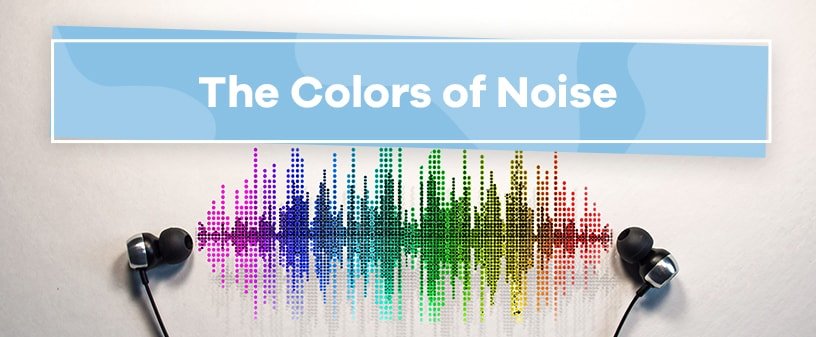
There are, for those with an esoteric bent, colours to noise. Not the ones you see, obviously. That would be synaesthesia, or drugs, or both.
No, these colours are sonic. They exist in the aural spectrum, whispered through the fizz of static, the hum of existence.
Take white noise, the aural equivalent of cheap house wine. It’s the sound of everything, all at once, a riotous, indiscriminate cacophony where every frequency shouts at the same volume. Babies love it. Adults tolerate it. Insomniacs worship it. It is the soundtrack of broken televisions, of aeroplane cabins, of people who own sound machines in an attempt to drown out the existential horror of their neighbours.
It is also, paradoxically, the sound of silence for some, a way of erasing the world by filling it completely.
Then there’s pink noise, which is white noise with a sense of decorum, a bassier, more balanced affair that flatters the human ear. If white noise is an all-you-can-eat buffet of sound, pink noise is a well-plated meal.
Think of the rush of rain, the whisper of wind through trees, the ocean’s sigh as it meets the shore. Nature, it turns out, has excellent taste in sound design. This is the noise of focus, the background hum of people who actually get things done.
Studies suggest it improves memory, boosts deep sleep, and generally makes you feel like a person who owns linen bedsheets and drinks herbal tea before bed.
Brown noise – also called red noise, though it has nothing to do with communism – is the auditory equivalent of a heavy wool blanket. It is deep and rumbling, all low frequencies and no screeching.
A waterfall from a great height, the low growl of distant thunder, the sort of noise that can lull the anxious into sweet, forgetful oblivion. If you have an overactive mind, brown noise is the aural equivalent of being told to sit down and shut up. It’s favoured by those who need the world to disappear but don’t have the luxury of a sensory deprivation tank.
There are other colours, of course there are!. Blue noise, which is sharp and bright and frankly unpleasant unless you are some sort of robotic insect. Violet noise, even higher, even shriller, for those who want their tinnitus pre-installed. Grey noise, an engineered oddity, designed to sound equally loud at every frequency – allegedly neutral, but somehow unsettling, like an AI trying to impersonate a human.
And then there’s black noise, which, despite its ominous name, is simply silence….but a different silence to white noise….or as close as one can get in this brash, clattering world.
True silence is a rare commodity. Even in the dead of night, there is the distant hum of a fridge, the faint tinnitus whine of modern existence. But in an anechoic chamber, where all noise is stripped away, the silence becomes a presence, a thing that presses inwards.
In this state, people hear their own blood moving, their bones creaking, their heartbeat amplified to the volume of a marching band. Silence, it turns out, is not restful; it is terrifying.
The longest anyone has been able to stay in an anechoic chamber, is 45 minutes.
For those of you wondering if Tartan Noise exists, of course it does – it’s the sound of the bagpipes!
And yet, for all our labelling and categorising, noise remains an unruly beast. It is inescapable, a constant companion to the modern world. It fills our streets, our homes, our heads. It keeps us awake. It sends us to sleep. It is both the enemy and the cure. We seek silence, but we bathe in noise. And perhaps, in the end, it is noise – glorious, colourful, inescapable noise – that reminds us we are alive.
The colours of noise, like everything else, have become a market. There are apps, playlists, and hours of YouTube loops promising the perfect soundscape for sleep, study, or stress relief.
Audiophiles debate the merits of different frequencies, while insomniacs hunt for the precise shade of static that will lull them into unconsciousness. Somewhere, right now, a hipster with a podcast is explaining why brown noise is superior to pink, while an influencer in the latest soft beige leggings is espousing the virtues of sleeping with white noise machines tuned to ‘optimal frequencies.’
And so, noise continues to shape our lives. We work to it, we relax with it, we seek its absence and yet fill our world with it. The modern world is an orchestra of unintended sound, from the electric hum of lights to the drone of traffic to the ever-present murmur of technology. We are drowning in sound, layering it, filtering it, shaping it to suit our needs.
And in doing so, we prove that silence is not golden – it is merely the void we avoid, filling it instead with the colours of our own making.
Graeme Dinnen
ResourcesForLife.net
Leave a Reply