Ageing often feels like a slow, nagging reminder that time is in charge. It’s easy to believe that getting older is fixed in our DNA, like a bad hand we were dealt at birth.
But the truth is far less dramatic. Age isn’t a destiny carved into our bodies; that’s mostly a story we’ve agreed to believe.
We tend to think people die of “old age,” but that idea doesn’t exist in any real biological sense. Our cells don’t suddenly give up because a birthday rolls around. They keep repairing, replacing, and renewing themselves throughout our lives, even when we think we’re past our prime.
Wrinkles, aches, forgetfulness. We treat these as proof that decay is natural and unavoidable. But much of what we call ageing is shaped by our beliefs, not just our biology.
We’ve absorbed the message that decline is normal, expected, unavoidable. And once we accept that script, we start living it.
Yet the body tells a different story. Skin replaces itself continuously. The liver repairs itself in six weeks; your DNA every two months. Bones rebuild themselves over the years. Even our personality shifts and refreshes over time.
Renewal is built into us far more deeply than decline is.
So why do we feel older than our biology suggests? Because society constantly reminds us. “You’re getting on,” people say. We hear it in jokes, read it in birthday cards, in ads, and learn it from well-meaning friends and relatives – “You shouldn’t be doing that at your age”.
We accept the idea that we must slow down, shrink back, and expect less from ourselves as the years go by.
But that’s an inherited belief, not a law of nature. If we stop assuming ageing has a fixed path, we might discover we’re more capable, more adaptable, and more resilient than we thought.
What keeps us lively isn’t tinctures or serums advertised by actors pretending to be dermatologists. It’s the willingness to redraw ourselves, to change the story we tell ourselves. It’s our willingness to try again, to stay curious, to imagine that the best parts of life aren’t behind us.
Ageing endures mostly because we keep signing the membership form.
The real challenge is not to stop the clock. No one can. So here’s to mutiny. To opting out. To refusing the dreary inevitability sold to us as wisdom. What’s tragic isn’t that we age, it’s how meekly we agree to it. After all, nobody said you had to buy a ticket to the show.
Meet the QEnergySpa
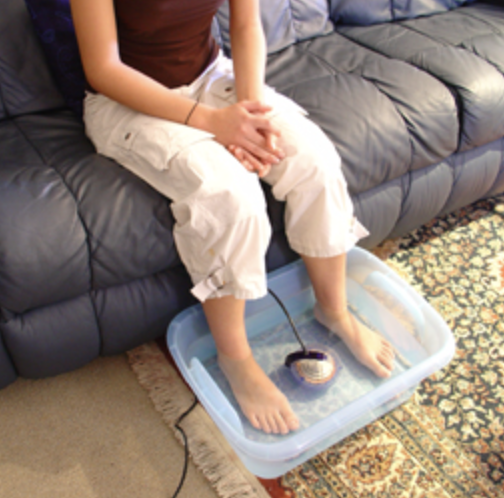
The wellness gadget people try once and then refuse to live without. Developed in Queensland, Australia, a place basically powered by sunshine and confidence, this hydro-therapy system turns a bowl of warm water into a full-on energy experience.
Everything living gives off a “bio-charge.” The “Q” sends a gentle electromagnetic pattern through the water that matches your body’s own electrical rhythm. So far no one else has managed to achieve this.
Setup? Child’s play. – Feet in. – Switch on. – Feel the shift.
People ask me why they feel tired all the time, as if their energy simply wandered off one day. So I fire back: • Are you happy with the state of your health? • Are all the doctors, therapists, or specialists helping as much as you hoped? • Why do so many people go from treatment to treatment without much real improvement?
“If homoeopathic remedies are not taking, the use of the Q will enable them to take.” Robert Davidson, Homoeopath
The explanation is that many of us simply run low on internal energy. Our bodies are like batteries that have been slowly losing charge, thanks to the compromised quality of water we drink, the food we eat, the air we breathe, and all the invisible interference floating around in the modern world.
If you want to halve your vascular (heart and arteries) age this link may not mean much at first although the graphs reveal a great deal about the reduction in vascular age.
The new models incorporate a copper ball that doubles the effectiveness of each session, with increased mitochondria connectivity and cellular communication.
If Desert Island Discs ever puts me in the hot seat, the Q would be my luxury pick, because even a castaway deserves to feel charged up.
I’m repeating myself here, but for good reason, yet this is not something you start to read and think “Yeah I’ve seen this type of article before”
Cast your eyes around any restaurant, bar, playground, railway station or any spot you care to name, and you’ll see the same bowed heads, the same trance-like glow: people communing with their phones.
You know this already. I appreciate that, but keep reading, because our children, God bless them, are voracious little laboratories. They absorb, metabolise, and repurpose the world with the enthusiasm of a puppy let loose in a butcher’s shop.
You and I were like that once, before spreadsheets and joint pain.
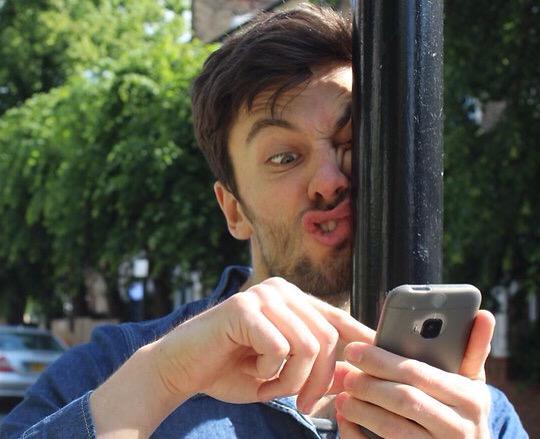
Every now and then, the devotion to cell phones becomes so complete that people walk straight into a lamppost, a wall, a car, an ornamental fountain, and even fall into an underground carpark, still clutching their screens like talismans.
Sometimes the consequences are not comic but tragic. A few years ago, a 15-year-old girl in Somerset was struck and killed by a train because she was looking at her phone as she crossed the tracks.
The digital age has bred a new kind of anxiety: FOMO, the Fear of Missing Out. Kids now fall asleep with their phones tucked under their pillows, hoping to wake to a flurry of text messages they might have missed while they dreamed.
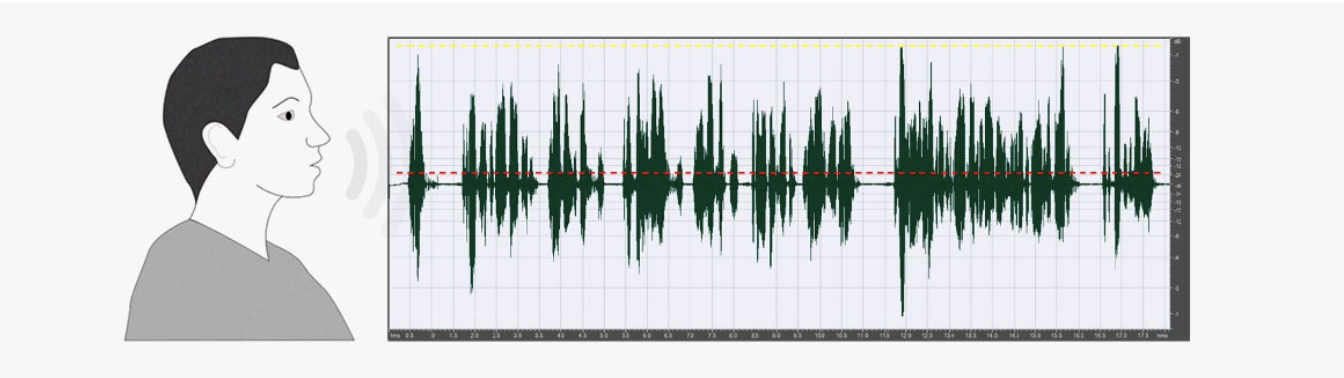
Simon Sinek has been contributing to our common sense and substantiating our opinions for some years now. In 2019 he suggested that phones are marvellous at keeping us close to people far away, yet hopeless at keeping us close to the people sitting right beside us.
Set aside the next 16 minutes to benefit from his words. Don’t skip it. Open it and listen because these things are all connected.
As far as your children are concerned, you don’t want to end up muttering the parental epitaph, the saddest of footnotes: “If only I’d…”
I learned today about the frankly unnerving dangers lurking in the new breed of AI toys being cheerfully marketed to our children. Consider this a flare fired into the parental night sky: be warned. Every mother, father, and vaguely responsible grown-up should read this, particularly as the great Christmas toy-buying stampede approaches.
The Schumann Resonance is Earth’s natural electromagnetic pulse, the rhythm that hums through our planet 24/7.
It’s born when lightning flashes strike the Earth about 45 times every second (that’s 8 million strikes a day), their energy bouncing between the ground and the ionosphere, that charged veil of atmosphere hovering roughly 100 km (60 miles) above us.
Think of it like Earth’s own radio station, broadcasting a frequency of 7.83 Hz, too low to hear, but powerful enough to be felt. Like a heartbeat, it thrums beneath everything that lives.
Earth is a giant bell, resonating since the dawn of time. Every flash of lightning sends waves that circle the globe, weaving a continuous symphony that every living being evolved within. We are not separate from it, we are made of its rhythm.
Here’s the fascinating part: that 7.83 Hz tone mirrors our own brain’s alpha waves (8–12 Hz), the frequency of calm, creativity, and flow, and theta waves (4–8 Hz), the state of deep meditation and healing.
It’s as if humanity has always been tuned to Earth’s frequency…..we just forgot how to listen.
Music as Medicine: Our Brain on Sound
What’s really happening in our brains when healing frequencies move through us? The answer is poetic neuroscience: a story that links your ears to your brain, your brain to your heart, and your heart back to the Earth itself.
The Sacred Pathway: How Sound Becomes Healing
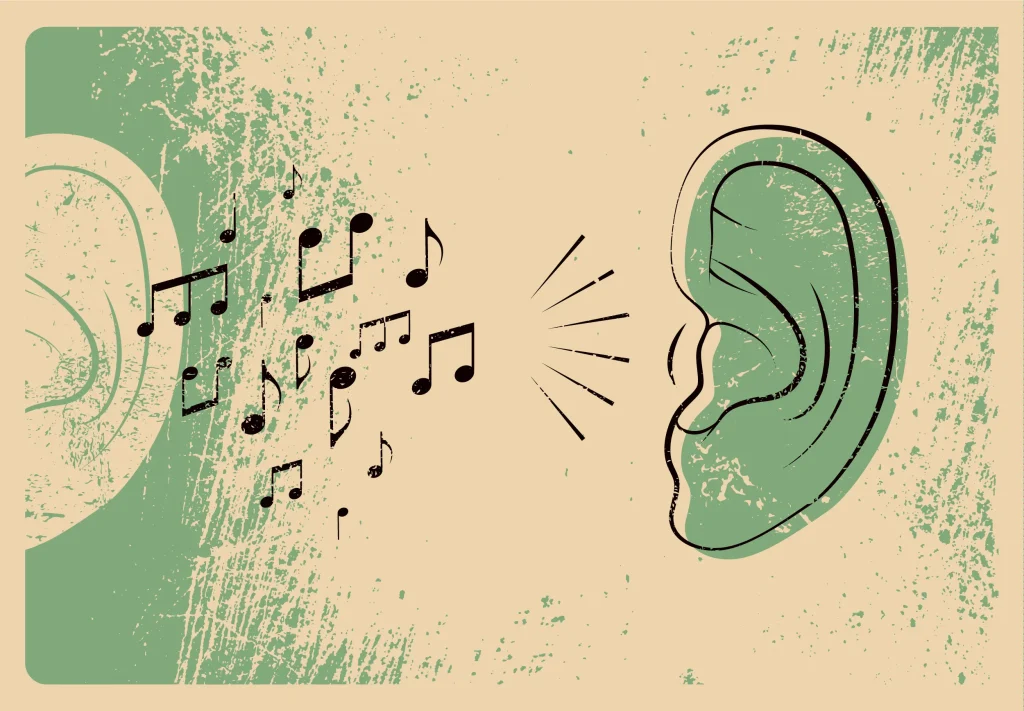
Inside your inner ear, 15,500 tiny hair cells act as divine translators, turning sound waves into electrical signals that your brain can understand. Those signals travel a sacred route, through your brainstem, thalamus, and into your auditory cortex, which is mapped like a piano keyboard across your mind.
But here’s where it gets magical: Sound doesn’t just stay in your head. It connects directly to your emotional centres, memory circuits, and through intricate neural pathways, even to your heart.
The Clinical Proof
Strengthening Fading Memories
In dementia therapy, rhythmic music helps restore what memory loss took away. Patients who couldn’t remember their own names suddenly sing every lyric to a song from their youth. That’s not nostalgia, it’s neural reconnection. Music rebuilds the bridges between memory, motion, and emotion.
Calming Racing Minds
Sound directly speaks to your autonomic nervous system — the subconscious conductor of your heart rate, breathing, and stress responses. Within 30 minutes of calming frequencies, your body shifts from fight-or-flight into rest-and-heal. Your nervous system exhales: “it’s safe now.”
Soothing Sleepless Nights
When researchers played sound designed to mirror slow-wave sleep, participants didn’t just fall asleep faster, their brains dropped into deeper, more restorative states. The music didn’t just lull them to rest, it tuned their bodies to the rhythm of renewal.
The Heart–Brain Connection
This is what moves me most, sound literally synchronises your heart’s rhythm with your brain’s waves.
Through the vagus nerve, the golden bridge between brain and body, healing frequencies guide your entire system into harmony.
Ancient cultures understood this long before science could explain it. When you listen to music around 60–90 BPM, your heart remembers its natural rhythm. Your brain releases its grip. Your body remembers peace.
Beyond Boundaries
Modern research is catching up with ancient wisdom.
Patients in minimally conscious states rebuilt neural connections after weeks of sound therapy.
Those with fibromyalgia experienced up to 81% improvement from 40 Hz tones.
Group drumming reduced depression and even shifted immune profiles toward healing.
Sound is not passive. It’s active medicine.
Ancient Wisdom, Modern Science
What emerges is a profound truth: We are not separate from vibration….we are vibration.
When sound rebuilds neural pathways, synchronizes heart and mind, and awakens the body’s memory of balance, we realize music was never mere entertainment. It was always the medicine.
A Harvard study showed that children with no prior musical experience who took music lessons for just over a year literally changed the structure of their brains.
The magnetic resonance imaging revealed:
Growth in motor regions — enhancing finger coordination and control Expansion of the corpus callosum — strengthening communication between brain hemispheres Development of the auditory cortex — sharpening sound perception and processing
But that’s not all. These young musicians also improved in:
• coordinated movement of both hands working together • Improved melodic and rhythmic sensitivity • musical skills related to both playing and listening
Music didn’t suddenly boost vocabulary or general I, its effects were beautifully targeted. It reshaped the brain precisely in the areas needed to make and understand music, forging stronger neural pathways and deeper capabilities than ever before.
Because it’s not just about talent. It’s about building the brain itself.
Celebrated musicians and their work
Let’s look at the connection:
J.S. Bach – Mathematical / Divine Order
“The universe written in music.” Bach’s music reflects symmetry, proportion, and logic, like architecture in sound. It feels governed by cosmic or mathematical law.
Wolfgang Amadeus Mozart – Natural / Organic
“Music that breathes like life itself.” Mozart’s phrasing often matches the rhythm of natural human breathing and speech. It’s effortless, balanced, and “alive.”
Ludwig van Beethoven – Emotional / Human Will
“Music of struggle and triumph.” Beethoven’s music mirrors human emotion and conflict, the drama of the inner life, of tension and release, of freedom and destiny.
Frederick Delius – Nature / Sensual Flow
“Music as landscape breathing – the sound of life dissolving into light and air“
The Painter of Sound – Delius’ music doesn’t argue or strive; it unfolds. It often feels like you’re listening to nature think – slow rivers, shifting sunlight, or summer fields in sound. There’s no sharp rhythm or classical “architecture”; it’s continuous and organic, as if time itself were stretching and relaxing.
Franz Schubert – Lyrical / Heartfelt Emotion
Music of longing, tenderness, and melancholy, like the poetry of the human soul.
Franz Liszt – Theatrical / Spiritual Ecstasy
Virtuosity that borders on mysticism, the search for transcendence through passion.
Frédéric Chopin – Introspective / Psychological
Music as inner monologue; small forms (nocturnes, preludes) that reveal vast emotional landscapes.
Claude Debussy – Sensual / Impressionistic
Sound as light and color; music that dissolves boundaries and imitates the fluidity of water and air.
Igor Stravinsky – Rhythmic / Primal Energy
Music tied to the pulse of ritual and the raw physicality of movement.
Johannes Brahms – Structural / Intellectual Emotion
Deep feeling contained within classical discipline, like emotion through architecture.
Sergei Rachmaninoff – Romantic / Nostalgic Memory
Music of longing for the past, drenched in harmonic richness and melancholy.
Joseph Haydn – Cheerful / Natural Order
Balance, wit, and good humour, music as the expression of reason and joy in nature.
Erik Satie – Minimal / Dreamlike Irony
Sound as atmosphere; simplicity with a wink, music that suggests, not declares.
Like Mozart, Gregorian Chant also matched the relaxing ins and outs of breathing, stimulating the vagus nerve and synchronising brain waves.
So next time you’re anxious, aching, or seeking balance, don’t reach for silence. Reach for sound and let those frequencies remind your being what harmony feels like.
We all need water. We know this. For us it’s the Grand Vizier of Life.
Yet there’s a modern mania for water. Not the sea, not the stuff that falls from the sky, or lurks moodily behind dams.
I mean drinking water.
Bottled, blessed, alkalised, ionised, triple-filtered, Himalayan, artesian, Icelandic, volcanic – the holy wet stuff we lug around like penitents with personal chalices.
Every generation has its fetish; ours happens to be transparent and tasteless.
You see them everywhere: the clink of metal flasks, the gentle suck of silicone straws, people nursing litre bottles like premature infants. If aliens landed, they’d assume we’d evolved a species-wide renal disorder.
Modern man, chained not to his phone but to his hydration schedule.
The great tragedy of this particular delusion is that it’s founded on a rumour. No scientist, doctor, or even gym bro can actually pinpoint any genuine research behind “eight glasses a day”.
It’s the dietary equivalent of “don’t swim for 30 minutes after lunch”.
Who First Launched the “Eight Glasses a Day” Gospel?
The fabled eight glasses of water a day, that modern rosary of wellness, can be traced back to one Fredrick J. Stare, Professor of Nutrition at Harvard, patron saint of processed breakfast, and trusted friend to industry.
Stare was a man with his fingers so deep in corporate pies you could have used him as a thermometer. Nabisco, the U.S. Cereal Institute, the sugar barons, they all found in him a sympathetic academic ear, one willing to hum reassuring tunes about additives, adding that a little fluoride never hurt anyone.
A trawl through the annals of science reveals precisely no evidence supporting his watery decree. None. Zilch. The Mayo Clinic, in its quiet Midwestern way, confirms as much. The “research” on eight glasses is as elusive as truth in a rumour.
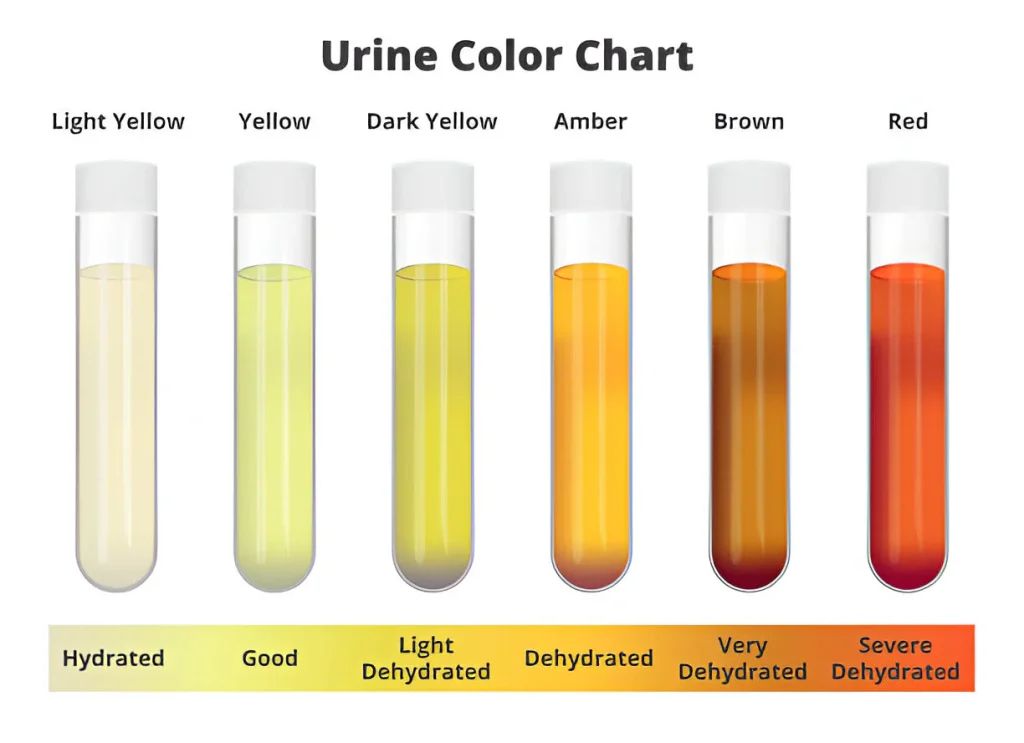
Realistically, most of us already get enough water, through food, tea, coffee, and, mercifully, wine. The body, that ancient and quietly competent machine, knows when it’s thirsty. It tells you. You drink. End of system. It’s worked rather splendidly since we were hairier and living in caves.
But try explaining that to the hydration evangelists. They’ll look at you with the condescension reserved for people who still smoke or question recycling. They will speak of toxins, those marvellous, undefined phantoms, and claim that water will grant you clear skin, eternal youth, and possibly spiritual enlightenment if consumed from a sufficiently expensive bottle.
We used to have faith in saints, relics, and homeopathy. Now we genuflect before electrolytes. There are apps to remind you to sip, bracelets that measure your fluid virtue, and bottles that glow accusingly when you’ve failed your hydration quota, as though we’re too dim to remember thirst. It’s the infantilisation of instinct. We’ve turned thirst into an algorithm.
The more we drink, the thirstier we become, not from dehydration but from neurosis. Modern life runs on the anxiety of insufficiency, not enough steps, sleep, or water. We’ve outsourced even our primal needs to data. Hydration has become the wellness world’s communion wine: clear, sanctified, and smug.
And of course, behind all this piety is profit. The bottled water industry, that glittering temple to our insecurities, sells us what falls freely from the sky. They slap a picture of a mountain on the label, charge three quid, and call it purity. It’s capitalism’s greatest magic trick: flogging tap water in fancy drag.
Even tap water can be treacherous. It’s not only the grime and corrosion in the pipes that feed it to your home, it’s what’s dissolved within it. A chemical soup of pesticides, pollutants, cleaning agents, and drug residues seeps into every glass. Traces of hormones and other disruptive compounds quietly tamper with your body’s chemistry. Most men don’t realise it, but they’re effectively taking microdoses of the contraceptive pill every day, recycled straight from the tap. In truth, we’re all drinking one another’s filtered urine, again and again.
Tme to get a decent water filter!
What happens when faith evaporates is that we replace holy water with hydration. The ritual persists, the sipping, the purification, the daily recommitment to virtue, only now the priests are influencers in Lycra, preaching salvation between sponsored posts.
It’s not that drinking water is bad, it’s just not transcendence. You don’t need a litre on your desk like a hostage negotiator’s prop. Your body’s been managing thirst since before Fitbits and branded aluminium canisters.
The eight-glass myth is a parable for our age. data-driven, fear-based, and conveniently monetised. It isn’t about water at all. It’s about the nagging suspicion that left to ourselves, we’re doing it wrong. So we buy bottles, apps, and reassurance. a lifestyle sold by the litre.
My advice? If you’re thirsty, have a drink. If you’re not, don’t. Tea probably counts. And if you must worship something liquid, make it wine. At least that knows how to turn water into something worth believing in.
And then there’s always this…..
Maybe We’re Drinking The Wrong Water
Modern life is a slow leak. Every breath, thought, and heartbeat drains a little of your mineral reserves. We’re walking oceans, diluted versions of the sea we came from, yet running perilously low on the trace elements that keep the lights on.
We spend nine months in a saline solution before being born. Taste a tear, or your sweat after exercise. It’s the Atlantic, in miniature. Every cell depends on that mineral soup. Without it, the whole symphony falters: nutrients go unabsorbed, mitochondria lose their spark, muscles sulk, and the nervous system stammers like a bad Wi-Fi signal.
Restore those minerals and the difference is biblical. Energy steadies. Brain fog lifts. Sleep deepens. Muscles behave. The body, no longer scavenging from itself, remembers what thriving feels like.
Health isn’t built on deprivation; it’s built on foundation. Minerals are that foundation, the scaffolding of vitality. Without them, you’re just running a very expensive piece of biology on fumes.
Stop expecting miracles from a body that’s scraping the bottom of its own barrel. Give it what it recognises, what it craves. And if you’re still wondering what your health is worth, wonder no more.
What To Do, Starting Today
Every cell, every tissue, every drop of blood relies on a rich symphony of minerals to keep life humming. Without them, nothing runs as it should.
• Your cells can’t draw nourishment from food. • Your mitochondria can’t spin the steady current of energy that keeps you alive. • Your body can’t cleanse itself with any grace. • Your nervous system can’t send a clear signal. • Your muscles forget how to move, how to tense, how to release.
But when mineral balance is restored, everything begins to work again, quietly, beautifully, as intended.
• Energy steadies through the day; the crashes fade. • Clarity returns; the fog lifts. • Sleep deepens; muscles soften. • Vitality blooms as each system hums in harmony once more.
Your body was never built merely to survive, it was designed to thrive. But it needs a mineral foundation strong enough to do its job: to repair, to energise, to defend.
Stop asking your body to perform on an empty stage. Give it the minerals it knows, the nourishment it remembers.
Because truly, how much is your health worth to you? Don’t undervalue the only home you’ll ever live in.
To get my daily dose of llfe-giving minerals, I add a pinch of mineral-rich Celtic Sea Salt to my Berkey water filter. It does the rest.
Dr Pierre Kory writes “Lithium, copper, and boron – just three of the trace minerals rewriting the boundaries of modern physiology.”
Each of these trace elements is present in Celtic Sea Salt along with 80+ other essential minerals. I’ve often suggested that 50% of people in GP waiting rooms are there through lack of minerals.
Celtic Sea Salt is available on our site. All you need is the organic Cooking salt, or if you’re more creative in the kitchen, the Fleur de Sel (we only have thr 250g left – all the 500g has gone to good kitchens).
Ever wondered why governments have suddenly decided that tobacco must die by 2030?
Not because they’ve suddenly found a moral compass, but because they’ve run out of excuses.
Tobacco, a pariah crop that once bankrolled empires and now funds oncology wards, has simply become ‘breaking news’.
Yet from the ashtray of its reputation comes a sly whisper: perhaps nicotine isn’t the villain. Perhaps it’s the company it keeps, the 599 chemical chaperones the FDA approved in the 1970s, including a cocktail of 15 pyrazines that makes the brain purr like a cat in a sunbeam.
Even Harvard, that temple of absolution, agree as much. The problem isn’t the alkaloid; it’s the cocktail.
Nicotine is NOT the reason for smoking-related diseases:
it is not a carcinogen
it does not cause lung cancer
it has minimal effect on causing cardiovascular disease
One study of people diagnosed with mild cognitive impairment, concluded:
“It [nicotine] seems very safe even in non-smokers… in our studies we find it actually reduces blood pressure chronically. And there were no addiction or withdrawal problems, and nobody started smoking cigarettes. The risk of addiction to nicotine alone is virtually nil.”
Nicotine itself is botanical pepper spray, nature’s little death threat to insects. It was never meant to heal anything. But humans discovered that in small doses it flatters the mind instead of frying it. It brightens thought, steadies the trembling, and lends a counterfeit serenity.
A breath of borrowed cleverness.
Writers, soldiers and stockbrokers adopted it as their chemical valet. For twenty glorious minutes you’re a genius: brilliant, brave, unbearable. Then the light dims, and the craving drags you back to the packet of cigarettes like a lover who knows your worst secrets.
In the laboratory, nicotine is a paradox in a lab coat. It appears to protect neurons, perhaps delaying the creeping indignities of Parkinson’s or Alzheimer’s. It has been courted as a treatment for depression and attention deficit.
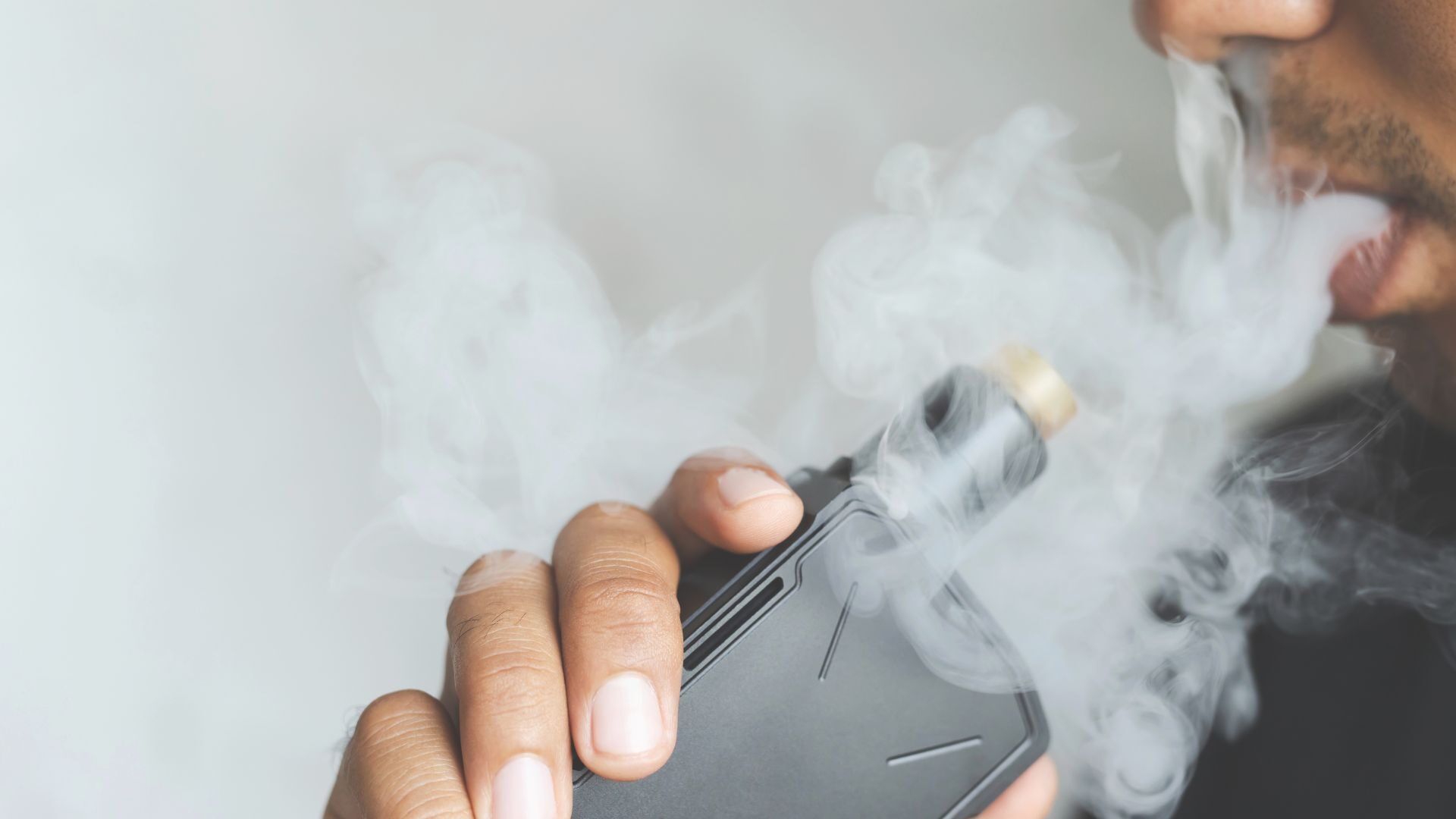
The trouble is not the molecule; it’s the medium. These days cigarettes are a chemical apocalypse of seven thousand compounds, two hundred and fifty toxins and seventy known carcinogens. Vaping, that space-age saviour, replaces smoke with circuitry. Its devotees on the slippery slope towards popcorn lung.
The patches and gums are the efficient puritan cousins. They work because they give the body its nicotine without the infernal extras. Oral nicotine is considered better than patches but only if the person is reasonably healthy – otherwise the oral dosage may be too high.
In that case, start with patches and, if the need arises, work upwards to build a tolerance. Be ultra careful not to dive in headlong and start with 4mg as this could make you dizzy, even sick.
Nicotine fascinates because it does two opposite things at once. It sharpens and soothes, excites and comforts. It’s the conversational equivalent of small talk, filling the silence without solving anything. Smokers call the first drag “relief,” but it’s merely the return to normal dopamine levels after a night’s withdrawal.
It’s not pleasure; it’s homeostasis.
So where does that leave us? With a plant that built fortunes, felled monarchs, and perfumed centuries of repentance. A molecule both muse and murderer, saint and sinner. Governments may one day outlaw tobacco entirely, but nicotine, sly, adaptive, and unrepentant, will slip through the cracks, dressed up in patches, gums, lozenges, and the next great medical scandal.
As for me – I’m using nicotine lozenges to help arrest Phylipa’s Alzheimers condition. We both take low-dosage nicotine lozenges given the over-protective and often dubious stance taken by the medical profession on their ineffective dementia drugs.
The devil, as ever, has excellent bedside manners.
And as for “tobacco essential oil,” trending among the aromatherapeutically bewildered: no such thing exists. Nicotine isn’t an essence, it’s a stimulant. What you’re buying is “tobacco absolute,” perfume for people who miss the smell of their grandad’s blazer.
Vape it and you’ll discover an aroma less reminiscent of Tuscany and more of the trauma ward.
Nature doesn’t do moral lessons. It deals in chemistry, not ethics. And nicotine remains proof that the delicate line between medicine and poison is drawn not by God or government, but by a trembling human hand.
Now we see the reasoning behind the global government’s crackdown on tobacco products.
As is often the case, the internet has written the last chapter of the novel before science has finished the opening paragraph.
There is a welterweight of misinformation online. Instead I recommended reading: Moving Beyond the COVID-19Lies by Dr Bryan Ardis.
Mornings begin, as all civilised things should, with heat in a cup. A cup that murmurs “stay a while” while the day tightens its tie and glares at you through the blinds.
For me, that heat comes in tea. Years ago, wandering through the sweat-slicked plantations of Sri Lanka, I was shown how to drink tea as the locals do: unadorned, without the prosthetic comfort of milk or sugar – the sensible way to tell the blends apart.
It took a period of abstinent weaning from my creamy habits, but now I like it black and brutally honest. Occasionally, when the sun heads towards the west on a warm afternoon, I feel the urge for an iced lemon tea, the beverage equivalent of totally relaxing.
The world, meanwhile, can’t agree what to think about coffee. We’ve been told for decades that it both kills and cures, that it leaches calcium and prolongs life, that it wakes the dead and then robs their bones.
The experts, those tireless conjurers of contradictory commandments, change the gospel every few years just to see if we’re still paying attention. Once upon a time, coffee was the devil’s broth; now it’s a health tonic in a hipster cup.
Who to believe? Nobody, probably. But when I drink coffee, I prefer to grind my own beans like a Sufi monk preparing incense, because, for me, drinking the corporate sludge served in chain cafés is an act of intentional self-harm.
Sugar is the real fallen angel. In 1985, after an enlightening encounter with William Dufty’s ‘Sugar Blues‘, by chapter three I decided emphatically to give sugar up. No more sweetened coffee, tea, or sprinkled sugar on my morning cereal. Dufty was persuasive: if sugar were invented today, it would be outlawed faster than heroin.
Hold on a moment! Sugar has a value. It greases the palms of both church and state, so it remains the most respectable of poisons. There’s a long list of aliases for the stuff, skulking through the small print of every label, a rogues’ gallery of saccharine subterfuge.
The checkout aisle of many outlets is its altar, lined with sweets for the faithful, mostly demanding children and the weak-willed.
History, too, has its sweet tooth. What triggered the American War of Independence? Most answers suggest the dumping of tea into Boston Harbour. That merely precipitated the event. The real reason? Taxes, taxes and yet more taxes, finally triggered by an increase in the tax on sugar.
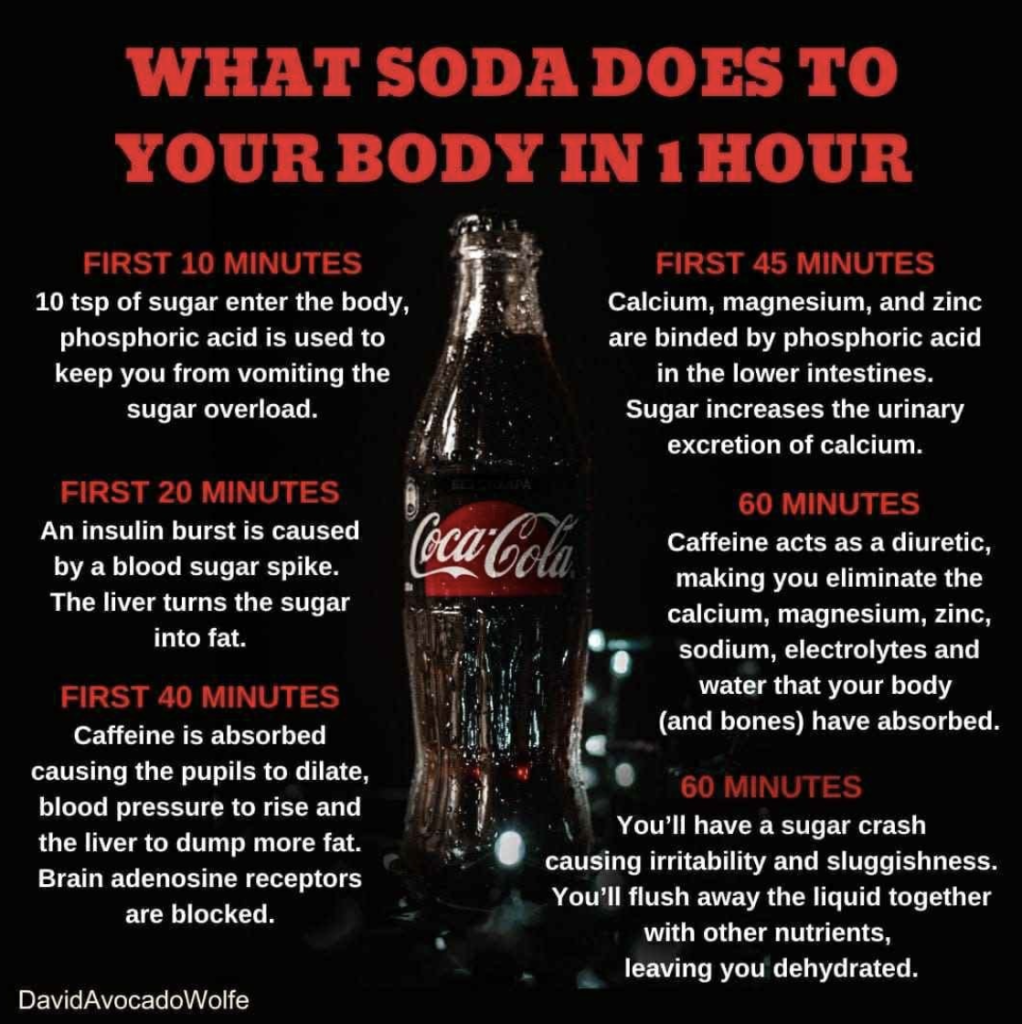
The substitutes are no salvation. Artificial sweeteners and high-fructose corn syrup parade as “natural”, a word now stretched so far it’s practically transparent. The soft-drink empires sell us fizz and phosphoric acid, a cocktail potent enough to strip rust from kettles and, in thrifty Asian farms, kill pests.
In 1700, the average person consumed about 4 pounds of sugar per year.
In 1800, the average person consumed about 18 pounds of sugar per year.
In 1900, individual consumption had risen to 90 pounds of sugar per year.
In 2023, over 50% of Americans now consume a whopping 180 pounds of sugar per year!
In 1890, only 3 people out of 100,000 had diabetes. Today, almost 8,000 out of every 100,000 people are diagnosed with diabetes. This number continues to rise.
A whopping ten thousand bottles, cans or glasses of soft drinks disappear down gullets every second, each one a sugary suicide note written in corporate font. Coke, Pepsi, Fanta, Sprite, Dr. Pepper, Schweppes, 7-Up and whatever, they’re all bubbles and immune-impacting concoctions in drag.
A Michigan study calculated that every can shortens your life by twelve minutes. Drink a six-pack and you’ve skipped lunch with your grandchildren.
Diet sodas are no more than a wolf in sheep’s clothing. For years, ‘Big Soda’ companies have been handing out millions of dollars in an attempt to prove that their drinks are NOT the cause of obesity.
In one example of this, the New York Times exposed one Big Soda company that paid $1.5 million to fund their own research group to convince the public that drinking soda is safe.
The food industry thrives on our ignorance and the labelling laws are flouted to our cost.
Sports drinks are heavily promoted to convince exercise enthusiasts they’re a healthy way to replace electrolytes lost during training. Marketing sleight-of-mouth there. Sports drinks don’t quench your thirst; they actually slow down hydration. In addition….
• you’re probably swallowing more calories (sugar) than you just burned off
• the high sugar content cancels out any electrolyte benefits
• there’s zero protein in sports drinks. Bad news for muscle builders.
• high sugar levels usually cause a subsequent energy crash
The Academy of General Dentistry published the results of a study which measured the high acid content in sports drinks. The report evidenced that damage occurs to the body after only 5 days of consistent consumption. The lead author of the study, Poonam Jain, BDS, MS, MPH, wrote:
“Young adults consume these drinks assuming that they will improve their sports performance and energy levels and that they are ‘better’ for them than soda. Most of these patients are shocked to learn that these drinks are essentially bathing their teeth with acid.”
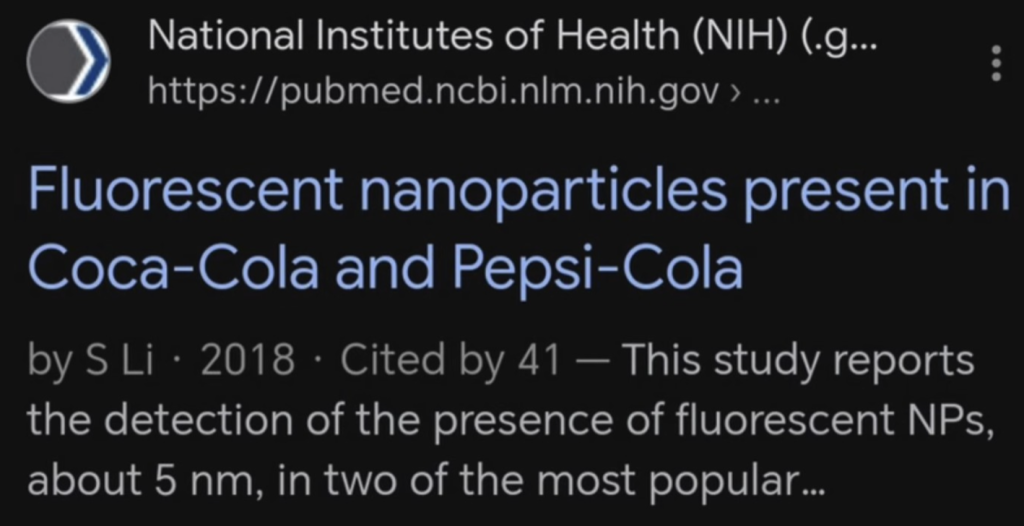
And then there’s the nanoparticles:
But never mind: nuts and bananas can win back the lost minutes, apparently. This is the nutritional ledger we now live by, minutes gained, minutes lost, a Fitbit for the soul.
As for milk, the white lie of childhood, it has been processed, pasteurised, homogenised, UHT-ed into unrecognisable submission. More than 80 percent of so-called “organic” milk in the US is treated to survive the apocalypse.
Seek a farmer and a pail, if you must, but beware: the research linking pasteurised dairy to cancer is enough to curdle even the freshest pint. The government, of course, subsidises Big Dairy with the same benevolent hypocrisy it uses for Big Sugar. The advertisements show moon-faced children with white moustaches, while the fine print whispers osteoporosis.
Nor do the diet versions redeem us. Diet cola, soy milk, artificial creamers. They’re all Trojan horses of chemistry. The manufacturers promise health and deliver laboratories. Water is fluoridated, olive oil adulterated, soy implicated in cancer, and apple-cider vinegar, that cultish elixir, is almost as acidic as a car battery.
We’ve turned our kitchens into petri dishes and call it “wellness”.
So what’s left to drink? Possibly only contrition. A clean glass of water, if you can still find one, and perhaps a measure of humility. Because the truth about diet and drink isn’t hidden in a Facebook reel or a smug nutritional vlog; it’s written on the labels we ignore and the habits we defend. Every sip is a small moral choice disguised as refreshment.
So I’ll still start my day with tea, black as confession and twice as honest. But loose leaf as the teabags themselves are tainted with a poor reputation.
The world may stew in corn syrup and caramel colouring, but I’ll cling to my unadulterated brew, hot, bitter, and not trying to sell me anything. Because in a culture that sweetens everything, bitterness is the last authentic flavour left.
There are moments when civilization feels as though it’s mislaid the plot. Entirely.
I had one in Ojai, California.
In a health food shop, surrounded by wheatgrass shots and earnest women in Lycra discussing the pH of kale, I witnessed an absurd scene that ought to have been written by Beckett.
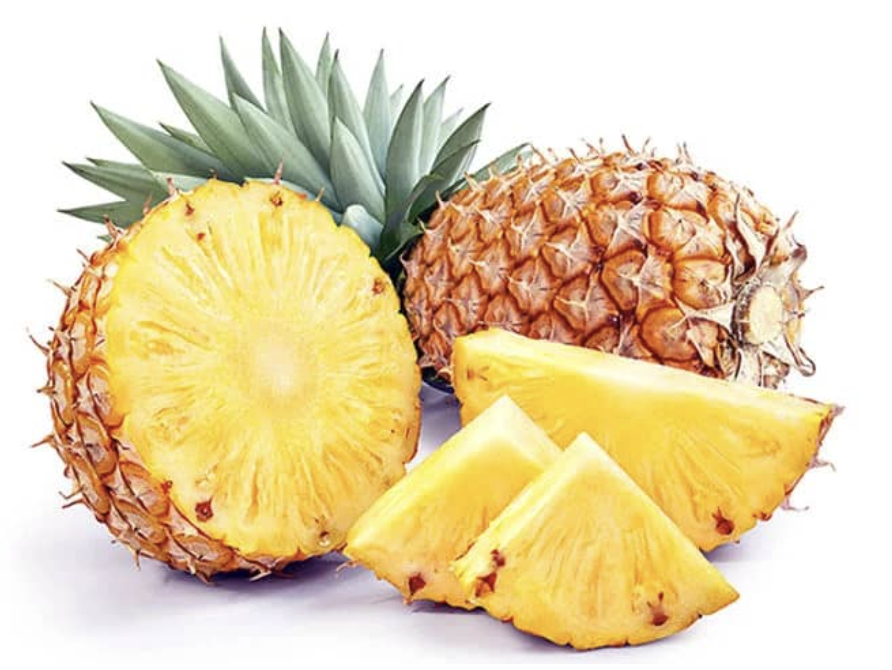
A boy, maybe seven or eight, was there. He pointed to a pineapple, an actual pineapple, the whole, spiky, crown-topped fruit, and asked his mother what it was.
When she told him, he was dumbfounded because he’d never actually seen one before, not outside its natural habitat of a clamshell plastic punnet, pre-cubed, de-cored, bleached of its eccentricity.
He loved the taste of pineapple, yet it took a whole fruit to baffle him.
And that, right there, is the obituary of food.
We live in an age of choice. Or at least, that’s the brochure.
Supermarkets have aisles longer than cathedral naves and brighter than Vegas, lined with a cornucopia of packaging, logos, and things that used to be food but now look like prototypes for Lego bricks.
Walk into one and it appears abundant, generous, practically biblical in its overflow. But scratch the label, the promises of “artisan,” “crafted,” “farmhouse,” “authentic”, and you discover the dreary truth.
Almost everything you put in your basket is, in one way or another, fraud.
Take bread. Real bread is flour, water, salt, yeast. Four ingredients, and yet it can taste like poetry. It can bring a room to silence when you crack open a loaf still steaming from the oven.
Now go into your nearest supermarket and pick up a “farmhouse loaf.” It will last longer than a minor war. It squeaks like polystyrene when you squeeze it. It has a list of ingredients that reads like a chemist’s receipt.
And yet, here it is, packaged in wholesome brown with a sketch of a windmill on the front, as though this pallid sponge has been lovingly tended by a bucolic miller in breeches, rather than extruded from a chrome roller in Slough, or somewhere distant in Europe.
Meat, too, has been stripped of its dignity. A chicken used to be a bird. Now it is a factory product, designed not to cluck or peck or live, but to grow so quickly that it can barely hold up its own miserable weight.
Then it’s pumped with water to add weight, and “flavour enhancers,” frozen, portioned, wrapped, and sold as “chicken Kiev.” It tastes of nothing, except the vague melancholy of disappointment.
And still we eat it, staring at screens, shovelling forkfuls into our mouths as if refuelling, rather than dining.
Even vegetables have lost their plot. Tomatoes should be the red punctuation marks of summer, tart, juicy, complicated. But buy them now and you get scarlet billiard balls, smooth, flawless, utterly tasteless. They look like they were bred for Instagram rather than appetite.
Out of season, strawberries are as hard as beetroot and smell faintly of nothing. Carrots are watery orange batons. Apples are waxed into uniform spheres. Nature has been disciplined, bullied, and spray-painted into compliance, as if the seasons themselves no longer matter.
And what do we do? We accept it. We shrug. We stuff trolley after trolley with the industrialised parody of food and take it home to children who have never eaten a tomato that tastes of real tomato or an apple that tastes of real apple.
We confuse satiety with satisfaction. The appropriate phrase is “overfed and undernourished”, surrounded by food but starved of flavour.
Of course, there are exceptions. Farmer’s markets are a theatre with bread that bruises, carrots unapologetically dirty, cheese smelling like truth. It’s food with a handshake, not a barcode, chaotic, sensual, fleeting, and absolutely worth the pilgrimage.
We are told, endlessly, that food has never been safer, cleaner, more convenient. And yes, you are unlikely to die of a rancid prawn these days. But in exchange for hygiene and shelf life, we have surrendered taste, integrity, and imagination.
We eat preservatives. We eat the mythology of “natural” and “wholesome” plastered over food that is neither.
The real tragedy isn’t just the poverty of flavour. It’s the poverty of expectation. A generation has grown up thinking bread should feel like foam and strawberries should taste like bottled air. They don’t know what they are missing, and therefore they don’t miss it.
Appetite has been domesticated.
What we have lost is the relationship, the memory of a grandmother’s stew, the rhythm of seasons, the anticipation of the first asparagus in spring, the last raspberries in autumn.
Eating has become an errand, not an event. Food has been outsourced to laboratories, factories, marketing departments. And we, docile and distracted, chew obediently.
It is possible to eat better, of course. To demand more. To buy food that rots, as only real food does.
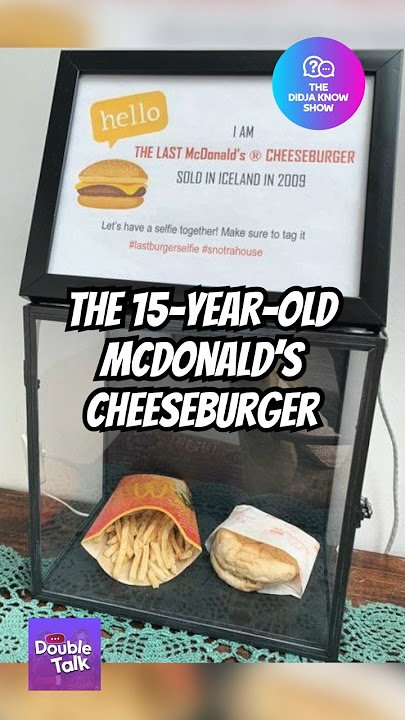
We’ve all seen the image of the last McDonald’s sold in Iceland during 2009. Today it still looks like it did on day 1. What on earth convinces people to eat this adulteration? Probably the constant advertising and the many road signs pointing to the nearest outlet.
Yet proper eating requires effort, and perhaps the most dispiriting truth is that we no longer want to make the effort. We want convenience dressed up as choice, abundance dressed up as quality. We are complicit in our own blandness.
So here we are: a nation that can summon a pizza to the door in six minutes flat, but cannot remember what a tomato is meant to taste like. That is progress, apparently. The Romans had bread and circuses. We have sliced white and Netflix.
Farmers’ Markets
But then there are farmers’ markets, those small, stubborn outposts of sanity. They are not the solution to everything but farmers’ markets are theatre with mud on their boots: bread that bruises, carrots that once had a conversation with soil, cheese stinking like truth. It’s food with a handshake, not a barcode, chaotic, sensual, fleeting, and absolutely worth the pilgrimage.
At a farmers’ market, you buy food that reminds you it is alive, or at least once was. It has blemishes, curves, scars, stories. A tomato that tastes of tomato, a strawberry that needs no sugar. You are not just buying calories; you are buying a handshake from the person who grew it. That is a relationship, not a transaction.
And that’s the joy of the market: it gives food back its context. It insists on seasonality, on imperfection, on the notion that eating is not a corporate arrangement but a cultural act. It’s the antidote to the fluorescent aisles where everything has been sanded down into glossy anonymity.
Because at least here, among the stalls, there’s a fighting chance that a child will point to a pineapple and recognise it, not because it came in a plastic tub, but because it came with a crown.
Pineapple boy in California hadn’t been deprived of food. He had, in fact, been drenched in it, plastic-wrapped, machine-cut, chilled and preserved into familiarity. What he lacked was context. He had been fed only the edited version, the sanitised highlight reel. Seeing the original fruit was like catching a glimpse of a celebrity without makeup.
Disorienting. Unrecognisable.
Food now is designed not to nourish or delight but to travel in food miles. To endure. To survive the hostile environments of container ships and warehouses and fluorescent lighting. It is, in its way, the perfect metaphor for us: engineered for shelf life, with taste an afterthought.
Let’s put 2 and 2 together to determine what this is leading to.
• Chronic disease is projected to rise 99% by 2050. • Cancer in people under 50 has surged 79% in just three decades. • Type 2 diabetes is now showing up in children as young as 8. • And fertility rates are collapsing as hormone systems buckle under toxic overload.
Want a 53 second video explanation of what’s causing this?
Bread and croissants from a bakery, not a supermarket. Meats from a butcher, not a supermarket. Thankfully, our fishmonger is only 10 minutes from us. Use them if you can. because food is their lifeblood. The lifeblood of a supermarket, is profit
And so we support Farmers’ Markets, local farm shops. We receive a weekly delivery from the enterprising network of Riverford Organic Farmers; we cook our food in organic olive oil, not the liquid deceit offered on supermarket shelves.
I’m inviting you to do something, and right away. Whatever you choose to do, make it beneficial to both you and your family, especially is you have children.
You’re given one digestive tract to get you through life. Maltreat it and it’ll repay you with a repertoire of indignities that’ll fold you in half.
Both Riverford and Save Our Soil (organic olive oil) supply to buyers in the UK.
Click the links (if you live in the UK).
Riverford Organic – click to order and receive £15 off your second order
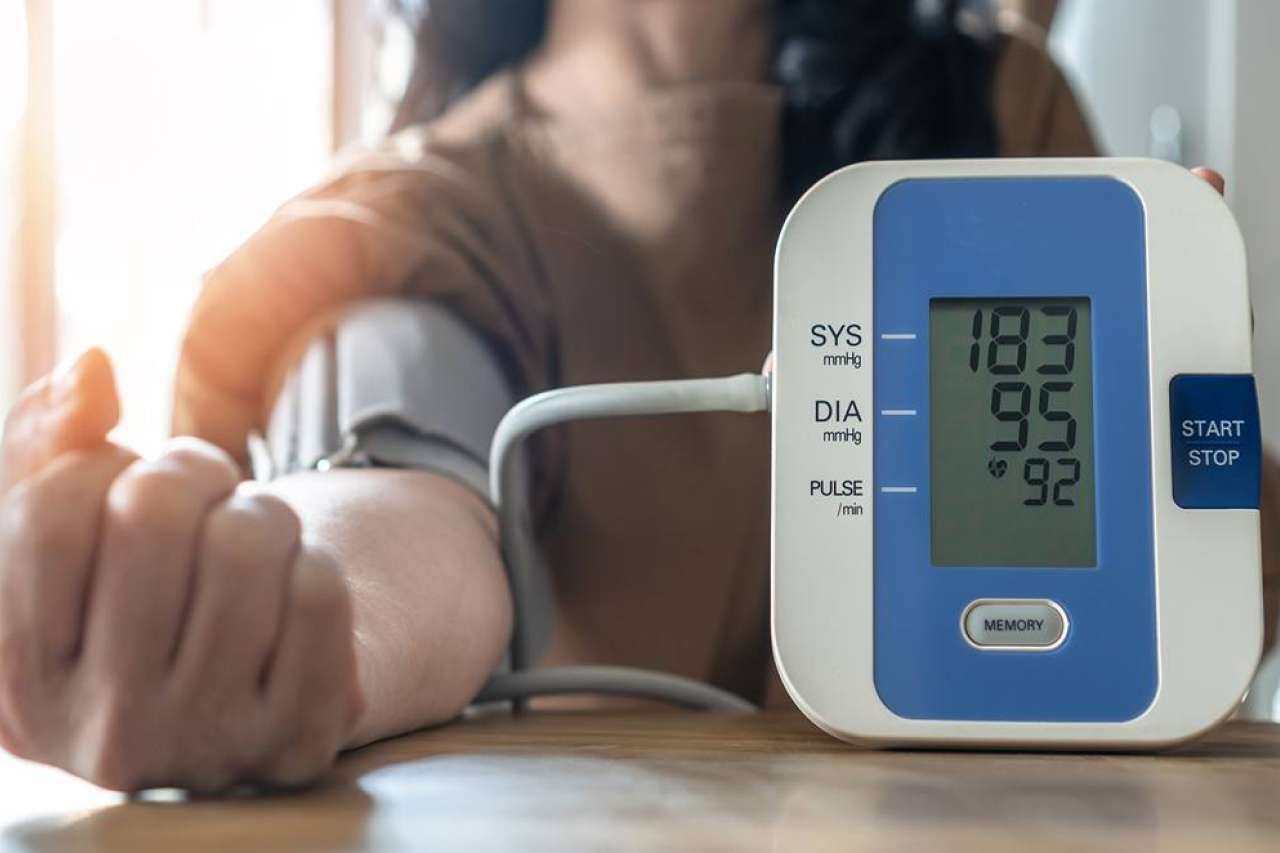
This week I’m passing the baton to Dr Pierre Kory from ‘The Forgotten Side of Medicine’. What he’s written in blood pressure and the shenanigans within the industry are what everyone absolutely MUST know about.
If not for you, pass this on as what your GP has been taught at medical school is flawed.
In many parts of France, when a person visits a doctor with heart problems, high blood pressure, or other problems that are hard to diagnose, the first question the physician may ask is, “What kind of salt are you using?”
You can’t function without salt. If your tears weren’t salty, if your blood wasn’t salty, if your sweat wasn’t salty, you wouldn’t be functioning very well. You can’t digest food without salt. Your heart can’t function. Your adrenal glands can’t function. Your liver can’t function Your kidneys can’t function. You spend 9 months in a salty amniotic fluid before you’re born.
Going on a salt-free diet can be more than hazardous. Your cells must be bathed in a sodium-based, extracellular fluid. When the cells are not in this fluid, they will explode. This has been proven biologically. The cells of a mammal deprived of sodium literally explode.
Without salt, there is no longer any exchange between the sodium on the outside of the cell, and the potassium on the inside. Talk about aging, this is probably the one, single, most important biological fact that must be considered when you discuss salt. Deprived of that saline solution, the cells age.
Thankfully I’ve never had blood pressure issues but then I’ve been taking Celtic Sea Salt daily since 1997.
Sex. Everybody does it, thinks about it, Googles it, and some people even read books about it.
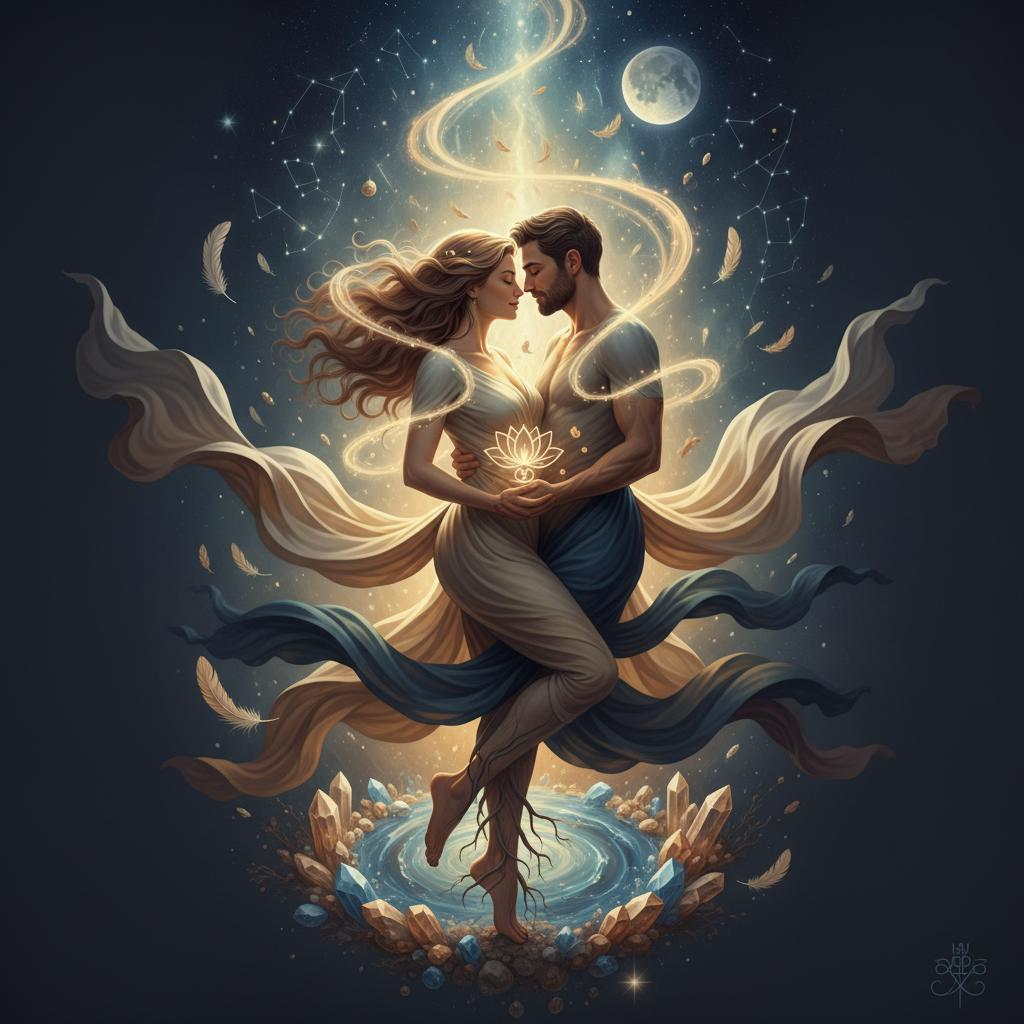
But here’s the rub: sex isn’t just the exchange of fluids and a wet patch on the sheet. It’s energy. Proper, humming, Tesla-coil energy. You don’t just leave your socks at someone’s house; you leave your aura, your chakras, your subtle cosmic aftertaste.
The sages tell us chakras regenerate every seven years, like teeth in sharks or the staff rota at Pret A Manger. Which means, if you’ve gone to bed with someone, you’re carrying around tendrils of their energy for the best part of a decade. Yes, that long.
Unless, of course, you’ve given yourself a proper psychic scrub. And let’s be honest, most of you haven’t.
When two people couple, it’s not just body against body, but root chakra to root chakra, like two tips of plugged-in extension leads sparking. Auras swell, mingle, embroider themselves into a single shimmering duvet of “us”.
And when you separate, it doesn’t quite go away. It lingers, like the smell of garlic on your hands.
This is why your old lovers wander through your dreams, why your ex’s ghost turns up at 3am just as you’re trying to forget their Netflix choices. You’ve made karmic graffiti together, and no amount of sage smudging will entirely scrub it off.
Choose badly, and you don’t just inherit their terrible taste in curtains. You pick up their shadows, their karmic potholes, their catalogue of misery. You vibrate like them, and soon the whole world looks like a sticky pub carpet.
Choose well, however, and it’s symphonic. Two energies, luminous, aware, scrubbed clean, growing fat on love and light like sunflowers in a July field.
But be warned: it’s never just the one person. Share a bed with someone who has a partner, and you also pack up the partner, and the partner’s partners, and so on. It’s an energetic Russian doll of strangers you never met but are now wearing dynamically, like hand-me-down underwear.
There are no villains here, only the unconscious and the consequences. You, tragically, are both culprit and victim. You attract the people you vibrate, and, like it or not, that usually means you’re pulling in a mirror. Sometimes cracked, sometimes smudged, always yours.
So what to do? First, learn to love yourself properly, not with the hashtag kind of self-love that comes with a bath bomb and a candle, but the quiet, awkward, lasting sort that doesn’t need validation.
When you raise your vibration, you stop bedding people who use you to patch their own void. You start making love rather than just having sex. And yes, go ahead and make love as often as you can, but do it from the right frequency.
Because, sex is energy, energy is memory, and memory is the wallpaper of the soul. Don’t paste yourself with anyone whose pattern you don’t want to live with for seven years.